Coffee Post-Harvest Processing: Washed, Natural, Honey & Anaerobic Chemistry
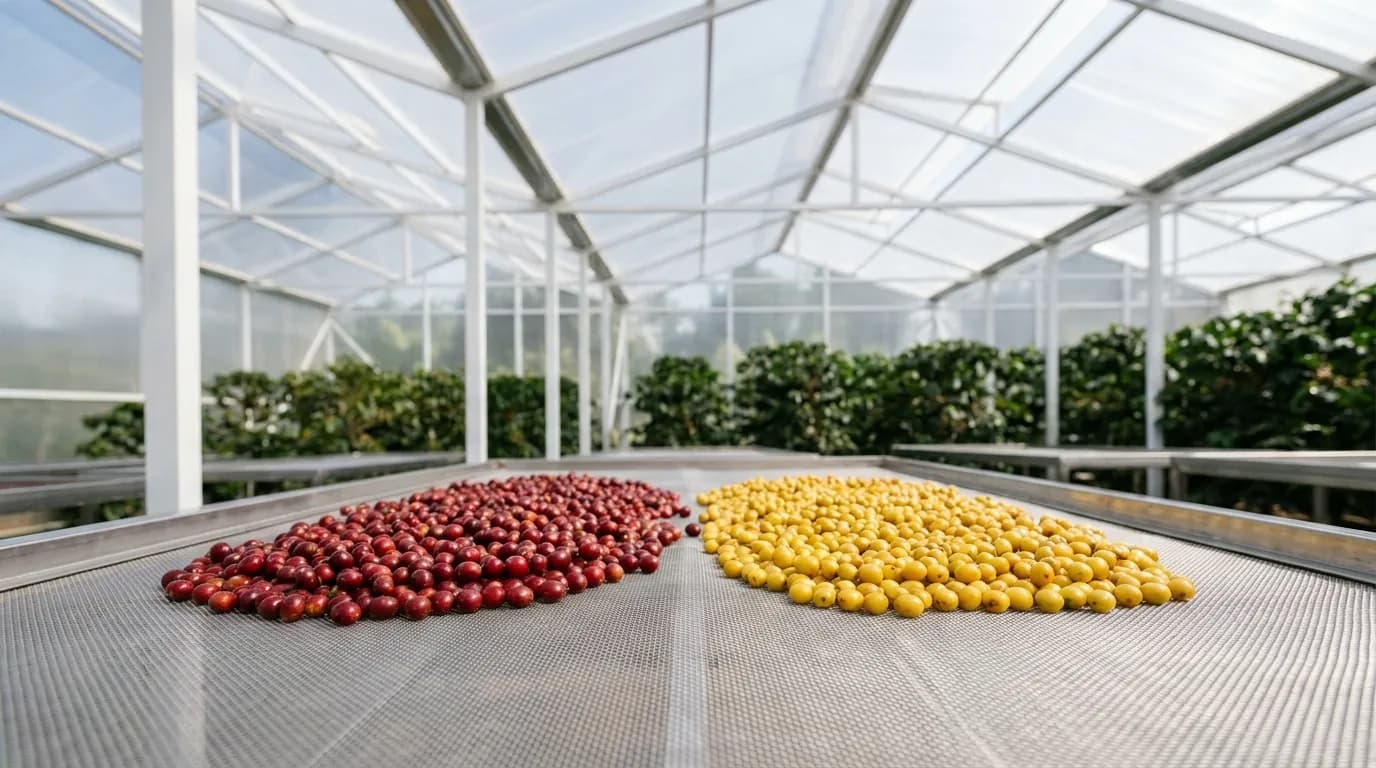
Table of Contents
- 01Biochemical Differences in Processing Methods
- 02Advanced Anaerobic Fermentation
- 03Choosing a Process to Match a Roasting Profile
- 04Quality Control After Fermentation: Drying, Resting and Moisture
- 05What This Means for B2B Buyers Evaluating a Lot
- 06Traceability Documentation That Should Travel With the Lot
- 07Drying Curve, Moisture and Water Activity
- 08Resting and Milling Before Export
The sensory signature of a high-altitude green coffee bean is determined during post-harvest processing. Sourcing from these distinct high-altitude zones enables B2B buyers to acquire coffee with unique sensory profiles shaped by the volcanic soil structure and coastal Pacific wind currents. While high-altitude agriculture provides density and complex sugars, the post-harvest processing method is what transforms these chemical precursors into the volatile compounds valued by specialty roasters.
Biochemical Differences in Processing Methods
The post-harvest method dictates the degree of cellular degradation and sugar migration within the coffee seed:
- Washed Process (Traditional): The outer skin and fruit mucilage are removed mechanically before the parchment coffee undergoes enzymatic fermentation in water tanks for 12 to 36 hours. This process preserves the natural citric acid (0.5% to 1.5%) and malic acid (0.3% to 0.7%) inside the bean, delivering a clean cup with bright, sparkling acidity.
- Natural Process (Dry Processing): The whole coffee cherry is dried on raised beds for 15 to 25 days. The simple sugars (glucose and fructose) in the mucilage concentrate and migrate into the seed through osmotic pressure. Slow natural fermentation occurs within the drying fruit, creating a full-bodied cup with wine-like complexity and high sweetness.
- Honey Process: Cherries are depulped but varying levels of mucilage are left on the parchment during drying. This method balances acidity and sweetness, yielding rounded stone-fruit and caramel profiles.
Advanced Anaerobic Fermentation
Modern specialty coffee utilizes anaerobic fermentation in sealed tanks. By excluding oxygen, we favor the growth of anaerobic bacteria (such as lactic acid bacteria) while suppressing wild yeasts. Lactic acid bacteria metabolize sugars into lactic acid, which increases the viscosity and body of the brewed coffee, creating a creamy mouthfeel. Carbonic maceration, adapted from wine-making, injects carbon dioxide to create an intracellular fermentation, yielding intensely aromatic cups with perfumed notes. Explore the chemical profiles developed at our specialty coffee farms.
Choosing a Process to Match a Roasting Profile
Processing method is not a stylistic preference layered on top of a fixed bean — it is a direct input into how the roaster needs to approach that lot. Washed coffees, with their lower sugar content on the bean surface, roast more predictably and tolerate a slightly more aggressive roast curve without scorching, which is why many commercial and light-roast specialty programs default to washed lots for consistency across large batches. Natural and honey process coffees carry higher residual sugar on the parchment or dried fruit skin, which caramelizes faster and unevenly if the roast curve is not adjusted — these lots typically need a slower ramp through the Maillard stage to avoid a scorched, ashy edge that masks the fruit-forward character the process was meant to highlight. A roaster building a program around a specific origin should be requesting the processing method alongside the cupping score, not treating it as secondary information, because it changes the roast profile before the first batch is even loaded.
Quality Control After Fermentation: Drying, Resting and Moisture
Fermentation gets most of the attention in processing discussions, but the drying and resting stages that follow determine whether that fermentation work survives to the export container intact. Parchment coffee is dried — on raised beds, patios, or mechanical dryers — until it reaches a moisture content of 10 to 12%, the band where the seed is stable enough to resist mold growth without becoming so dry that the cell structure turns brittle and cracks during milling. Drying too fast, especially in mechanical dryers run at high temperature to save time, can lock in unwanted fermentation off-notes and produce a baked, papery flavor that no amount of skilled roasting can correct later. After drying, the parchment coffee is typically rested for several weeks to a few months before milling and export, allowing residual moisture to equalize throughout the bean and volatile compounds from fermentation to stabilize — skipping or rushing this rest period is a common cause of a lot cupping inconsistently between the origin sample and the container that actually arrives.
What This Means for B2B Buyers Evaluating a Lot
For a buyer sourcing based on cup profile rather than price alone, the practical takeaway is that the processing method, moisture reading at export, and rest period are as much a part of the lot's specification as its variety or altitude. A pre-shipment sample cupped fresh, followed by a second cupping once the container clears customs, is the standard way to confirm that drying and storage conditions in transit did not shift the cup away from what was originally approved — a gap between those two cuppings usually traces back to moisture or rest-period issues rather than anything wrong with the original fermentation.
Traceability Documentation That Should Travel With the Lot
A processing method claim on a spec sheet is only as credible as the log behind it. A well-run origin keeps a processing log per lot — fermentation start and end time, tank or bed temperature readings, drying duration, and the moisture readings taken at intervals through drying, not just the final figure at export. For a roaster building a program around specific processing profiles (say, a rotating anaerobic natural release), that log is what lets them communicate the process credibly to their own customers, and it is what lets a buyer catch a processing inconsistency before it becomes a cupping surprise months later. Origins that cannot produce this documentation on request are effectively asking the buyer to trust the label at face value, which is a weaker position than the traceability the specialty segment is supposed to offer.
Drying Curve, Moisture and Water Activity
Whatever the process, the lot is only stable when it leaves the drying stage inside a narrow window. Commercial practice puts green coffee at roughly 10 to 12 % moisture, measured with a calibrated meter and confirmed against a reference method, and water activity below about 0.60 so that mould and yeast have nothing to work with in the bag. Above that window the coffee ages fast and can arrive baggy; below it the bean becomes brittle and loses sweetness and aromatic complexity in the roast.
How the lot reaches that window matters as much as the final number. Slow, even drying on raised beds with regular turning gives the moisture inside the bean time to migrate outward at the same rate it evaporates from the surface; forced hot air that dries the outside first traps a wetter core, and the reading taken an hour later drifts upward once the bean equilibrates. A buyer evaluating a lot should ask not only for the final moisture but for the drying method and the number of days it took.
Resting and Milling Before Export
Coffee that goes straight from the drying bed to the huller is not the same coffee that rests first. A rest period in parchment — commonly several weeks in a stable, ventilated store — lets the moisture distribute evenly through the lot and lets the harsher notes of a recent fermentation settle. Milling is normally left as close to shipment as the schedule allows, because the parchment layer is the bean’s natural protection and green coffee starts ageing faster the moment it comes off.
This is where two lots with identical process descriptions stop being comparable. Same variety, same fermentation, same final moisture — but one rested and was hulled the week it shipped, the other was hulled immediately and sat green for two months. The cup will not be the same, and the difference belongs in the offer sheet.
To source washed, natural, honey or anaerobic lots from Ecuador in volume, see our page on wholesale green coffee.
Green Coffee Microlots
Interested in sourcing this product directly from our factory in Cayambe, Pichincha?
Frequently Asked Questions About This Topic
What is anaerobic fermentation in coffee?
It is a fermentation process conducted in oxygen-free tanks, which favors lactic acid bacteria, resulting in a creamy mouthfeel and tropical fruit notes.
How does the washed process affect acidity?
The washed process preserves the organic acids (citric and malic) of the seed, resulting in a bright, clean cup with distinct acidity.
What moisture content should green coffee have at export?
Green coffee should sit between 10% and 12% moisture at export — enough to resist mold growth in transit without becoming so dry that the bean's cell structure turns brittle and fractures during milling.
Related articles
Understanding EU Cadmium Limits for Cacao: B2B Compliance & Import Guide
A complete guide to EU Regulation 488/2014 heavy metal limits for cacao imports. Learn how B2B buyers navigate compliance, testing, and soil mitigation.
Read ArticleHow Ecuadorian Cacao Growers Mitigate Cadmium Absorption: Soil Science & Process
Explore the agronomic techniques and soil management practices used in Manabí to naturally reduce cadmium uptake in fine aroma cacao trees.
Read ArticleHow to Buy Cacao Beans from Ecuador: A B2B Importer's Step-by-Step Guide
A step-by-step walkthrough of sourcing, contracting, and shipping wholesale cacao beans from the Port of Guayaquil to global destinations.
Read Article