Cacao Nibs and Blood Sugar: What the Science Shows
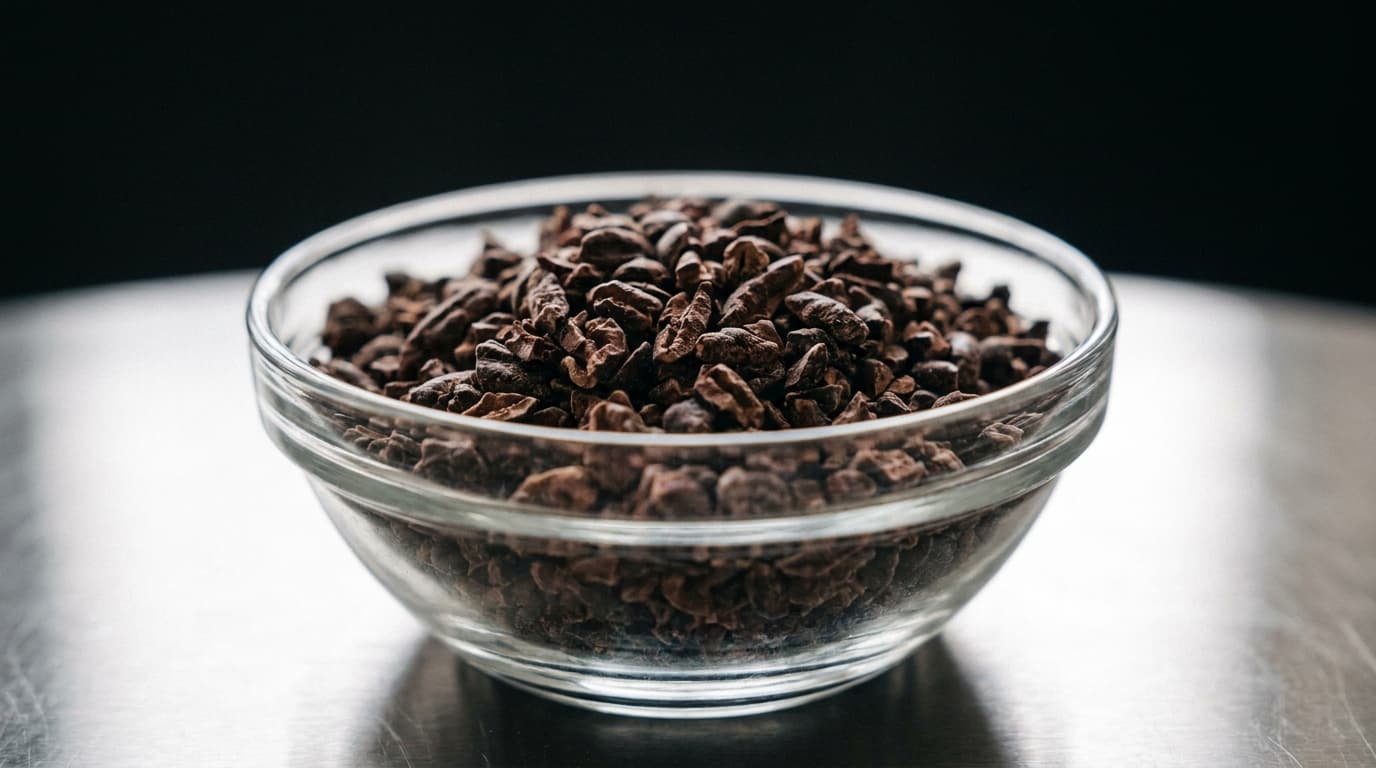
Table of Contents
- 01Why Cacao Nibs Come Up in Blood Sugar Conversations
- 02Do Cacao Nibs Have Sugar?
- 03The Glycemic Profile of Cacao Nibs: Sugar, Fiber, and Fat
- 04Flavanols and Insulin Sensitivity: What Research Suggests
- 05Cacao Nibs vs. Sugared Chocolate: A Direct Comparison
- 06Fiber's Role in Blunting the Glucose Response
- 07Using Cacao Nibs in Diabetic-Friendly and Keto Formulations
- 08Serving Size and Practical Considerations
- 09A Note on Medical Advice
Among the questions food manufacturers and health-conscious buyers ask most often about cacao is whether it is compatible with a blood-sugar-conscious or diabetic diet. Unlike sweetened chocolate, cacao nibs carry no added sugar, which places them in a different nutritional category entirely. This guide reviews the glycemic profile of cacao nibs, summarizes what current research suggests about flavanols and insulin sensitivity, and outlines how food brands are using nibs in diabetic-friendly and keto formulations, sourced from our certified facility in Cayambe, Pichincha, and our network of roughly 100 allied farms across Manabí, Esmeraldas, and Pichincha, Ecuador. This article is written for a B2B and informed-consumer audience and is not medical advice.
Why Cacao Nibs Come Up in Blood Sugar Conversations
Cacao nibs are simply crushed, fermented, dried, and lightly roasted cacao beans with the shell removed, nothing else added. That single fact, zero added sugar, is what separates them from virtually every other chocolate product on a supermarket shelf and explains why they increasingly appear in formulations aimed at people managing blood sugar. Consumers researching diabetic-friendly snacking and formulators building low-glycemic product lines both land on the same question: does the natural composition of cacao nibs make them a reasonable ingredient for a blood-sugar-conscious diet? The honest answer is layered. Nibs themselves contribute negligible sugar, but how they are eaten, alongside what, and in what quantity, still matters.
Do Cacao Nibs Have Sugar?
Do cacao nibs have sugar? Practically none. Pure cacao nibs are roasted, crushed cacao beans with nothing added: they contain no added sugar and typically under 1 g of naturally occurring sugars per 100 g, alongside roughly 50% fat, about 30% fiber and 12 to 14% protein. That is why they taste bitter rather than sweet, and why they behave so differently from chocolate chips in a blood-sugar context. If a product labelled "cacao nibs" tastes sweet, check the ingredient list: it has been coated or sweetened.
The Glycemic Profile of Cacao Nibs: Sugar, Fiber, and Fat
A 100-gram serving of pure cacao nibs contains 0 grams of sugar and effectively no starch. What it does contain is roughly 25 to 30 grams of dietary fiber and 52 to 54 grams of fat, primarily oleic and stearic acid, plus 11 to 13 grams of protein. This combination, fiber, fat, and protein, with none of the rapidly absorbed carbohydrate found in sweetened chocolate, gives cacao nibs a glycemic load close to zero. Fiber in particular slows gastric emptying and blunts the glucose response of anything eaten alongside it, which is one reason nibs are often folded into meals rather than consumed as a stand-alone sweet. For food scientists building a nutritional panel, cacao nibs are one of the few chocolate-flavored ingredients that can be declared sugar-free without any reformulation, since no sugar was ever added in the first place.
Flavanols and Insulin Sensitivity: What Research Suggests
Beyond the absence of sugar, cacao nibs are notable for their concentration of flavanols, primarily epicatechin and catechin, plant compounds also found in tea and berries. A body of nutrition research, still evolving and not fully conclusive, has examined whether cocoa flavanols influence insulin sensitivity and glucose metabolism. Several controlled studies suggest that regular flavanol intake may support healthy endothelial function and modestly improve markers of insulin sensitivity in some populations, likely through improved nitric oxide signaling and reduced oxidative stress in blood vessels. Other trials show more modest or mixed results, and effect sizes vary depending on flavanol dose, study duration, and the baseline health of participants. It is accurate to say that flavanols may support metabolic health as part of an overall diet; it would not be accurate, and we do not claim, that cacao nibs treat, cure, or replace management of diabetes or any other condition. Readers should treat this as an area of promising but incomplete evidence rather than an established clinical outcome.
Cacao Nibs vs. Sugared Chocolate: A Direct Comparison
The contrast with conventional chocolate is stark and worth stating plainly for formulators and consumers alike. A typical milk chocolate bar can contain 40 to 55 grams of sugar per 100 grams, alongside refined carbohydrates that produce a fast, pronounced glucose and insulin spike. Cacao nibs, even unsweetened dark chocolate at high cacao percentages, sit at the opposite end of that spectrum: zero sugar, high fiber, and a fat-forward macronutrient profile that produces a much flatter post-meal glucose curve. This is precisely why cacao nibs, rather than milk or even standard dark chocolate, are the preferred raw material when a brand wants to make an honest, unsweetened claim about compatibility with lower-sugar diets. The flavanol content is also generally higher in nibs than in conventionally processed chocolate, since alkalization (commonly called Dutch processing) and prolonged conching, both common in chocolate manufacturing, degrade a portion of the original flavanol pool through heat and pH exposure. A buyer comparing a certificate of analysis for nibs against one for standard couverture will typically see this difference reflected directly in the total polyphenol content, not just in the sugar declaration.
Fiber's Role in Blunting the Glucose Response
The mechanism behind cacao nibs' favorable glycemic profile is not limited to the absence of sugar; the fiber content plays an active role. Roughly 25 to 30 grams of the fiber in a 100-gram serving is a mix of insoluble cellulose and soluble pectin. When nibs are eaten alongside other carbohydrate-containing foods, such as oatmeal or a granola base, that fiber physically slows gastric emptying and delays glucose absorption in the small intestine, a phenomenon nutrition researchers refer to as a lowered glycemic response of the overall meal. The soluble fraction also ferments in the colon into short-chain fatty acids, which some studies associate with improved insulin signaling over time. This is a separate, complementary mechanism from the flavanol effect described above: one works through the digestive tract, the other through vascular and cellular signaling, and formulators building a low-glycemic product often lean on both simultaneously when they select cacao nibs as an inclusion.
Using Cacao Nibs in Diabetic-Friendly and Keto Formulations
Food brands developing diabetic-friendly, low-carb, or ketogenic products increasingly specify cacao nibs as a chocolate-flavor inclusion precisely because they add crunch, aroma, and mineral density (magnesium, iron, potassium) without contributing net carbohydrates. Common applications include keto granola and protein bars, sugar-free trail mixes, high-fiber breakfast cereals, and no-added-sugar chocolate bark or confections sweetened instead with sugar alcohols or stevia. Because nibs carry their own natural bitterness, formulators typically pair them with a modest amount of a non-nutritive or low-glycemic sweetener to balance flavor, rather than relying on cane sugar. From a labeling standpoint, using nibs as the chocolate component allows a "no added sugar" or "diabetic-friendly" positioning to remain accurate on the finished product, provided the rest of the formulation is controlled with the same discipline.
Serving Size and Practical Considerations
Even a zero-sugar ingredient benefits from sensible portioning. Cacao nibs are calorically dense, roughly 570 to 600 kcal per 100 grams, owing to their natural fat content, so a reasonable daily serving for most healthy adults is one to two tablespoons, about 10 to 20 grams. This amount delivers a meaningful dose of fiber and flavanols without excessive calorie load, and it keeps the modest theobromine and caffeine content (roughly 200 mg theobromine and 25 mg caffeine per 10-gram serving) within a comfortable range for most people. Individuals managing diabetes should still track total carbohydrate and calorie intake across the full product they are consuming, not just the nib inclusion, since other ingredients in a formulated snack, sweeteners, dried fruit, or grains, can carry a meaningfully different glycemic impact.
A Note on Medical Advice
This article is intended for food industry professionals and informed consumers researching ingredient properties, not as medical guidance. Cacao nibs are not a treatment for diabetes, prediabetes, or any medical condition, and the flavanol research summarized above describes a supportive, not curative, relationship with metabolic health. Anyone managing diabetes or another condition affecting blood sugar should consult a physician or registered dietitian before making significant dietary changes, and should not substitute cacao nibs, or any food ingredient, for prescribed medication or monitoring. Our role as a supplier is to provide transparent, verifiable sourcing and composition data; the nutritional and medical interpretation of that data for an individual diet belongs with a qualified health professional. For technical specifications, request our documentation through the cacao nibs product page, review related research in our guide to cacao nibs nutrition and health benefits, or visit the Premium Kakaonibs Hub for wholesale inquiries. Contact our trade team for samples and lab documentation.
Cacao Nibs
Interested in sourcing this product directly from our factory in Cayambe, Pichincha?
Frequently Asked Questions About This Topic
Do cacao nibs raise blood sugar?
Pure cacao nibs contain 0g of added sugar and negligible starch, so on their own they have a glycemic load close to zero; the overall glycemic impact of a finished product still depends on its other ingredients.
Can diabetics eat cacao nibs?
Many diabetic-friendly formulations use cacao nibs as a sugar-free chocolate inclusion, but individuals should consult their physician or dietitian before making dietary changes, since nibs are not a treatment for diabetes.
Do cacao flavanols really improve insulin sensitivity?
Some controlled studies suggest a supportive relationship between cocoa flavanol intake and markers of insulin sensitivity, though evidence is still developing and results vary; nibs should not be considered a treatment.
How much sugar is in cacao nibs?
Pure, unsweetened cacao nibs contain 0 grams of sugar per serving, since nothing is added during processing.
Are cacao nibs keto-friendly?
Yes. With 0g sugar, high fiber, and roughly 50% natural fat, cacao nibs fit common ketogenic and low-carb formulation requirements.
Related articles
Cacao Nibs Nutrition: Bioactive Compounds and Health Benefits
An in-depth analysis of cacao nibs nutritional value. Discover the science behind antioxidants, flavanols, and why sugar-free organic nibs are healthy.
Read ArticleCacao Nibs in Industrial Food Manufacturing: B2B Applications
Discover the role of cacao nibs in large-scale food manufacturing. A guide to bakery, granola, snack bars, chocolate inclusions, and wholesale logistics.
Read ArticleWhat Are Cacao Nibs? A Complete Definition Guide
A clear, no-jargon definition of cacao nibs: how they're made from bean to nib, how they differ from chocolate and cocoa powder, and how they're used.
Read Article