What Are Cacao Nibs? A Complete Definition Guide
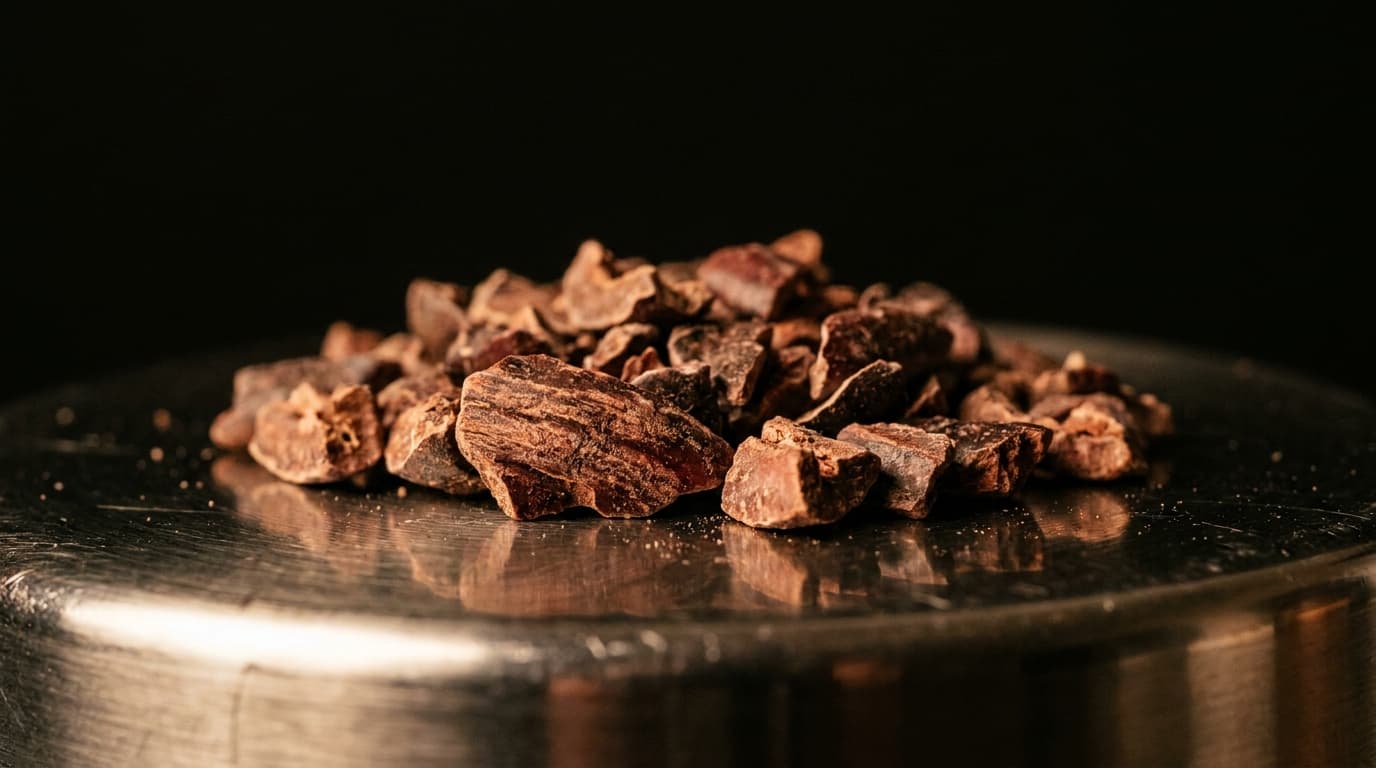
Table of Contents
- 01What Are Cacao Nibs? A Simple Definition
- 02From Cacao Pod to Nib: How Cacao Nibs Are Made
- 03Cacao Nibs vs. Chocolate: What Is the Difference?
- 04Cacao Nibs vs. Cocoa Powder and Cocoa Liquor
- 05Are Cacao Nibs Raw? Understanding Roast Levels
- 06How Are Cacao Nibs Eaten and Used?
- 07Sourcing Quality Cacao Nibs: Why Origin and Processing Matter
- 08The Bottom Line
Cacao nibs are one of the most talked-about ingredients in specialty food and chocolate manufacturing, yet many buyers and consumers still ask the most basic question: what exactly are they? For companies sourcing raw material for chocolate, confectionery, or functional foods, and for consumers encountering the term for the first time, this guide answers that question directly, tracing cacao nibs from the pod to the finished ingredient, and clarifying how they differ from chocolate, cocoa powder, and cocoa liquor. As a certified processor in Cayambe, Pichincha, working with a network of roughly 100 allied farms across Manabí, Esmeraldas, and Pichincha, Ecuador, we explain the process the way we control it ourselves, step by step.
What Are Cacao Nibs? A Simple Definition
Cacao nibs are small, crunchy pieces of crushed cacao beans. They are made by fermenting, drying, and roasting cacao beans, removing the papery outer shell, and breaking the remaining cotyledon, the fatty, flavorful interior of the bean, into small fragments roughly the size of a coffee bean crumb. In short, a cacao nib is the closest thing to eating a piece of the cacao bean itself: no added sugar, no added milk, no conching, no tempering. It is the raw material from which chocolate is eventually made, sold as a standalone ingredient rather than transformed further. Because nibs undergo the fewest processing steps of any cacao product on the market, they are often described as the most whole-food form of chocolate available, retaining the natural fat content, fiber, and bitter, fruity flavor notes of the original bean.
From Cacao Pod to Nib: How Cacao Nibs Are Made
Understanding what a cacao nib is requires understanding the journey it takes. It starts at harvest: ripe cacao pods are cut from the tree and opened by hand to extract the wet beans, each surrounded by a sweet white pulp. Those beans are piled into wooden fermentation boxes for five to six days, where naturally occurring yeasts and bacteria convert the pulp sugars into alcohol and then acetic acid, generating heat that can reach 45-48°C. This fermentation step is where the true flavor precursors of chocolate develop; unfermented beans taste flat and astringent, no matter how they are processed afterward.
Once fermentation is complete, the beans are spread on raised beds or patios to sun-dry over several days, reducing moisture from roughly 60% down to about 7%, the level required for safe storage and export. Dried beans are then roasted at controlled temperatures, a step that develops the characteristic chocolate aroma through Maillard reactions between sugars and amino acids. After roasting, the beans pass through a winnower, a machine that cracks the shell and separates it from the interior meat using air suction, leaving behind clean, shell-free pieces. Those pieces are the cacao nibs. If they are ground further under heat and pressure, the friction melts the natural cocoa butter and turns the nibs into a thick paste known as cocoa liquor or cocoa mass, the direct precursor to chocolate, cocoa powder, and cocoa butter.
Cacao Nibs vs. Chocolate: What Is the Difference?
The confusion between cacao nibs and chocolate is understandable, since both start from the same bean. The difference lies entirely in what happens after roasting. Chocolate is cacao nibs, ground into liquor, blended with added sugar, often milk solids, and additional cocoa butter, then refined, conched for hours to smooth the texture and mellow bitterness, and tempered to create the glossy snap consumers expect. Cacao nibs skip every one of those steps. They contain zero added sugar, no milk, no emulsifiers such as soy lecithin, and no conching. The result is a flavor that is intensely chocolatey but noticeably more bitter and astringent than even dark chocolate, with a crunchy, slightly oily texture instead of a smooth melt. A useful way to think about it: chocolate is a formulated product, while cacao nibs are an unformulated ingredient.
Cacao Nibs vs. Cocoa Powder and Cocoa Liquor
Within the cacao supply chain, nibs sit at a specific point between whole beans and the derivative products manufacturers actually use in recipes. Cocoa liquor, also called cocoa mass or cocoa paste, is what nibs become once they are ground fine enough for the cocoa butter to liquefy; it is still 100% cacao, just in paste form rather than crunchy pieces. From liquor, manufacturers can press out the fat to obtain cocoa butter, leaving a dry cake that is pulverized into cocoa powder. Cocoa powder therefore has most of its natural fat removed, while nibs retain their full fat content, roughly 50% by weight. This is why nibs have a firmer, richer mouthfeel and a much shorter, simpler production chain than powder: fewer steps generally mean less processing and, for many manufacturers, an easier clean-label claim.
Are Cacao Nibs Raw? Understanding Roast Levels
The term raw cacao nibs appears frequently in marketing, but it deserves a precise answer. True raw nibs are dried without any heat treatment above roughly 42-45°C and never pass through a conventional roaster, a niche process that preserves more heat-sensitive antioxidants but also leaves more raw, astringent flavor notes and carries a higher microbiological burden if not carefully controlled. The vast majority of commercially available cacao nibs, including ours, are lightly roasted at controlled temperatures. Roasting develops the recognizable chocolate aroma, reduces microbial load for food-safety compliance, and improves shelf stability, all while preserving the great majority of the bean's natural fiber, minerals, and flavanol content. When a supplier describes nibs as roasted rather than raw, this is not a lower-quality product; it simply reflects a different, food-safety-oriented processing choice.
How Are Cacao Nibs Eaten and Used?
Because they are unsweetened and intensely flavored, cacao nibs are rarely eaten in large quantities on their own, though a spoonful straight from the bag is common among enthusiasts who enjoy the bitter, fruity, slightly smoky notes. Far more commonly, they are used as an ingredient: sprinkled over yogurt, oatmeal, or smoothie bowls for crunch and a mineral boost; folded into granola, energy bars, and trail mixes; incorporated into baked goods such as cookies and brownies alongside chocolate chips; and used by chocolate makers and roasters as the direct raw material for bean-to-bar chocolate production. In industrial and food-service applications, nibs also serve as a garnish for desserts and specialty beverages, and as a flavoring inclusion in premium ice cream and confectionery. Because they contain no added sugar, formulators frequently choose nibs when they want the flavor and texture of chocolate without adding to a product's sugar declaration.
Sourcing Quality Cacao Nibs: Why Origin and Processing Matter
Not all cacao nibs taste alike, and the differences trace back to genetics, terroir, and post-harvest handling rather than the crushing step itself. Ecuador's Nacional Arriba variety is prized in the fine-flavor cacao segment for its distinctive floral and fruity notes, a profile shaped by the volcanic soils of Manabí, Esmeraldas, and Pichincha, where our network of roughly 100 allied farms grows and ferments the beans we process. At our certified facility in Cayambe, Pichincha, we control fermentation time, drying curves, and roast profile specifically to preserve those origin characteristics rather than flatten them into a generic chocolate flavor. For B2B buyers evaluating suppliers, the fermentation protocol, moisture content at export, and shell-removal precision are the practical quality markers worth requesting alongside a sample, since they determine flavor consistency far more than any single processing step in isolation. You can review our full specification on the cacao nibs product page, explore formulation use cases in our guide to cacao nibs B2B industrial applications, or visit the Premium Kakaonibs Hub for wholesale specifications.
The Bottom Line
Cacao nibs are simply crushed, roasted cacao beans with the shell removed: the least processed, most concentrated form of chocolate flavor available as a commercial ingredient. They are not chocolate, which requires added sugar and further refining; they are not cocoa powder, which has most of its fat pressed out; and they are not necessarily raw, since most commercial nibs undergo controlled roasting for flavor and food safety. For food manufacturers, understanding this distinction clarifies exactly which product to specify for a given formulation, whether the goal is a sugar-free crunch inclusion, the raw material for bean-to-bar chocolate, or a clean-label ingredient with full transparency back to origin. Contact our trade team to request a sample and technical specification sheet.
Brands positioning organic cacao nibs specifically should note that our standard nibs are conventional; an organic-labeled batch requires the same allied-farm sourcing described above but under a dedicated contract, since none of our partner farms currently hold a formal organic certificate.
Transactional briefs frequently specify organic cacao nibs raw, combining two independent requirements that should be quoted separately. Raw is a process condition, meaning the beans were dried and cracked without a conventional roast, and it needs to be written as a temperature limit rather than as a word, plus a microbiological specification, since the roast is normally what reduces the microbial load. Organic is a documentary condition covering the farm and the processing facility for that lot. A supplier can meet either one without the other, so a purchase order that bundles them without defining the temperature ceiling will produce quotes that are not comparable.
Commercial searches phrased where to buy cacao nibs or where to buy cocoa nibs split along the same line as the rest of this category: retail-sized packs from a distributor, or bulk from origin against a specification. For any user beyond home consumption the second route is what makes the product reproducible, because nibs are sold with a roast level and a sieve fraction, and those two numbers are what determine whether the batch behaves the same way in your line as the sample did. Ask for both on the offer, not just a price per kilo.
The same product is asked about in several ways, what are nibs in chocolate, what is a chocolate nib, what is chocolate nibs, and all describe the fragments of cocoa bean left after the shell is removed. In a chocolate context they appear twice over: as the raw material that gets ground into liquor, and as an inclusion added back into a finished bar for texture. Buyers should be aware that the two uses need different specifications, a grinding feedstock is bought on fermentation and moisture, while an inclusion is bought on sieve fraction and roast consistency.
Related reading: Brewing Cocoa and Cacao Husk Tea: A B2B Sourcing Guide.
Cacao Nibs
Interested in sourcing this product directly from our factory in Cayambe, Pichincha?
Frequently Asked Questions About This Topic
What are cacao nibs made of?
Cacao nibs are made of crushed, fermented, dried, and lightly roasted cacao beans with the outer shell removed — nothing else is added.
Are cacao nibs the same as cocoa powder?
No. Cocoa powder is made from cocoa liquor with most of the natural fat pressed out, while nibs retain their full fat content and crunchy texture.
Can you eat cacao nibs raw, straight from the bag?
Yes, they are safe to eat as-is, though the flavor is intensely bitter and astringent compared to sweetened chocolate.
Do cacao nibs contain sugar?
No, pure cacao nibs contain zero added sugar; any sweetness comes only from natural fruity notes developed during fermentation.
What is the difference between cacao nibs and cocoa liquor?
Cocoa liquor is cacao nibs ground fine enough to liquefy the natural fat into a paste; nibs are the solid, unground precursor to that paste.
Related articles
Cacao Nibs Nutrition: Bioactive Compounds and Health Benefits
An in-depth analysis of cacao nibs nutritional value. Discover the science behind antioxidants, flavanols, and why sugar-free organic nibs are healthy.
Read ArticleCacao Nibs in Industrial Food Manufacturing: B2B Applications
Discover the role of cacao nibs in large-scale food manufacturing. A guide to bakery, granola, snack bars, chocolate inclusions, and wholesale logistics.
Read ArticleCacao Nibs and Blood Sugar: What the Science Shows
The glycemic profile of cacao nibs explained: zero sugar, fiber, and flavanols, what the science suggests about insulin sensitivity, and diabetic-friendly formulation uses.
Read Article