Ceremonial Cacao Recipe: How to Prepare It Step by Step
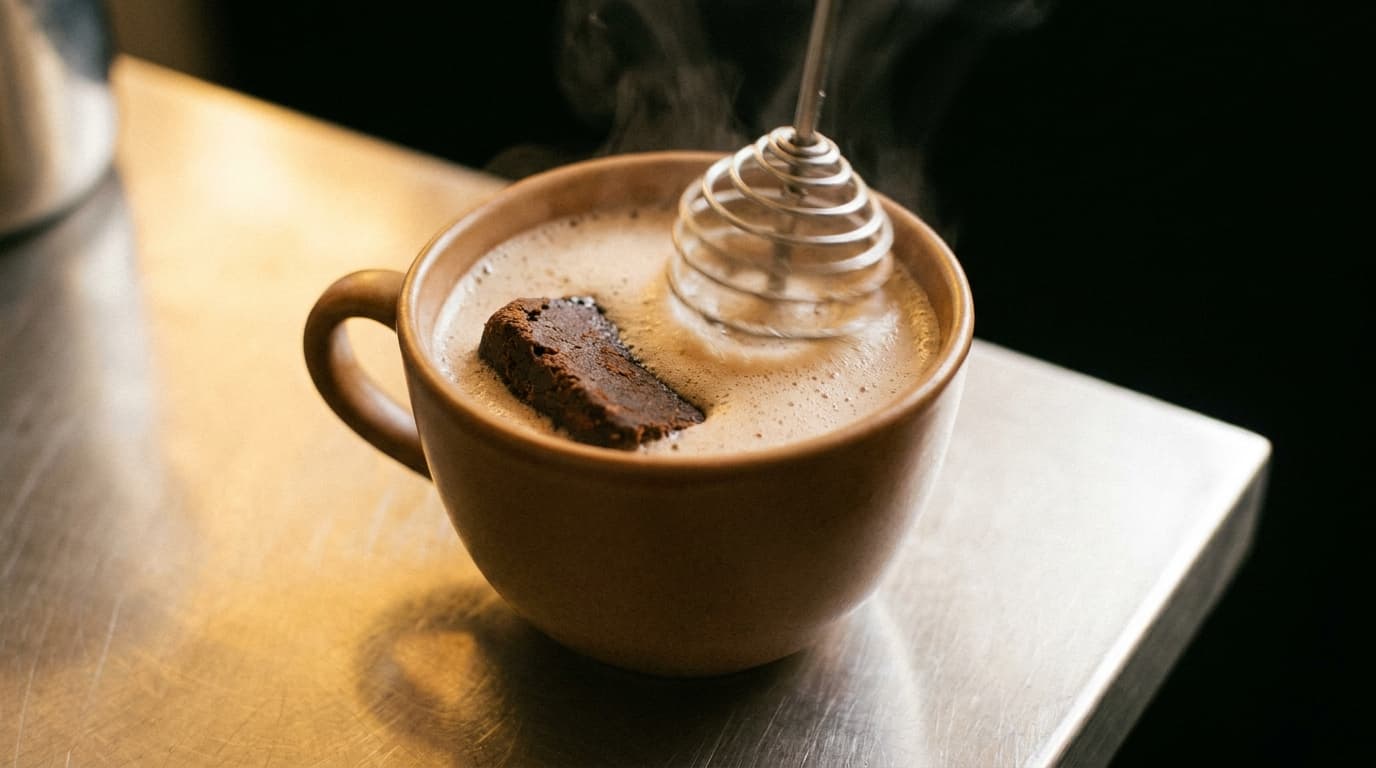
Table of Contents
- 01Ceremonial Cacao vs. Regular Hot Chocolate
- 02The Base Recipe: Ratio of Paste to Water
- 03Step-by-Step Preparation Method
- 04Why Water Temperature Controls the Final Texture
- 05How to Prevent Separation and Achieve a Smooth Emulsion
- 06Recipe Variations
- 07A Note on Dosage for First-Time Preparers
- 08Common Preparation Mistakes to Avoid
- 09Consistency Starts With the Quality of the Paste
Ceremonial cacao rewards precision. Unlike everyday hot chocolate, it is prepared from 100% pure cacao paste with no added sugar, milk solids, or emulsifiers, so the final cup depends entirely on technique: the ratio of paste to water, the temperature of the liquid, and how thoroughly the natural cocoa butter is emulsified. For wellness facilitators, retreat centers, and specialty cafés working with our stone-ground Nacional Arriba paste, a consistent recipe is what separates a smooth, ceremonial-grade cup from a grainy, separated one. This guide walks through the exact ratio, method, and troubleshooting steps we recommend to B2B clients preparing our paste for groups.
Ceremonial Cacao vs. Regular Hot Chocolate
Regular hot chocolate is typically made from cocoa powder (already defatted) combined with sugar, milk, and sometimes starches or emulsifiers that stabilize the mixture artificially. Ceremonial cacao starts from the opposite point: a solid block of unrefined paste that still contains its full natural fat content, roughly 52-54% cocoa butter. That fat is precisely what makes preparation more technical. Without careful heating and mixing, the butter can separate from the solids, leaving an oily film on top and a chalky texture underneath. The recipe below is designed to keep that fat properly emulsified, producing the thick, velvety texture facilitators expect from a ceremonial-grade cup.
The Base Recipe: Ratio of Paste to Water
The standard ceremonial preparation ratio is approximately 40 to 42 grams of solid cacao paste per 200 to 250 milliliters of hot water. This yields a single, moderately concentrated serving suitable for a therapeutic or ceremonial dose. For a lighter, daily-use cup, facilitators can scale down to 15 to 20 grams of paste in the same volume of water. We recommend weighing the paste on a kitchen scale rather than estimating by eye or by spoon, since the density of a stone-ground block varies slightly from batch to batch. Consistent weighing is especially important when preparing cacao for a group, where every cup needs to taste the same.
Step-by-Step Preparation Method
Once the paste is weighed, the preparation itself follows four simple stages:
- Chop the paste into fine shavings. Use a sharp knife or a vegetable peeler to shave the solid block into small, thin pieces. Smaller pieces melt faster and more evenly, which reduces the risk of undissolved lumps at the bottom of the cup.
- Heat the water to approximately 80-85°C. This is hot enough to melt the cacao butter and dissolve the solids quickly, but well below a rolling boil (100°C). If you do not have a thermometer, heat the water until small bubbles begin forming at the bottom of the pot but before it reaches a full boil, then remove it from the heat for about thirty seconds before pouring.
- Add the shavings and whisk immediately. Pour the hot water over the shaved paste in a mug or small pot and whisk vigorously with a traditional wooden molinillo, a milk frother, or a hand blender. Whisk for a full 60 to 90 seconds, not just until the paste appears melted, but until a light foam forms on the surface. That foam is the visual sign that the cocoa butter has emulsified into the water rather than floating separately.
- Let it rest for one minute, then whisk again briefly. A short rest allows any remaining solid fragments to soften fully. A second, shorter whisk right before serving keeps the emulsion stable and prevents the fat from re-separating while the cup sits.
Why Water Temperature Controls the Final Texture
Temperature is the single most common variable that determines whether a batch turns out smooth or separated. Water that is too cool will not fully melt the cocoa butter, leaving hard flecks of unmelted paste suspended in a thin liquid. Water that is boiling, on the other hand, can shock the fat and proteins, encouraging the butter to separate out and float to the surface as an oily layer, while also flattening some of the more delicate aromatic notes of the paste. The 80-85°C range is a practical middle point: hot enough for full, fast melting and emulsification, but gentle enough to preserve both the texture and the sensory profile of the cacao. If you are preparing cacao at altitude, where water boils at a lower temperature, adjust by heating slightly longer rather than hotter.
How to Prevent Separation and Achieve a Smooth Emulsion
Separation is the most frequent complaint from facilitators new to preparing ceremonial cacao, and it almost always comes down to insufficient mixing rather than a problem with the paste itself. A few practical fixes:
- Whisk longer than feels necessary. Most separation happens because the whisking stops as soon as the paste looks dissolved, before the fat is actually emulsified. Continue until a visible foam layer forms.
- Use a narrow container. A tall mug or small pitcher concentrates the whisking motion better than a wide bowl, which disperses the mixing energy.
- Avoid adding cold liquid after whisking. If you are diluting the cup or adding a splash of plant milk, warm it first. A cold addition can shock the emulsion and cause the fat to separate again.
- Re-whisk before each pour when serving a group. Even a well-emulsified batch can settle slightly if it sits in a pot for several minutes between servings.
Recipe Variations
Once the base technique is mastered, the recipe adapts easily to different formats and preferences:
- Spiced ceremonial cacao: Add a pinch of cayenne pepper, a small piece of cinnamon bark, or a few strands of orange zest to the water before heating. These infuse gently and complement the natural fruit and earthy notes of Nacional Arriba paste without masking them.
- Dairy-free / plant milk version: Replace part or all of the water with warmed oat or coconut milk for a creamier, richer cup. Avoid dairy milk, since its casein proteins bind to cacao's polyphenols and reduce both flavor and antioxidant availability.
- Sweetened version: If sweetness is desired, stir in panela, coconut sugar, or raw honey after whisking, once the cup has cooled slightly, so the sweetener dissolves without needing extra heat.
- Cold-process version for warm climates: Some facilitators prepare a concentrate with hot water first, then chill and serve over ice with plant milk, keeping the same 40-42g ratio but adjusting total liquid volume to taste.
A Note on Dosage for First-Time Preparers
If you or your participants are new to ceremonial cacao, it is worth starting with the lighter end of the ratio, around 20 to 25 grams per cup, rather than jumping directly to a full ceremonial dose. This lets first-time drinkers become familiar with the sensory experience and gauge their own response before increasing the amount in future sessions. This article focuses on preparation technique rather than dosage guidelines; facilitators planning group ceremonies should review our dedicated ceremonial cacao dosage and effects guide for detailed B2B dosing standards and contraindications before serving therapeutic doses.
Common Preparation Mistakes to Avoid
Beyond temperature and mixing, a few recurring errors show up when facilitators prepare cacao for the first time. Reheating a cup that has cooled by microwaving it can cause uneven heating and separation; it is better to gently rewarm it on the stovetop while whisking. Using pre-ground or powdered cacao in place of the solid paste changes the ratio entirely, since powder has already lost most of its fat content. Finally, storing prepared cacao for later use rarely works well: the emulsion is not stable once cooled and reheated repeatedly, so it is best to prepare only what will be consumed within the session.
Consistency Starts With the Quality of the Paste
No recipe can compensate for an inconsistent raw material. Our ceremonial paste is stone-milled at low temperature, never exceeding 45°C during processing, from cacao grown across roughly 100 allied farms in Manabí, Esmeraldas, and Pichincha under agronomist Andrea Dávila's protocol, then finished at our facility in Cayambe, Pichincha. Because the paste retains its full natural cocoa butter content without additives or standardization agents, the ratio and method described above apply consistently, batch after batch. For B2B buyers evaluating the paste for retreats, cafés, or their own ceremonial cacao line, we recommend requesting a sample to test this recipe directly before placing a wholesale order. Details on our sourcing and processing standards are available in our ceremonial cacao wholesale guide, and product specifications are listed on the ceremonial paste product page.
Related reading: Mushroom Cacao Blends: B2B Formulation & Sourcing Guide.
Ceremonial Paste
Interested in sourcing this product directly from our factory in Cayambe, Pichincha?
Frequently Asked Questions About This Topic
What is the correct ratio of ceremonial cacao paste to water?
The standard ratio is approximately 40 to 42 grams of solid cacao paste per 200 to 250 milliliters of hot water for a therapeutic or ceremonial dose. For a lighter daily cup, use 15 to 20 grams in the same volume of water.
Why shouldn't I boil the water for ceremonial cacao?
Boiling water can shock the natural fats and proteins in the paste, causing the cocoa butter to separate and flattening some of the delicate aromatic notes. Heat water to approximately 80-85°C instead, hot but never at a rolling boil.
Can I prepare ceremonial cacao with plant milk instead of water?
Yes, replacing part or all of the water with warmed oat or coconut milk produces a creamier cup. Avoid dairy milk, since its casein proteins bind to cacao's polyphenols and reduce flavor and antioxidant availability.
How do I stop my ceremonial cacao from separating?
Whisk longer than feels necessary, until a visible foam forms on the surface, use a narrow container to concentrate the whisking motion, and re-whisk briefly before each serving if the batch has been sitting.
How is this recipe different from regular hot chocolate?
Regular hot chocolate uses defatted cocoa powder with sugar and milk. Ceremonial cacao is prepared from unrefined paste that retains its full natural cocoa butter, which requires careful heating and emulsifying technique.
Related articles
Sourcing Ceremonial Cacao Wholesale: A Guide for B2B Buyers
What makes cacao truly ceremonial? Learn the criteria for sourcing pure, high-fat, traceable cacao paste from Manabí, Ecuador.
Read ArticleFrom Bean to Brick: The Artisanal Process of Making Ceremonial Cacao Paste
Follow the journey of Nacional Arriba cacao beans as they are fermented, dried, lightly toasted, and stone-ground into pure ceremonial paste.
Read ArticleCeremonial Cacao Dosage, Preparation, and Sensory Effects: A B2B Guide
An essential B2B guide for wellness facilitators. Learn correct ceremonial cacao dosages, preparation methods, and the science of theobromine.
Read Article