Sourcing Ceremonial Cacao Wholesale: A Guide for B2B Buyers
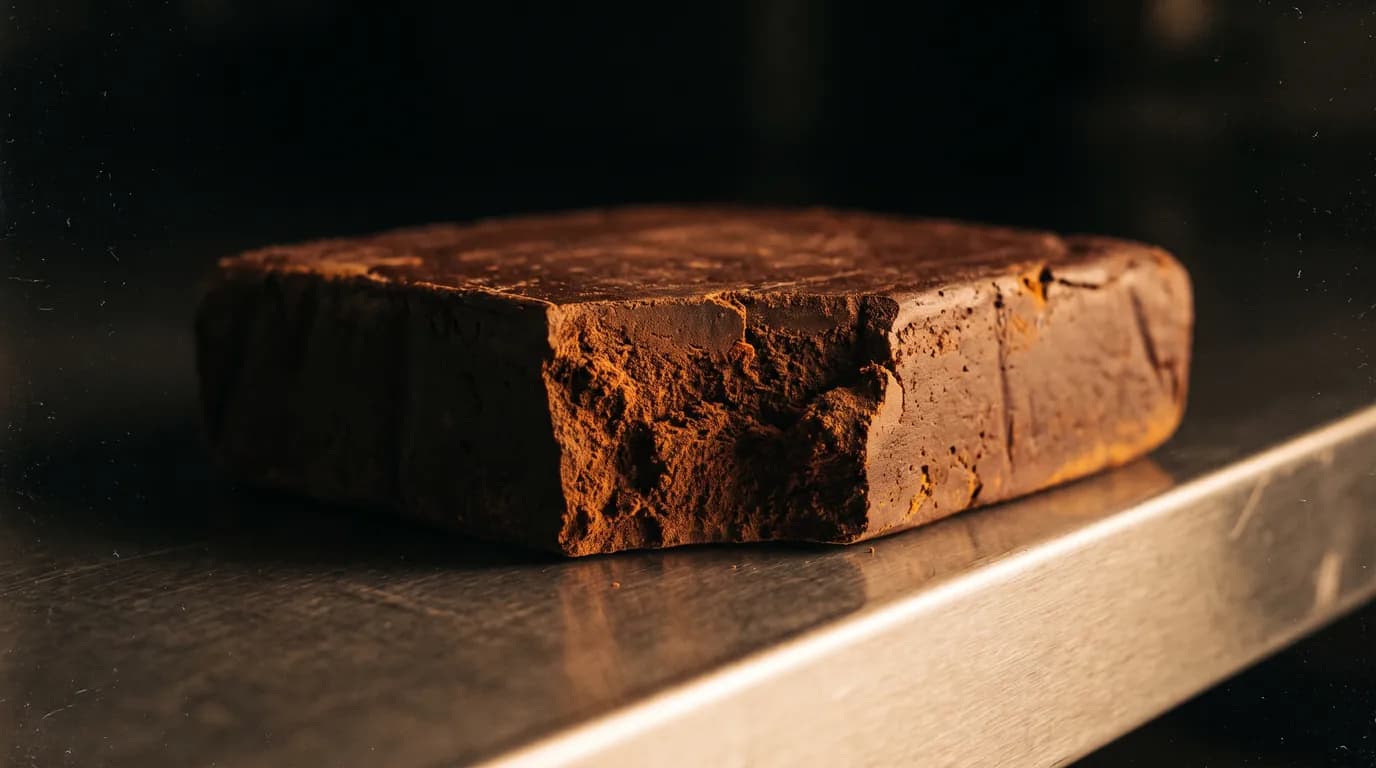
Table of Contents
- 01What Defines Ceremonial Grade Cacao?
- 02The Science of the Lipid Carrier and Bioactive Compounds
- 03The Sourcing Protocol: Ancestral Heritage and Agronomy
- 04Cayambe Factory Processing and Formats
- 05B2B Commercial Terms and Logistics
- 06Specification Table for Ceremonial Paste
- 07Supplier Due Diligence for Ceremonial Cacao
In recent years, the demand for ceremonial cacao has expanded from niche wellness circles into a robust global market. For brands, distributors, and wellness businesses, sourcing high-grade ceremonial paste requires looking beyond standard agricultural metrics to verify processing integrity, chemical composition, and ethical relationships. This guide outlines the quality parameters, processing standards, and logistical requirements necessary to establish a reliable, high-purity B2B supply chain for ceremonial cacao.
What Defines Ceremonial Grade Cacao?
While 'ceremonial' is not a legally protected agricultural term like 'organic,' the specialty B2B industry has established strict criteria to distinguish authentic ceremonial paste from standard industrial cocoa liquor. The differences reside in the botanical variety, the preservation of natural lipids, and the temperature control during roasting and milling. Sourcing decisions must prioritize these specifications to ensure the product meets the therapeutic expectations of end consumers.
- 100% Pure Cacao: The paste must contain only one ingredient: raw, stone-ground cocoa beans. No sugars, emulsifiers, vanilla, or dairy are permitted. The product must remain in its unrefined, natural state.
- Natural Cocoa Butter Intact: The fat content must not be separated, pressed, or defatted. Ceremonial cacao relies on the natural fats (around 52-54% cocoa butter) to act as a lipid carrier. This slow-release mechanism ensures that the active chemical compounds are absorbed gradually by the body.
- Traditional Post-Harvest and Mild Roasting: Beans undergo controlled fermentation and drying, followed by a light roast at low temperatures (typically below 110°C). This protects delicate bioactive compounds, such as theobromine and antioxidants, from thermal degradation.
- Stone-Ground Milling: The beans are ground in traditional granite stone mills (melangeurs) at low speeds to prevent friction-induced heating, preserving the natural volatile terpene profile.
The Science of the Lipid Carrier and Bioactive Compounds
The therapeutic efficacy of ceremonial cacao is directly linked to its chemical integrity. The primary active alkaloid is theobromine (3,7-dimethylxanthine), which acts as a cardiovascular stimulant and smooth muscle relaxant. Unlike caffeine, which stimulates the central nervous system and can trigger cortisol release (leading to jitteriness and energy spikes), theobromine dilates blood vessels and increases blood flow, placing a gentle demand on the heart. This creates a warm, grounding physical sensation that facilitates deep focus and relaxation during meditation.
For this compound to act effectively, the natural cocoa butter must remain fully intact. The fats coat the stomach lining and slow the digestion and absorption of theobromine, providing a long-lasting, stable release of energy over 3 to 4 hours without the sudden crash associated with synthetic stimulants or caffeine. Additionally, ceremonial cacao contains trace amounts of anandamide (the "bliss molecule") and L-tryptophan, a precursor for serotonin synthesis. High-temperature industrial milling, which routinely exceeds 75–80°C in high-speed pin or ball mills, degrades these sensitive neurochemicals, rendering the resulting liquor biochemically inert compared to stone-ground paste.
The Sourcing Protocol: Ancestral Heritage and Agronomy
Our ceremonial cacao is produced under a strict quality protocol developed by agronomist Andrea Dávila. This protocol blends traditional Kichwa agricultural practices with modern agronomic safety, ensuring a clean, potent, and traceable raw material. The beans are sourced from our network of approximately 100 allied farms across Manabí, Esmeraldas, and Pichincha, located at altitudes ranging from 0 to 800 meters. We have collaborated with these growers for ~6 years, maintaining relationships based on fair pricing and mutual trust without formal exclusive contracts.
Under Andrea Dávila's protocol, the cacao trees are cultivated in biodiversity-rich forest gardens (Chacras) without the use of synthetic agrochemicals. The fertilization is managed entirely with organic inputs, including compost, liquid bio-fertilizers (biol), and mountain microorganisms. During the harvest, traditional customs—such as harvesting songs—are maintained to honor the heritage of the Nacional Arriba crop. The post-harvest fermentation is conducted in local wooden boxes for 5 to 6 days, followed by sun-drying on wooden beds to slowly reduce moisture to a stable 7.0%. Sourcing from these specific provinces creates a complex flavor profile: Manabí provides jasmine floral notes, Esmeraldas adds red fruit accents, and Pichincha introduces herbal and woody complexities.
Cayambe Factory Processing and Formats
After post-harvest, the dried beans are transported to our specialized processing factory located in Cayambe, Pichincha province. Cayambe's cool climate is ideal for managing temperature during the delicate milling stage. The beans are sorted, winnowed to remove the husks, and slowly ground in granite stone mills. The temperature of the paste is monitored continuously to ensure it never exceeds 45°C, preserving the natural fats, enzymes, and antioxidants.
Because of its artisanal nature and strict adherence to Andrea Dávila's protocol, our ceremonial cacao is a limited-run product. We produce only 4 to 6 metric tons per production cycle, meaning it is not scalable to full container shipments. Instead, we offer the paste in two commercial formats tailored for B2B buyers:
- 3 kg Blocks (Cold Chain Required): These solid blocks are ideal for wellness centers and facilitators who shave the paste for ceremonies. Due to the high, unrefined fat content, this format must be shipped and stored under strict cold-chain conditions (14–16°C) to prevent melting, fat separation, or blooming.
- 25 kg Blocks (Room Temperature): Designed for distributors or brands that melt and repackage the paste. This format is more resilient and can be shipped at ambient temperatures in sturdy food-grade bulk packaging, though exposure to direct heat must still be avoided.
B2B Commercial Terms and Logistics
Establishing a wholesale partnership requires clear logistical agreements. For B2B buyers looking to evaluate our ceremonial paste, we provide representative samples from 1 to 5 kg. These samples are dispatched within ~3 business days if stock is available in our warehouse, with international courier freight costs (DHL or FedEx) covered by the buyer. This allows your team to perform sensory evaluations and laboratory testing before committing to a larger purchase.
Our standard payment terms for wholesale orders are structured on a B2B basis: a 50% advance deposit via SWIFT bank transfer upon contract signature, and the remaining 50% balance cleared against presentation of shipping documents (including the Bill of Lading, DAE, and Phytosanitary Certificate). For regular clients with recurring monthly allocations, payment terms can be negotiated. We maintain continuous Good Manufacturing Practices (BPM/GMP) monitoring at our Cayambe facility to guarantee food safety and physical purity, backed by our active FDA registration.
We do not hold active USDA Organic or EU Organic certifications for this limited-run product, but we can arrange organic certification under contract for committed annual volumes. For European Union buyers, heavy metal compliance is a critical parameter. We can commission a lot-specific ICP-MS heavy metal analysis in an accredited laboratory on request and at the buyer's cost, delivering the certified analysis report before the container is sealed and shipped at the Port of Guayaquil. For more detailed specifications on EU regulations, please read our article on EU cadmium limits for cacao.
Specification Table for Ceremonial Paste
| Parameter | Specification Standard |
|---|---|
| Ingredient | 100% Raw Nacional Arriba Cacao Beans |
| Fat Content (Cocoa Butter) | 52% - 54% (unseparated, natural fats) |
| Milling Method | Slow granite stone-milling (< 45°C) |
| Roasting Temperature | Low-temperature flash roast (< 110°C) |
| Sourcing Network | 100 allied farms in Manabí, Esmeraldas, Pichincha |
| Production Limit | 4 to 6 metric tons per cycle (artisan batch) |
Supplier Due Diligence for Ceremonial Cacao
When selecting a ceremonial cacao partner, due diligence must cover both laboratory metrics and field practices. Ask your prospective supplier to confirm: (1) whether they operate their own processing factory or rely on third-party industrial plants, (2) the milling method used and the temperature reached during grinding, (3) the exact farm origin of the beans, and (4) if they can provide lot-specific traceability linking the block back to the harvest batch. At El Dulce Origen, we maintain complete control over this loop, providing wellness businesses with the transparency needed to build trust with their clients.
To review our specification sheets, discuss private label packaging, or request a sample for your lab, contact our trade team. We respond to all commercial inquiries within one business day.
Facilitators buying for a sacred cacao ceremony and brands building product lines around chocolate rituals are asking the same question of a supplier, in different words: can this material be traced, and can it be repeated. Neither term is a product category we grade against, and we do not make claims about ceremonial or spiritual properties. What we can document is what the specification covers: full-fat mass from fermented and dried beans of an identified origin, no defatting, no alkalization, no additives, with heavy-metal analysis for the lot, since this product is consumed neat and in relatively high single doses.
Buyers asking which is the best cacao for drinking are usually weighing fat content and bitterness rather than origin. Higher-fat mass gives a rounder, heavier cup and holds emulsion better when whisked; a more acidic origin reads as brighter and sharper. There is no universally best option, so the practical approach is to run two or three origins through your own preparation method at the dose you actually serve, and pick against that rather than against a tasting note written for a bar.
The comparison ceremonial cacao vs regular cacao has no regulatory basis, which is exactly why it needs a straight answer. There is no separate grade, no certification and no compositional standard behind the word ceremonial; what distinguishes the products sold under that label is that they are full-fat mass rather than powder, kept unalkalized and undefatted, usually from an identified origin, and portioned for direct preparation. Everything else, from the packaging to the story, is a commercial choice. A buyer comparing offers should therefore compare fat content, origin traceability and heavy-metal results, because those are the only variables that differ verifiably.
Follow-on searches such as where to buy ceremonial cacao, best ceremonial cacao powder and ceremonial cacao reviews are consumer-side rather than trade-side, and they matter to a B2B buyer for one reason: they define what your own customers will compare you against. If your line is built on a wholesale mass from origin, the two claims you can defend are traceability and lot analysis. Note also that most of the consumer demand is for mass or paste rather than powder, so a brief asking for ceremonial powder is usually asking for the wrong format.
Adjacent demand shows up as cacao ceremony cups, which is a service-format question rather than a raw-material one, but it affects the order: the serving size a facilitator uses determines how the mass should be portioned and packed, whether in blocks to be weighed, pre-portioned discs, or bulk for a brand that portions in-house. Deciding that before the first shipment saves a repack later, and it changes the packaging specification more than it changes the product.
Two variants worth separating are criollo ceremonial cacao and raw cacao ceremony. The first stacks a scarce variety onto a format, and the varietal claim should be verified the same way as anywhere else, through plantation origin and lot separation rather than assertion, because scarcity and price make it the most commonly overstated claim in this category. The second describes preparation rather than product: mass that has not been conventionally roasted, which needs a temperature ceiling in the specification and a microbiological limit agreed in advance, since the roast normally handles microbial reduction.
Consumer-side searches such as cacao ceremony benefits and what is the best ceremonial cacao shape what your buyers will ask you, and both invite claims a supplier should not make. Our position is narrow on purpose: we document composition, origin and lot analysis, and we do not make wellness or spiritual claims about the material. A brand that wants to differentiate has more defensible ground in traceability, single-origin lots and published heavy-metal results than in effects it cannot substantiate.
Two more format-specific requests: organic ceremonial cacao powder and ceremonial cacao mug. The first mixes categories, since the ceremonial format is mass rather than powder, and a brief asking for certified powder in this segment usually needs re-scoping before it is quoted. The second is merchandise rather than raw material, but it matters commercially, because brands in this category frequently sell the vessel alongside the cacao and the serving size of that vessel is what should drive the portioning of the mass you order from us.
Ceremonial Paste
Interested in sourcing this product directly from our factory in Cayambe, Pichincha?
Frequently Asked Questions About This Topic
What is the difference between cacao liquor and ceremonial paste?
While similar, ceremonial paste requires low-temperature roasting and stone-milling to preserve active nutrients, whereas industrial liquor is often processed at high heat.
Do you offer bulk packaging for private label brands?
Yes. We supply ceremonial paste in 1kg blocks or discs, packed in bulk cartons ready for private labeling.
Related articles
From Bean to Brick: The Artisanal Process of Making Ceremonial Cacao Paste
Follow the journey of Nacional Arriba cacao beans as they are fermented, dried, lightly toasted, and stone-ground into pure ceremonial paste.
Read ArticleCeremonial Cacao Dosage, Preparation, and Sensory Effects: A B2B Guide
An essential B2B guide for wellness facilitators. Learn correct ceremonial cacao dosages, preparation methods, and the science of theobromine.
Read ArticleCeremonial Cacao Recipe: How to Prepare It Step by Step
A practical, step-by-step recipe for ceremonial cacao: the correct paste-to-water ratio, ideal temperature, whisking technique, and variations for facilitators.
Read Article