How Much Does a Chocolate Manufacturing Plant Cost?
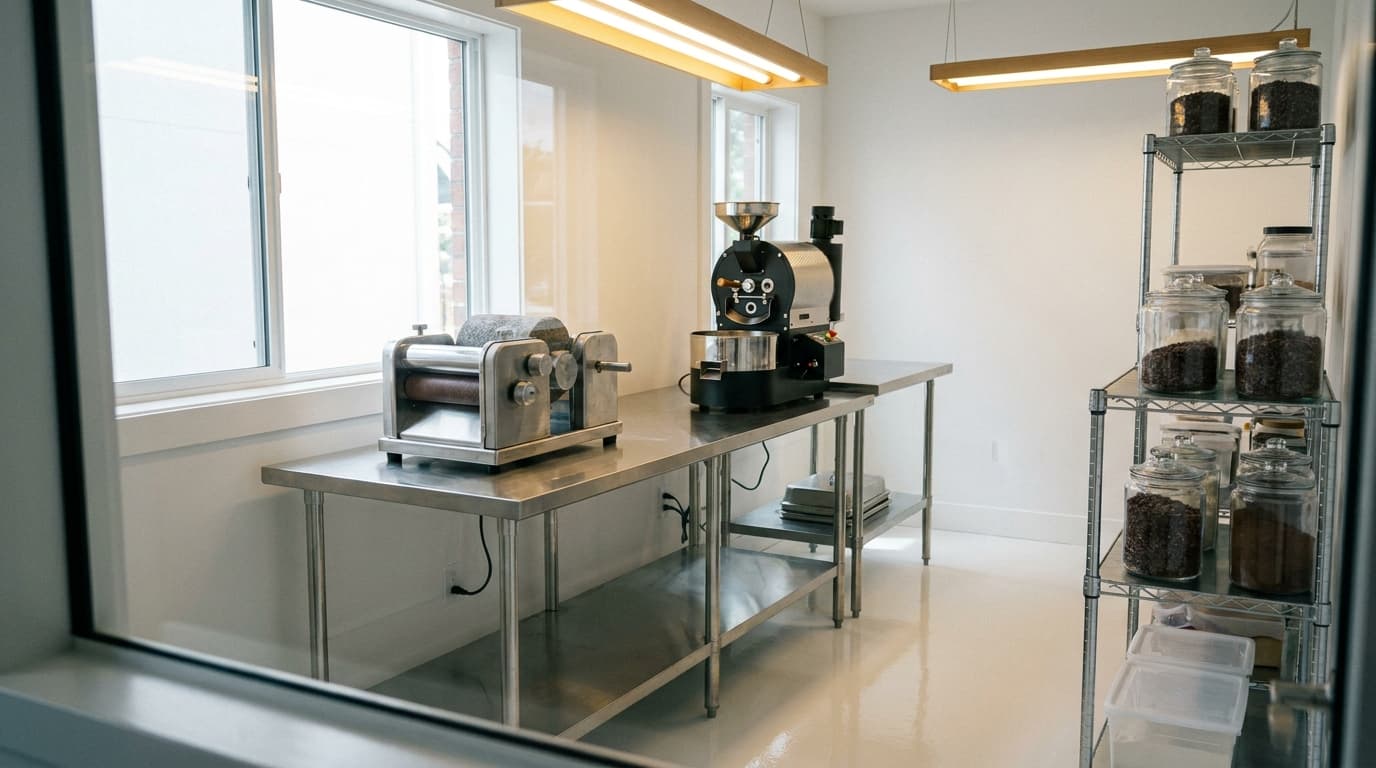
Table of Contents
- 01Why "How Much Does a Chocolate Plant Cost" Has No Single Answer
- 02The Five Cost Drivers a Banker Will Actually Ask About
- 03Small-Batch vs. Industrial: Where the Cost Curve Bends
- 04Turning These Numbers Into a Bankable Business Plan
- 05Where a Diagnostic Fits Before You Spend Anything
- 06Financing Structures That Actually Fund a Plant
- 07Common Budget-Blind Spots First-Time Founders Miss
- 08Phasing the Investment Instead of Building It All at Once
- 09The Costs That Never Appear on the Machinery Quote
"How much does it cost to start a chocolate business" and "chocolate manufacturing plant cost" are two of the most searched questions in this industry, and neither has a single honest answer — the range between an artisanal bean-to-bar workshop and an industrial couverture plant spans more than an order of magnitude. What follows is not a number, because a credible one cannot be given without a diagnostic specific to a project. It is the breakdown a banker, investor or serious co-founder will actually want to see before writing a check, and it is the same breakdown a proper chocolate plant setup diagnostic produces.
Why "How Much Does a Chocolate Plant Cost" Has No Single Answer
Two projects with the same word — "chocolate factory" — in their business plan can differ in cost by a factor of ten or more depending on target capacity, product mix (bars only vs. bars plus couverture plus derivatives), and how much of the facility already exists versus needs to be built from scratch. Any number quoted without those three inputs specified is not useful for planning.
The Five Cost Drivers a Banker Will Actually Ask About
- Target capacity. The jump from small-batch to industrial throughput does not scale linearly — it multiplies nearly every other line item, from equipment sizing to facility footprint to working capital.
- The equipment line. Roaster, winnower, grinder/refiner, conche, tempering, and moulding, depositing or packing equipment. This is usually the largest single capital category, and sizing decisions here dominate the rest of the budget.
- The facility itself. Food-grade floors, walls, drainage, utilities and hygiene zoning are routinely underestimated by first-time founders, who budget for machines and treat the building as an afterthought.
- Certification and documentation. Implementing GMP, and FSSC 22000 or ISO 9001 where buyers require them, consumes both external fees and significant internal staff time — it is a cost driver, not a line item you add at the end.
- Working capital. Cacao inventory and packaging need to be financed before the first sale closes; underestimating working capital is one of the most common reasons a well-built plant runs into cash trouble in its first year.
Small-Batch vs. Industrial: Where the Cost Curve Bends
An artisanal bean-to-bar line — compact roaster, winnower, stone or tabletop melangers — can reach a real market with a fraction of the capital an industrial couverture line requires, provided the food-safety fundamentals are treated with the same seriousness at small scale as at large scale. The practical question for most founders is not "industrial or artisanal" but "artisanal now, with a layout that doesn't need to be rebuilt when volume justifies scaling up." Designing that growth path in from the start avoids paying for the same square footage or documentation twice.
Turning These Numbers Into a Bankable Business Plan
A business plan that investors take seriously is not a narrative with a revenue projection attached — it rests on a technical core: target capacity, process design, an equipment list with real specifications, facility requirements, and a certification roadmap with a realistic timeline. Once those five inputs are fixed, the financial model stops being a guess and becomes engineering translated into a spreadsheet. This is also, not coincidentally, the exact output of a proper plant diagnostic — the numbers a bank or investor will actually scrutinize are produced as a byproduct of designing the plant correctly, not as a separate exercise.
Where a Diagnostic Fits Before You Spend Anything
The single highest-leverage step in this entire process is the one that costs the least: a diagnostic that fixes target capacity, product mix and facility scope before any equipment purchase order or lease is signed. Our plant setup consulting starts here specifically because every other cost on this list is downstream of decisions this phase gets right or wrong.
Financing Structures That Actually Fund a Plant
Few projects of this kind are financed with pure founder equity. The most common structure blends founder capital to cover the diagnostic and initial design, long-term debt or equipment leasing for the machinery line — which can often be financed against the equipment itself as collateral rather than against the whole business — and, for projects with an associative or rural-impact component, concessional or development-bank funding (IDB, agroindustrial promotion lines) with more favorable rates and terms than commercial banking. The right mix depends on who the sponsor is: an individual founder typically builds a debt-plus-leasing structure; a producer association looking to build a shared plant fits better with concessional financing or public development funds, where the technical business plan described above is exactly the document that kind of fund requires to approve disbursement.
Whatever the structure, the common mistake is designing the financing before the plant — asking for a round number without the five-cost-driver breakdown behind it. A bank or fund evaluates the technical soundness of the file as much as the projected cash flow.
Common Budget-Blind Spots First-Time Founders Miss
Beyond the five core cost drivers, there are line items that are minor individually but recurring in their ability to derail a timeline: permitting and environmental licensing lead times, which in many countries take months and only run in parallel with construction if they are started early; critical spare-parts inventory for imported equipment, whose absence can stop an entire line for weeks while a part ships from the manufacturer; and staff training before launch, which if compressed ends up getting resolved expensively during the first real production runs instead. No single one of these line items radically changes the total budget on its own, but together they are the difference between an orderly launch and one with cash surprises in its first months of operation.
Phasing the Investment Instead of Building It All at Once
Not every cost on this list has to be committed on day one. A common way to control initial capital exposure is phasing: sizing the facility's layout, drainage, and utilities for the target capacity from the start (since retrofitting a building is far more expensive than retrofitting a purchase order), while sequencing the equipment purchase itself in stages — launching with core roasting, grinding, and tempering equipment at a moderate throughput, then adding a second production line or capacity upgrade once the first phase's sales validate demand. This approach trades some near-term efficiency for a materially lower initial capital requirement and a shorter runway to first revenue, which matters most for a founder financing the project without a committed anchor buyer already in place.
The Costs That Never Appear on the Machinery Quote
The equipment invoice is the visible part of the budget and rarely the largest. Around it sit civil works and floors that survive fat and hot water, utilities sized for the line (compressed air, chilled water, extraction), a temperature-controlled room for stabilisation and storage, a small QC and cupping area, and the electrical work needed to feed the tempering and cooling equipment without voltage dips. None of these show up in a machine quotation, and all of them are on the critical path to the first commercial batch.
The other invisible line is working capital. A chocolate plant has to fund cacao inventory, packaging bought in minimum print runs, and the weeks between production and payment by the first customers. Projects that budget only the machinery tend to start production and discover that the cash needed to keep it running was never part of the plan.
Cacao Beans
Interested in sourcing this product directly from our factory in Cayambe, Pichincha?
Frequently Asked Questions About This Topic
Is it cheaper to buy a used chocolate production line?
Used equipment can lower the capital cost of the machinery line, but it shifts risk into maintenance, spare-part availability and whether the equipment can still be sized correctly for your target capacity and hygiene zoning requirements. It needs the same diagnostic sizing as new equipment, just with an added inspection step.
How long before a chocolate plant breaks even?
It depends entirely on capacity utilization and sales channel, which is why a credible business plan models these explicitly rather than assuming a generic payback period. A plant selling into contract manufacturing from day one breaks even on a different timeline than one building a retail brand from scratch.
What's the minimum viable scale for a chocolate factory?
There is no fixed minimum — a small-scale artisanal line with a compact roaster, winnower and stone or tabletop melangers can be commercially viable, provided food-safety fundamentals are treated as seriously as at industrial scale and the layout leaves room to grow without a full rebuild.
Related articles
Chocolate Manufacturing Equipment: Roaster to Enrober Explained
A plain-language walkthrough of every machine in a chocolate production line — roaster, winnower, melanger, conche, tempering and moulding — and how they fit together.
Read ArticleFDA Food Facility Registration for Chocolate & Cacao Exporters
What FDA food facility registration actually requires, how it differs from FSMA compliance and FSSC 22000/GMP, and why it matters for chocolate exporters.
Read ArticlePrivate Label vs. White Label vs. Contract Manufacturing, Explained
Five overlapping terms — private label, white label, contract manufacturing, toll manufacturing, co-packing — and what actually separates them for a chocolate brand.
Read Article