Chocolate Manufacturing Equipment: Roaster to Enrober Explained
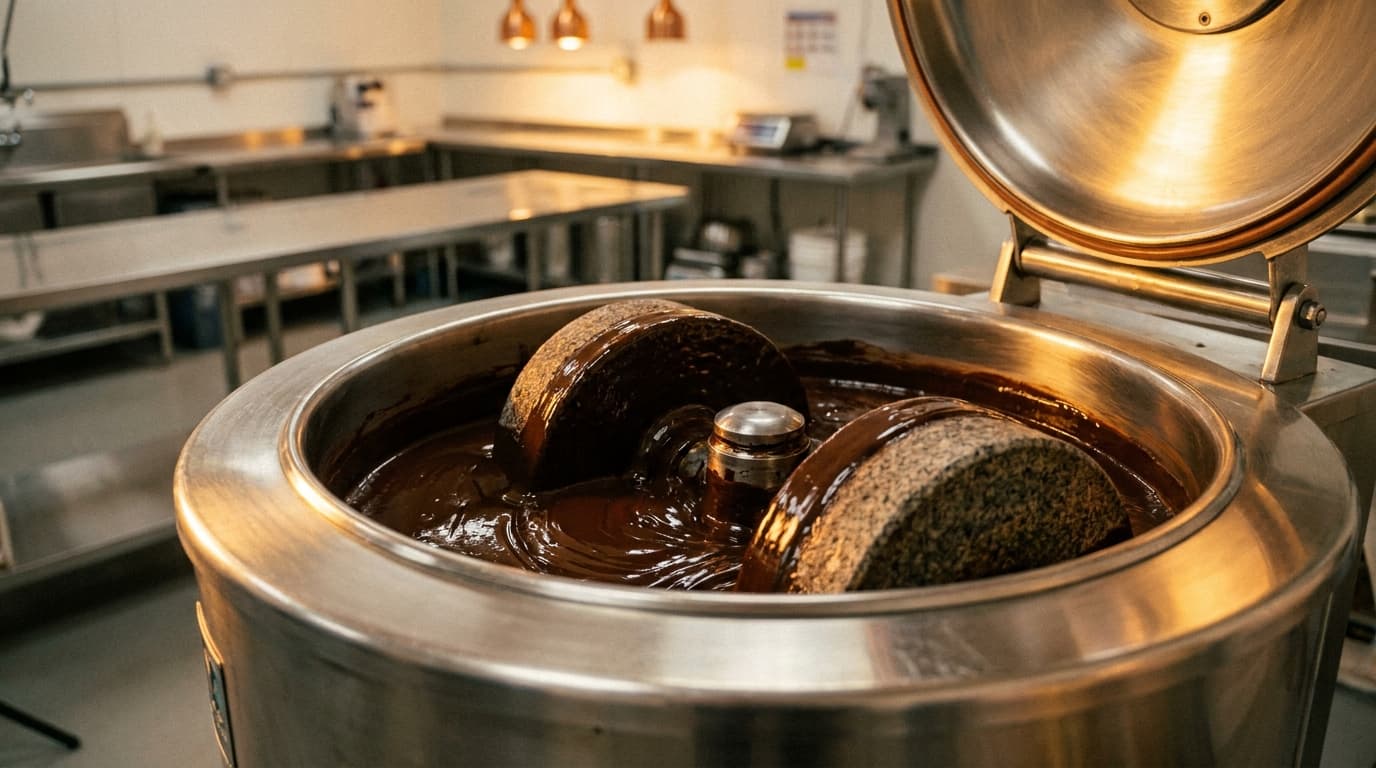
Table of Contents
- 01The Core Line, Machine by Machine
- 02Cocoa Butter Pressing: A Separate Line
- 03Sizing Equipment to Your Actual Production Volume
- 04Why Buying the Machine First Backfires
- 05Where Independent Sourcing Advice Comes In
- 06Utilities and Facility Requirements Equipment Sizing Depends On
- 07New vs. Used Equipment: What Actually Changes in the Evaluation
- 08Rated Capacity Is Not Real Output
Anyone pricing out a chocolate plant setup eventually runs into the same wall of unfamiliar machine names: melanger, winnower, conche, enrober. Search interest in this equipment is high, but most buying guides are written by equipment resellers with an obvious incentive to steer the recommendation. This is a plain-language map of what each machine actually does, in the order cacao passes through them, so you can evaluate a quote or a supplier's pitch on its merits instead of on marketing.
The Core Line, Machine by Machine
A bean-to-bar chocolate line follows the cacao through six stages, and a distinct machine (or machine category) handles each one:
- Roaster: develops flavor and loosens the husk from the nib. Roasting profile (time, temperature, airflow) is where most of a chocolate's final flavor is actually decided — more than any downstream step.
- Winnower: cracks the roasted bean and separates the lightweight husk from the nib using airflow. A poorly tuned winnower either leaves husk fragments in the nibs (grit in the final bar) or blows nib fragments out with the husk (yield loss).
- Melanger / grinder-refiner: grinds nibs into cocoa liquor and, with sugar and other ingredients added, refines the particle size down to the smoothness the palate reads as chocolate rather than gritty paste. This is usually the single largest capital line item after the roaster.
- Conche: agitates the refined mass under controlled heat for an extended period, driving off unwanted volatile acids and rounding out flavor and mouthfeel. Conching time is a real production-cost lever: longer conching improves quality but ties up capacity.
- Tempering: controls the crystallization of cocoa butter so the finished chocolate has snap, gloss and a clean melt instead of a dull, soft, bloom-prone surface. Commercial tempering machines automate a process that is genuinely difficult to do consistently by hand at volume.
- Moulding, depositing or enrobing: shapes the tempered chocolate into its final form — bars in moulds, drops or centers from a depositor, or a coating layer from an enrober for filled or dipped products.
Cocoa Butter Pressing: A Separate Line
If the end goal includes selling cocoa butter and cocoa powder as standalone products, not just as chocolate ingredients, a hydraulic cocoa press is a separate piece of equipment that splits cocoa liquor into butter and press cake, which is then pulverized into powder. This line is optional for a pure chocolate-bar business but becomes relevant fast for anyone planning to supply cocoa butter or cocoa powder to other manufacturers.
Sizing Equipment to Your Actual Production Volume
The single most common and most expensive mistake in this list is buying industrial-capacity equipment for artisanal-scale production, or the reverse. A tabletop melanger sized for a craft workshop cannot be scaled into an industrial run by simply buying three more of them — the conching, tempering and moulding stages downstream need to match, and food-safety documentation scales with throughput, not with machine count. Sizing the full line correctly from day one, against a realistic capacity target, is what a proper plant design phase is for — see the roadmap in how to start a chocolate factory for how that sequencing works.
Once the machine list is clear, the harder question is how the line fits a building, a utilities budget and a food-safety certification. That work — layout, process flow and FSSC 22000/GMP readiness for industrial cocoa installations — is what our plant setup service covers.
Why Buying the Machine First Backfires
Equipment sellers are, reasonably, in the business of selling equipment, not of telling a prospective buyer that their facility's floor drainage, hygiene zoning or electrical capacity won't support the line they're about to order. The projects that run into expensive rework are almost always the ones where equipment was purchased before the facility layout and process flow were designed around it, rather than after. Reversing that order — plant design first, equipment specification second — is a small change in sequencing that prevents most of the costly surprises.
Where Independent Sourcing Advice Comes In
Because our own business is cacao supply, not equipment sales, our recommendations on machinery brands and specifications are not tied to a commission on any particular manufacturer's line. When a plant setup engagement reaches the equipment-sourcing stage, we broker introductions on a transparent commission basis when asked, but we hold no inventory and have no stake in steering a client toward one brand over another.
Utilities and Facility Requirements Equipment Sizing Depends On
An equipment quote in isolation is incomplete — every machine on this line carries a facility requirement that has to be confirmed before the purchase order is signed. Roasters and conches both draw significant electrical load and generate heat that the room's ventilation and cooling design must absorb; a conche running for hours at controlled temperature in a poorly ventilated room pushes ambient heat into the rest of the production floor and can compromise tempering in an adjacent zone. Tempering machines and cooling tunnels need reliable chilled water or glycol supply, and floor loading matters more than most first-time buyers expect — a industrial-scale melanger or roaster is heavy enough that it needs a structural floor assessment, not just a flat surface. Compressed air, typically used for pneumatic conveying and some moulding or depositing equipment, is another utility line that gets missed in early budgets. None of this is exotic engineering, but treating it as an afterthought after the machines are already ordered is exactly the sequencing mistake described above.
New vs. Used Equipment: What Actually Changes in the Evaluation
Used equipment can meaningfully lower the capital line item, and a well-maintained used roaster or melanger from a reputable manufacturer can run for years in a new facility. What changes is the due-diligence burden: a used machine needs a mechanical inspection covering wear on grinding stones or refiner rollers, motor condition, and — for anything touching product directly — a hygienic-design check against current food-safety standards, since older equipment was sometimes built before current GMP and FSSC 22000 hygienic design expectations existed. Spare-part availability is the other practical filter: equipment from a manufacturer still in business and still supporting that model line is a very different risk profile than a discontinued machine with no parts supply chain. For a first plant, mixing new equipment at the bottleneck stages (typically the melanger/refiner and conche, where quality is decided) with used equipment at less quality-sensitive stages is a common way to control capital cost without compromising the cup — or in this case, the bar.
Rated Capacity Is Not Real Output
Equipment quotations state capacity per machine, and a line planned by adding those numbers together will not deliver what the spreadsheet promised. Real output is set by the slowest step and by how long the line actually runs: changeovers between recipes, cleaning between allergen groups, tempering stabilisation after a stop, and the conche cycle, which in most small and mid-size lines is the step that fixes the rhythm of everything else. A conche sized for the average batch turns into the bottleneck as soon as the mix of SKUs widens.
Before signing, it is worth converting every quoted capacity into hours of occupancy for a realistic week of production, including sanitation and changeovers. The exercise usually shows either that one machine is oversized against the rest of the line, or that the plan depends on a shift pattern nobody has budgeted for.
Cacao Beans
Interested in sourcing this product directly from our factory in Cayambe, Pichincha?
Frequently Asked Questions About This Topic
What's the difference between a melanger and a conche?
A melanger grinds the nibs (with sugar and other ingredients) down to a smooth particle size — it builds the chocolate's texture. A conche then agitates that refined mass under heat for an extended period to develop flavor and mouthfeel and drive off unwanted volatile acids. Some machines combine both functions; larger industrial lines typically run them as separate stages.
Do I need a separate roaster if I buy pre-roasted nibs?
No — buying pre-roasted, pre-winnowed nibs from a supplier lets you skip the roaster and winnower entirely and start your line at the melanger stage. This is a common way for a private label or contract manufacturing operation to launch with a smaller equipment footprint, at the cost of not controlling the roast profile yourself.
Can the same line handle bean-to-bar and couverture production?
Largely yes up through the conche — the roasting, winnowing, grinding and conching stages are shared. Where they diverge is downstream: bar production needs tempering and moulding, while couverture for other manufacturers is typically packed as blocks or callets straight after conching and tempering, without the moulding/packaging line a retail bar requires.
Related articles
FDA Food Facility Registration for Chocolate & Cacao Exporters
What FDA food facility registration actually requires, how it differs from FSMA compliance and FSSC 22000/GMP, and why it matters for chocolate exporters.
Read ArticleHow Much Does a Chocolate Manufacturing Plant Cost?
There is no single number — but there are five cost drivers every banker or investor will ask about. A realistic breakdown, without invented figures.
Read ArticlePrivate Label vs. White Label vs. Contract Manufacturing, Explained
Five overlapping terms — private label, white label, contract manufacturing, toll manufacturing, co-packing — and what actually separates them for a chocolate brand.
Read Article