Ecuador vs Peru Cacao Beans: B2B Origin Comparison
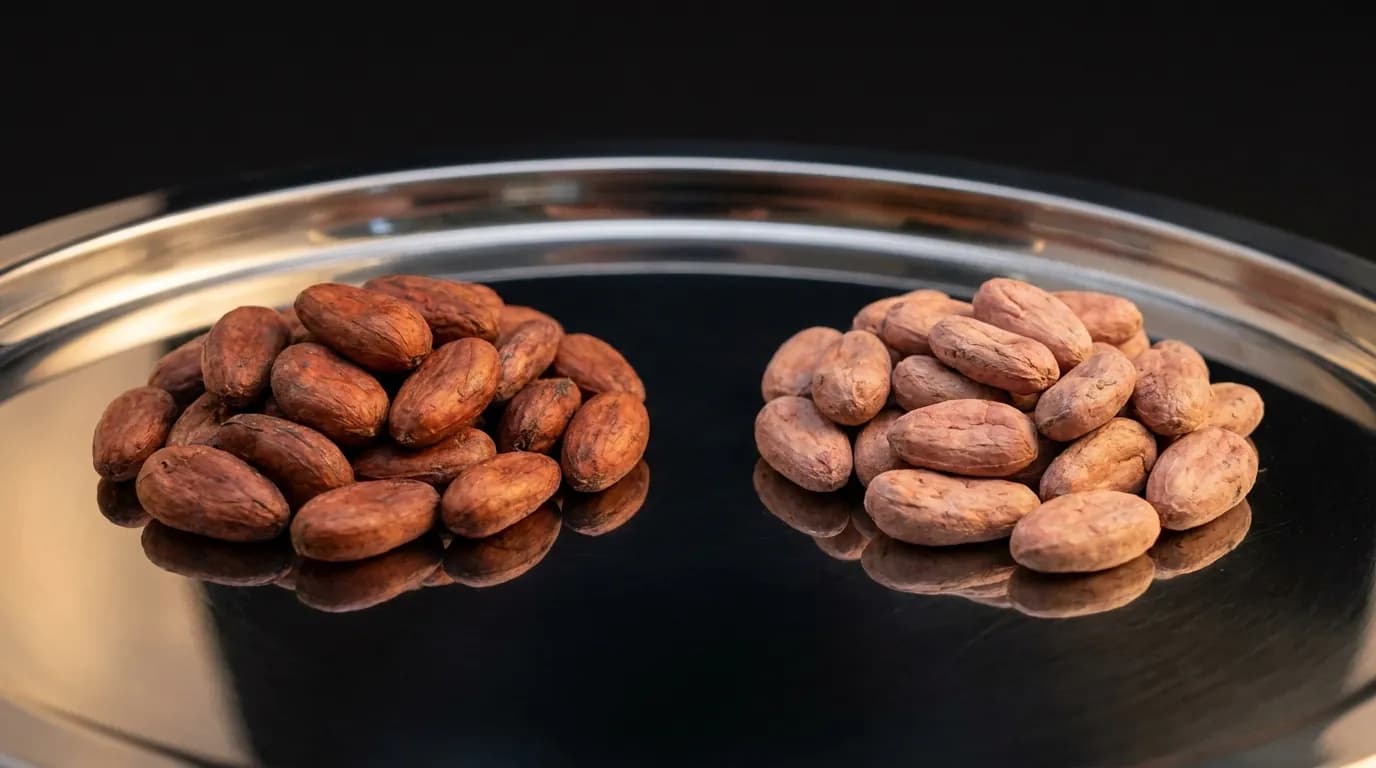
Table of Contents
- 01Geographic Shared Heritage: The Andean-Amazonian Cacao Corridor
- 02Sensory Differentiation: Floral Elegance vs. Fruity Acidity
- 03Supply Volume, Production Scale and Batch Consistency
- 04Heavy Metal Cadmium Compliance and Mitigation Strategies
- 05Port Infrastructure and Maritime Export Logistics
- 06Physicochemical Rheology and Industrial Processing Performance
- 07Analytical Laboratory Protocol for Destination Quality Inspection
- 08Organic Certification Boundaries vs. Smallholder Agroforestry Reality
- 09Palletization, Container Logistics and Ocean Freight Protection
- 10Supplier Qualification Framework and Technical Contracting
- 11EU Deforestation Regulation (EUDR) Compliance and Traceability
- 12Commercial Execution, Hedging and Risk Management
- 13Conclusion and Strategic Procurement Recommendation
In the global chocolate manufacturing sector and the specialty bean-to-bar market, origin selection is a critical, high-stakes strategic decision for procurement officers, formulation scientists, and master chocolatiers alike. South America's Andean region represents the biological birthplace of Theobroma cacao, with Ecuador and Peru standing as the two premier exporters of certified fine aroma cacao. While both nations share rich Amazonian heritage and exceptional genetic biodiversity, their technical offerings differ significantly in flavor profiles, batch consistency, supply volume, heavy metal management, and port logistics. Evaluating fine aroma cacao beans from these two origins enables procurement teams to optimize product formulation and supply chain resilience across European and North American markets.
This objective B2B comparative guide evaluates the key similarities and critical operational differences between Ecuadorian and Peruvian cacao beans for commercial food processors and industrial chocolate manufacturers.
Geographic Shared Heritage: The Andean-Amazonian Cacao Corridor
Ecuador and Peru share unique geographic advantages that foster world-class cacao cultivation. Both countries encompass diverse agro-ecological zones, spanning coastal plains, high-altitude Andean valleys, and lush Amazonian rainforests. This microclimatic diversity supports rare heirloom cacao genetics that have evolved over millennia, producing beans with extraordinary aromatic complexity unavailable from West African origins.
Both nations emphasize sustainable agroforestry systems, where cacao trees are cultivated beneath native forest canopy alongside fruit trees, timber species, and leguminous nitrogen-fixing plants. This shade-grown approach preserves biodiversity, maintains soil organic matter, and protects fragile ecosystems, yielding beans with complex organoleptical character that commands significant premium pricing in specialty chocolate markets worldwide.
Sensory Differentiation: Floral Elegance vs. Fruity Acidity
The primary distinction between Ecuadorian and Peruvian cacao beans lies in their cup profiles and aromatic chemistry. Ecuadorian Arriba Nacional beans are world-famous for their distinct floral top notes, dominated by fresh jasmine, orange blossom, and wild flora, featuring a rich, creamy cacao body with low astringency and pleasant, rounded bitterness. Peruvian cacao, by contrast, is celebrated for bright, vibrant acidity with pronounced fruity top notes — citrus, red berries, passion fruit — accompanied by subtle herbal and spicy undertones. For detailed commercial purchasing guidance, consult our B2B guide on buying Ecuadorian cacao beans.
Supply Volume, Production Scale and Batch Consistency
For industrial buyers, supply volume and lot consistency are vital procurement considerations. Ecuador is the world's top exporter of fine aroma cacao, producing over 350,000 metric tons annually. Modern centralized post-harvest processing centers ensure remarkable batch-to-batch uniformity across multi-container orders. Peru produces approximately 160,000 metric tons annually, distributed among smallholder cooperatives in remote Amazonian regions (San Martín, Junín, Cusco). While offering exceptional micro-lot diversity, volume consolidation across large industrial contracts can present batch variation challenges requiring careful supplier management and additional quality screening steps at origin.
Heavy Metal Cadmium Compliance and Mitigation Strategies
European Regulation (EU) 2023/915 enforces strict maximum residue limits for cadmium ("Cd") in cocoa products at 0.80 mg/kg for 100% cocoa mass. Cadmium bioaccumulation occurs naturally in volcanic and alluvial soils across South America. Ecuador has implemented nationwide soil mapping and agricultural liming protocols, applying calcium carbonate ("CaCO3") to raise soil pH and reduce root absorption. Ecuadorian exporters conduct rigorous batch-level ICP-MS mass spectrometry testing prior to port dispatch, providing guaranteed Certificate of Analysis ("CoA") compliance for European importers, including detailed heavy metal screening reports issued by accredited ISO 17025 laboratories.
Peru faces comparable cadmium challenges in its volcanic growing regions. Mitigation programs rely heavily on smallholder education and regional liming campaigns, but the fragmented cooperative structure makes centralized batch-level verification more complex than Ecuador's consolidated export supply chains, which benefit from centralized post-harvest aggregation stations.
Port Infrastructure and Maritime Export Logistics
Logistical efficiency at origin impacts lead times, freight reliability, and container booking availability. The Port of Guayaquil handles over 85% of Ecuador's cacao exports, featuring specialized refrigerated container terminals ("reefer"), automated customs clearance, and direct feeder ocean routes to major European ports (Rotterdam, Hamburg, Antwerp) with competitive transit times of 16–20 days. Peru's Port of Callao offers modern container handling, but inland transport from remote Amazonian growing regions to the coast involves navigating complex Andean geography ("cordillera"), increasing inland freight costs and transit lead times by 5–8 days compared to Ecuador's coastal proximity advantages.
Physicochemical Rheology and Industrial Processing Performance
Processing cacao beans from Ecuador versus Peru reveals measurable differences in physical rheology during roasting, grinding, and conching. Ecuadorian Arriba Nacional beans possess a natural fat content between 52% and 55% with a consistent polymorphic Beta-V crystal setting point at 34°C–35°C. This uniform fat fraction yields predictable melt viscosity and excellent snap in finished chocolate bars. Peruvian beans, depending on regional genetics (Chuncho, Porcelana, or Amazonian Forastero hybrids), display wider fat content variance ranging from 48% to 54%. Formulators working with Peruvian micro-lots must dynamically adjust conching times, lecithin ("soy" or "sunflower") dosage, and temperature profiles to optimize flow properties and maintain uniform temper in automated molding lines.
Analytical Laboratory Protocol for Destination Quality Inspection
Upon discharge at European ports (Rotterdam, Hamburg, Antwerp), quality assurance laboratories perform rigorous analytical verification. Physical cut tests ("CT") evaluate fermentation completeness across 100-bean samples, requiring a minimum threshold of 75–80% fully fermented beans. Moisture content is measured via Karl Fischer titration, ensuring bean moisture remains strictly under 7.0% to prevent fungal Ochratoxin A ("OTA") development. Chemical screening using gas chromatography ("GC-MS") evaluates fatty acid profiles to confirm natural cocoa butter integrity. High-performance liquid chromatography ("HPLC") quantifies polyphenol and flavanol markers, verifying authentic antioxidant density. These standardized laboratory checks protect industrial chocolate manufacturers against batch inconsistency and hidden quality defects that would disrupt continuous production schedules.
Organic Certification Boundaries vs. Smallholder Agroforestry Reality
Understanding the distinction between certified organic cacao and traditional smallholder agroforestry is essential for strategic ("B2B") procurement. Certified organic cacao requires unbroken audit trails under USDA NOP or EU 2018/848 standards, with mandatory annual inspections verifying zero synthetic pesticide or chemical fertilizer applications over a three-year transition window, accompanied by official Transaction Certificates ("TC") for each shipment. However, many traditional Ecuadorian Arriba Nacional smallholders cultivate cacao within multi-species shade systems without chemical inputs. Industrial buyers can audit these supply chains through multi-residue pesticide screens and direct farm visits, securing clean botanical cacao while supporting sustainable smallholder livelihoods across Esmeraldas, Los Ríos, and Manabí provinces.
Palletization, Container Logistics and Ocean Freight Protection
Exporting raw cacao beans across transoceanic routes requires specialized containerization standards. Food-grade jute bags (60 kg or 69 kg capacity) containing raw beans are stowed on ISPM-15 heat-treated wood pallets, stretch-wrapped, and fitted with rigid corner guards to prevent stack displacement during ocean passage. Container walls and ceilings are lined with heavy desiccant blankets to absorb ambient moisture and mitigate sweat risk across tropical maritime zones. For processed cacao liquor blocks (25 kg each), climate-controlled reefer containers set precisely between 15°C and 18°C prevent melting and unwanted fat crystallization bloom during passage, guaranteeing pristine structural integrity upon arrival at European processing plants.
Supplier Qualification Framework and Technical Contracting
Establishing reliable origin supply requires rigorous vendor qualification protocols. Procurement teams must audit supplier certifications (FSSC 22000, ISO 22000) and enforce binding contract specifications covering physical bean count per 100 grams, moisture limits, heavy metal thresholds, and pesticide compliance. Demanding batch-specific Certificates of Analysis ("CoA") issued by ISO 17025 accredited laboratories ensures complete regulatory compliance. Forward supply agreements with minimum volume guarantees protect industrial buyers against seasonal harvest fluctuations that affect spot market availability, particularly during El Niño years affecting yields in coastal Ecuador and Peruvian Amazonia simultaneously.
EU Deforestation Regulation (EUDR) Compliance and Traceability
Under European Union Regulation 2023/1115 on deforestation-free supply chains ("EUDR"), cacao importers must demonstrate that all sourced beans originate from land not deforested after December 2020. Ecuador's consolidated cooperative structure enables full GPS-level geolocation traceability to individual farm parcels, providing importers with due diligence documentation compliant with EUDR Article 9 requirements. This traceability infrastructure is a measurable competitive advantage for Ecuadorian exporters over suppliers from regions with less formalized land registration systems.
Commercial Execution, Hedging and Risk Management
Navigating price volatility on global commodity exchanges (ICE New York and London) requires proactive risk management strategies. While benchmark futures contracts ("futures") hedge against broad market movements, fine aroma beans trade at physical differentials reflecting origin quality premiums, post-harvest care, and botanical rarity. Establishing forward purchasing contracts with reliable Ecuadorian aggregators protects food manufacturers against sudden price spikes. Diversifying across both Ecuadorian and Peruvian supply sources also provides portfolio resilience during localized climate events affecting yields.
Conclusion and Strategic Procurement Recommendation
Both Ecuador and Peru produce exceptional cacao beans serving distinct commercial applications. For craft chocolatiers seeking unique fruity micro-lots and vibrant single-origin character, Peru offers compelling flavor diversity. For industrial food processors requiring large-volume consistency, iconic floral elegance, streamlined export logistics, and EUDR-compliant traceability, Ecuadorian Arriba Nacional remains the premier choice. To request technical specifications, certificates ("CoA", "TDS"), and sample shipments, please contact our sourcing team.
A note on terminology: buyers searching for ecuador chocolate or cocoa from ecuador are often looking for a finished chocolate bar rather than the raw bean input covered in this comparison. El Dulce Origen supplies Nacional Arriba cacao beans, paste, powder, nibs and butter as B2B raw materials and co-manufacturing inputs; brands looking to launch a private-label chocolate bar made from Ecuadorian cacao should specify that finished-goods intent when they contact our sourcing team, since it changes the relevant specification sheet from bean-grade parameters to a finished-product formulation brief.
The question where does the best cocoa come from has no single answer, and any supplier who gives one is selling rather than advising. Origin sets the aromatic range, but fermentation and drying decide how much of that range survives into the bean; a well-processed lot from an ordinary origin will beat a badly fermented lot from a celebrated one, consistently. What origin does determine is the character you are buying towards, floral and fruity notes in Ecuadorian Nacional, different profiles elsewhere, and the practical criteria that follow are the same everywhere: fermentation index, moisture, defect count and whether the supplier can repeat the lot next harvest.
Buyers comparing Peruvian material often encounter chuncho cacao, a native variety from the Cusco region prized for its aromatic intensity and produced in genuinely small volumes. It is a legitimate fine-flavor cacao and not a competitor to Nacional in any practical sense, because the quantities available rarely support industrial programmes. Where it appears in an offer at container scale, the varietal claim deserves the same verification as any other: plantation origin, lot separation and documentation rather than assertion.
Cacao Beans
Interested in sourcing this product directly from our factory in Cayambe, Pichincha?
Frequently Asked Questions About This Topic
Is Ecuador known for cacao?
Yes. Ecuador is globally recognized as the leading exporter of fine aroma cacao, producing over 60% of the world's Fine Aroma cacao supply, renowned for its distinctive Arriba Nacional floral profile.
What is the difference between Ecuadorian and Peruvian cacao?
Ecuadorian cacao is famous for its iconic floral jasmine top notes, creamy body, and low acidity, whereas Peruvian cacao often exhibits bright fruity acidity, berry notes, and subtle spicy undertones.
Which country has the best cacao beans?
Both origins offer world-class cacao. For industrial buyers seeking consistent high-volume supply of fine aroma beans, Ecuador provides superior export infrastructure and EUDR-compliant traceability.
How do Ecuador and Peru manage cadmium compliance for EU exports?
Both nations map agricultural soils and enforce soil pH management. Ecuadorian exporters conduct ICP-MS batch screening to guarantee strict EU MRL compliance.
Related articles
How to Buy Cacao Beans from Ecuador: A B2B Importer's Step-by-Step Guide
A step-by-step walkthrough of sourcing, contracting, and shipping wholesale cacao beans from the Port of Guayaquil to global destinations.
Read ArticleEcuadorian Cacao Bean Grades Explained: Understanding ASE and ASSS Specs
Demystifying the commercial standards for exporting cocoa from Ecuador. Learn the physical and chemical differences between ASE and ASSS grades.
Read ArticleSinterklaas Chocolate B2B Sourcing: Timeline & Cocoa Liquor Specs
Industrial B2B procurement guide for cocoa liquor sourcing for the Dutch Sinterklaas season: planning, letters specs, and Rotterdam port logistics.
Read Article