What is Specialty Coffee? Understanding the SCA Standards & Quality Ladder
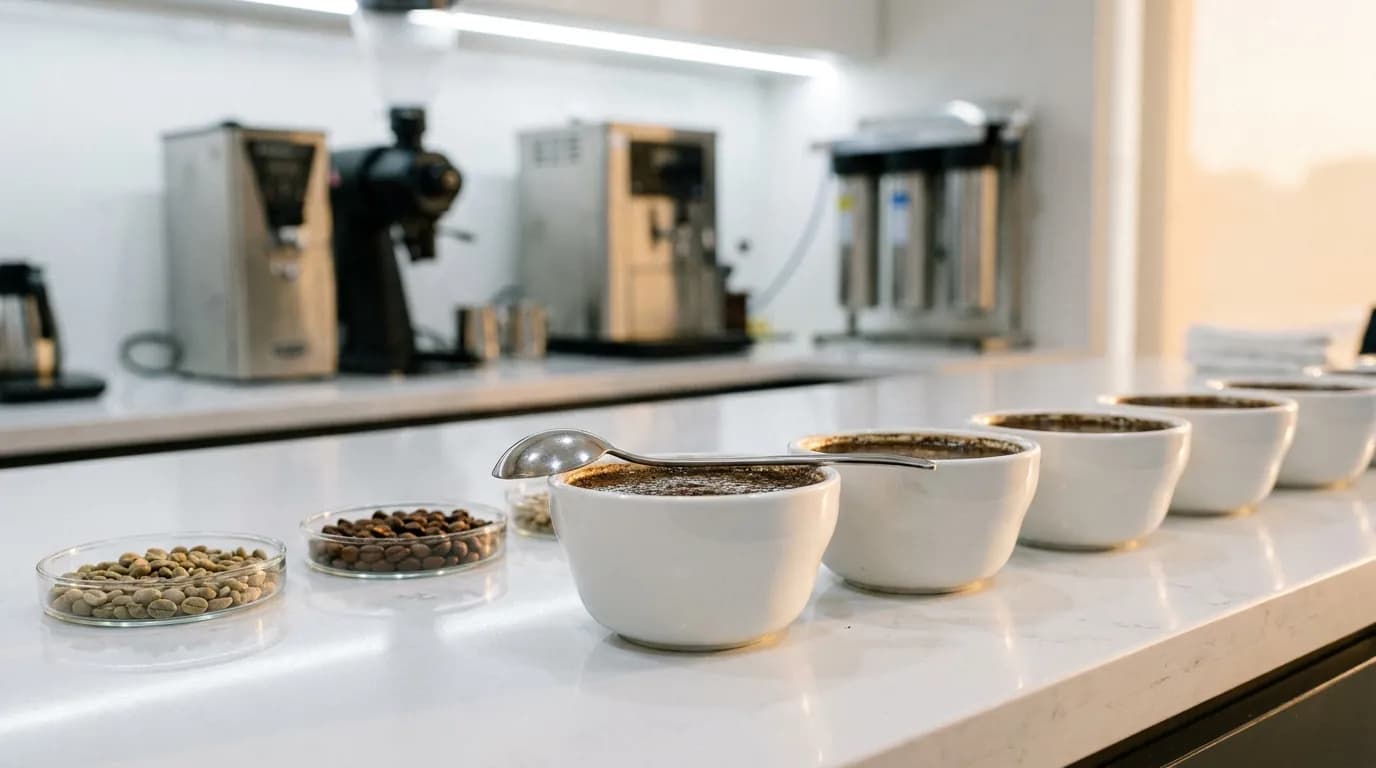
Table of Contents
- 01The SCA 100-Point Cupping Scale
- 02Physical Grading and Defect Tolerances
- 03The Importance of Q-Grader Certification
- 04Specialty vs. Commercial Coffee: Why the Price Premium Is Real
- 05How Altitude and Terroir Feed Into the Cupping Score
- 06Building a Specialty Coffee Program: What B2B Buyers Should Verify
- 07Beyond Arabica: How the SCA Framework Treats Other Species
- 08Preparation and Screen Size: What "Grade" Means Beyond the Cup
For coffee roasters, green importers, and baristas, the term 'specialty coffee' represents the highest tier of quality in the global coffee supply chain. Unlike commercial-grade coffee, which is traded as a bulk commodity with minimal concern for origin or microclimatic differences, specialty coffee focuses on preservation of flavor, genetic purity, and agricultural excellence. Understanding the standards established by the Specialty Coffee Association (SCA) is essential for any professional navigating B2B sourcing and importing. Sourcing directly from certified origins like specialty coffee plantations in Ecuador allows buyers to secure compliant lots.
The SCA 100-Point Cupping Scale
The core of the specialty coffee definition is the 100-point cupping scale, historically developed to grade coffee batches based on physical and sensory parameters. During a standardized cupping session led by certified Q-graders, the coffee is evaluated on ten attributes: fragrance/aroma, flavor, aftertaste, acidity, body, balance, uniformity, clean cup, sweetness, and overall evaluation.
Under this scale, coffees are graded into three main categories:
- 80.0 to 84.99 points: Very Good - Sourced as the baseline for specialty roasting programs.
- 85.0 to 89.99 points: Excellent - Represents micro-lots and distinct single-estate coffees.
- 90.0 to 100.0 points: Outstanding - Rare coffees, such as competition-grade Geisha or Sidra, command premium prices.
Coffees scoring below 80.0 points are classified as commercial or commodity grade and cannot carry the specialty label. In 2025, the SCA introduced the Coffee Value Assessment (CVA), which adds descriptive and affective protocols to the traditional grading system, establishing a more holistic view of quality.
Physical Grading and Defect Tolerances
Before a coffee is ever cupped, it must pass a rigorous physical inspection. A 350-gram sample of green coffee beans is examined for physical defects, which are categorized into Primary and Secondary defects. To qualify as specialty grade green coffee, the sample must contain:
- Zero Primary Defects: No black beans, sour beans, moldy seeds, or large stones. These defects introduce severe off-flavors (bagginess, chemical taints, vinegar tastes) that ruin the cup.
- No More than Five Secondary Defects: Limited numbers of insect-damaged beans, chipped seeds, or broken parchment. These are secondary issues that do not ruin the entire batch but affect roasting uniformity.
Uniformity in screen size is also checked, ensuring that at least 95% of the beans fall within the specified screen size (typically screen 15 and above for premium Arabicas). Uniform sizing prevents small beans from burning during the roasting process.
The Importance of Q-Grader Certification
A Q-grader is a highly trained sensory scientist certified by the Coffee Quality Institute (CQI). They act as the objective judges of the coffee industry, calibrating their palates to grade coffees without personal bias. When sourcing specialty coffee from origin countries like Ecuador, B2B contracts often require a Q-certificate from an independent lab. This document confirms the cupping score and guarantees that the physically sorted batch matches the commercial contract. Direct-trade exporters rely on these certificates to establish trust with international micro-roasters.
Specialty vs. Commercial Coffee: Why the Price Premium Is Real
The commodity coffee market (the 'C-price' traded on the ICE futures exchange) prices coffee as a fungible bulk good, with almost no regard for cup quality above a basic pass/fail threshold. Specialty coffee decouples from that benchmark entirely: price is negotiated per lot based on cupping score, not on a daily futures print, which is why a 86-point microlot and an 81-point regional lot from the same valley can carry a meaningfully different price per pound even in the same harvest. For a B2B buyer, that premium is not a marketing markup — it pays for the extra labor of selective picking, controlled fermentation, and physical sorting described above, all of which reduce the buyer's own downstream risk of an inconsistent roast batch or a customer complaint about cup quality.
This decoupling also changes how contracts are negotiated. Specialty purchase agreements typically lock in a price per cupping-score bracket before harvest, giving both grower and importer price certainty that the volatile C-market cannot offer either side.
How Altitude and Terroir Feed Into the Cupping Score
Cupping scores are not decided in the lab alone — they start with where the coffee was grown. Arabica destined for specialty grading is almost always cultivated between 1,200 and 2,000 meters above sea level, where cooler nighttime temperatures slow cherry maturation and allow sugars and organic acids to develop more fully before harvest than they would at lower, warmer elevations. In Ecuador specifically, volcanic soils rich in minerals combine with this altitude effect, and the wide diurnal temperature swing between the Andean valleys and the coastal lowlands produces distinct sensory signatures from farm to farm within a short geographic distance.
This is why two lots from farms a few kilometers apart can cup five or more points apart on the SCA scale: altitude, shade cover, and soil mineral content are agronomic inputs that show up directly in the sensory evaluation, long before a Q-grader ever picks up a cupping spoon.
Building a Specialty Coffee Program: What B2B Buyers Should Verify
Before committing to a container, a serious buyer verifies more than the headline cupping score. A complete specialty coffee dossier includes the Q-certificate itself (with the grader's name and lab), moisture content (ideally 10-12% to prevent mold risk in transit), water activity, screen size distribution, harvest date, and full farm-level traceability. Requesting a pre-shipment sample roast — cupped independently by the buyer's own team against the supplier's certificate — is standard practice for any first-time relationship, and it is the single fastest way to confirm that the physically sorted, documented lot actually matches what left the farm.
Beyond Arabica: How the SCA Framework Treats Other Species
The 100-point cupping scale was built around Coffea arabica, and the vast majority of specialty coffee traded globally is arabica for that reason — its genetics simply produce a broader range of sugars and aromatic precursors than Robusta. That said, the SCA has extended a parallel Fine Robusta protocol for high-quality Coffea canephora, recognizing that well-processed Robusta from favorable terroir can reach a genuine specialty threshold on its own separate scale, distinct from the commodity Robusta traded for instant coffee and blends. For a B2B buyer evaluating a supplier's full catalog, understanding which scale a given lot was graded against — standard Arabica cupping or Fine Robusta — matters, since the two are not directly comparable on the same numeric scale despite superficially similar-looking scorecards.
Preparation and Screen Size: What "Grade" Means Beyond the Cup
A cupping score describes the flavour; it says nothing about how the lot was prepared. Preparation covers screen size — the calibrated sieve openings a bean has to sit on — plus uniformity, colour and the absence of foreign matter. A lot can cup well and still be commercially difficult if screen distribution is wide, because beans of different size roast at different rates and the roaster ends up with underdeveloped and scorched beans in the same batch.
This is why an offer sheet should carry both halves of the picture: the sensory score and the physical description. European Preparation, American Preparation and their equivalents are shorthand for defect tolerances and screen retention, not for taste. When a buyer and a seller argue after arrival, it is almost always because one of them was negotiating on the cup and the other on the preparation.
How roasters turn these standards into a buying process, from offer sample to container, is covered in our guide to green coffee sourcing for roasters.
Specialty Green Coffee
Interested in sourcing this product directly from our factory in Cayambe, Pichincha?
Frequently Asked Questions About This Topic
What is the minimum score for specialty coffee?
A coffee must score 80.0 points or higher on the 100-point SCA cupping scale to be classified as specialty coffee.
What are primary green bean defects?
Primary defects are severe physical flaws in green coffee beans, such as full black or sour beans, which introduce strong off-flavors into the final brew.
Why do two coffees from the same region score differently?
Cupping score is driven by farm-level agronomic factors — altitude, shade cover, soil mineral content and post-harvest processing — so lots from farms a few kilometers apart can differ by five points or more on the SCA scale, even within the same harvest and region.
Related articles
How to Buy Specialty Coffee Online: B2B Sourcing Guide
A comprehensive guide for B2B buyers on sourcing specialty green coffee online, evaluating quality, and managing logistics.
Read ArticleGreen Coffee Sourcing for Roasters: From Sample Roast to Container
How a roaster sources green coffee from origin: reading offer sheets, SCA sample roasting, the pre-shipment sample, arrival checks, roasting dense high-grown Ecuadorian lots and buying as a small-batch roaster.
Read ArticleWhat is Microlot Coffee? Sourcing Limited-Edition Green Beans
Discover the definition of a coffee microlot, how it differs from regional blends, and why it represents the peak of traceability for specialty roasters.
Read Article