What is Microlot Coffee? Sourcing Limited-Edition Green Beans
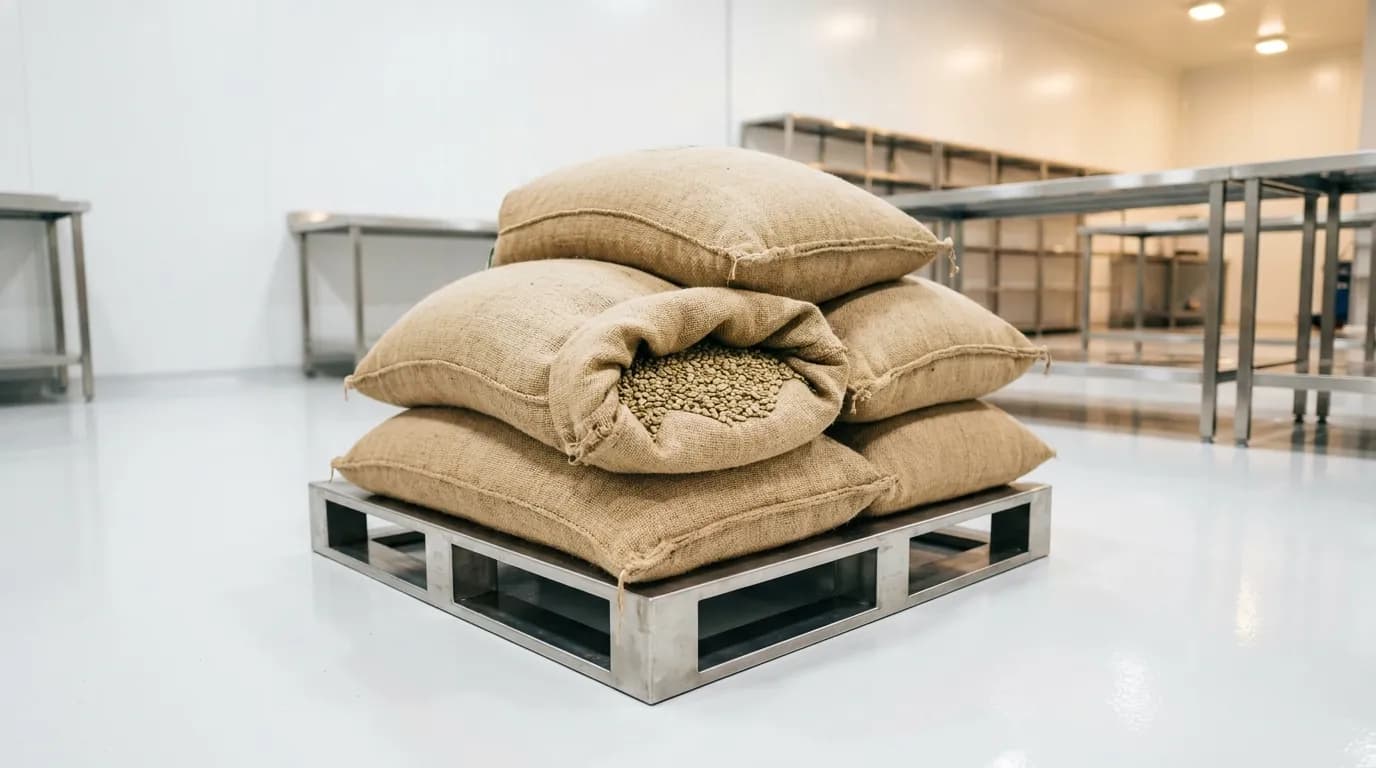
Table of Contents
- 01The Definition of a Coffee Microlot
- 02Why Roasters Pay a Premium for Microlots
- 03Microlot vs. Single-Origin vs. Regional Blend: The Traceability Ladder
- 04How a Microlot Program Actually Works, From Cherry to Container
- 05What to Ask a Supplier Before Committing to a Microlot Program
- 06Pricing a Microlot: What Drives the Premium Beyond the Cupping Score
- 07Sampling and Approval Before the Lot Ships
- 08Small Lots Change the Logistics and the Cost per Kilo
For independent coffee roasters and importing companies seeking unique sensory profiles, understanding the role of a coffee microlot (often referred to as 'micro-lot') is critical. Unlike regional blends, which pool coffees from hundreds of farms across a valley, a microlot is a limited-run harvest separated due to its exceptional quality, microclimate, and physical preparation. Discover how our specialty coffee program separates these exclusive microlots.
The Definition of a Coffee Microlot
In the specialty coffee industry, a microlot represents a small batch of green coffee beans, typically ranging from 1 to 40 bags of 60 kg (approximately 60 to 2,400 kg total). The coffee is harvested from a specific plot of a single farm on a specific date, utilizing a single variety (such as Sidra or Typica Mejorada) and processed under a controlled method.
Because the volume is highly restricted, the grower can apply meticulous labor: picking only cherries at peak ripeness (measured by sugar content / Brix degrees), utilizing raised African beds for shade drying, and hand-sorting the green seeds. This level of control minimizes internal faults and produces a cup score that typically exceeds standard single-origin lots.
Why Roasters Pay a Premium for Microlots
Micro-roasters and specialty cafes utilize microlots to differentiate their retail catalog. These coffees represent limited editions with unique flavor characteristics (ranging from vibrant tropical fruit acidity to intense jasmin floral notes) that cannot be replicated. Sourcing microlots directly from origin allows roasters to build direct trade relationships with smallholders, ensuring that the premiums paid for quality reach the farm level. The transparency is complete, detailing farm name, elevation, harvest date, and processing log.
Microlot vs. Single-Origin vs. Regional Blend: The Traceability Ladder
These three terms get used loosely, but they sit on a strict traceability hierarchy. A regional blend pools coffee from dozens or hundreds of farms across a growing zone, sold and traced only to the region — useful for consistent, large-volume commercial roasting, but with no farm-level story to tell. A single-origin lot narrows that to one country or, more precisely, one cooperative or washing station, where coffee from multiple neighboring farms is processed together under shared protocols. A microlot goes one step further: one farm, one plot, one harvest date, one variety, one processing method, kept physically separate from the moment the cherry is picked through export. Each rung up this ladder trades volume and price predictability for traceability and sensory distinctiveness — which rung makes sense depends entirely on whether the roaster is building a consistent house blend or a rotating limited-release program.
How a Microlot Program Actually Works, From Cherry to Container
Running a microlot program is an operational commitment, not just a sourcing label. It starts at the plot level: pickers are trained to harvest only cherries above a target Brix (sugar) reading, keeping that plot's cherry physically segregated from the rest of the farm's harvest during transport to the wet mill. Processing — whether washed, honey or natural — runs as its own isolated batch, with its own fermentation tanks or drying beds, so nothing mixes with the farm's main-crop volume. Each lot is cupped independently before a final quality call is made, and only lots that clear a minimum score threshold (typically 85+) are packaged and labeled as a microlot, with the remainder folded back into the farm's standard single-origin volume. This is also where lot coding matters commercially: every bag carries a unique code tracing back to the specific plot and processing log, which is the documentation a roaster needs to market the coffee as a distinct, limited release rather than a generic origin story.
What to Ask a Supplier Before Committing to a Microlot Program
Because microlots are, by definition, low-volume and non-repeatable, the sourcing relationship works differently than a standard commercial contract. Buyers should confirm harvest-to-harvest availability expectations upfront — a specific plot's microlot from one year is not guaranteed to exist, or to cup the same, the next — and should request the full separation protocol in writing: how the lot is kept apart from bulking at the wet mill, at the dry mill, and during warehousing before export. For a roaster building a rotating limited-release calendar, locking in a standing relationship with a producer who runs multiple microlot plots is what makes a predictable release schedule possible, rather than depending on a single one-off exceptional lot each season.
Pricing a Microlot: What Drives the Premium Beyond the Cupping Score
Cupping score explains part of a microlot's price, but not all of it. Yield loss during selective picking (only ripe cherries, multiple passes through the same plot instead of one strip-pick) reduces the volume harvested per hectare compared to bulk picking, and the isolated processing infrastructure — dedicated fermentation tanks, drying beds, or space on a raised bed that could otherwise be used for higher-volume lots — carries its own opportunity cost for the producer. Add the labor of hand-sorting and the administrative overhead of lot coding and separate documentation, and the price differential over a standard single-origin lot reflects real, itemizable costs rather than a scarcity markup alone. Buyers who understand this cost structure are in a better position to negotiate a fair price and to recognize when a microlot price is inflated relative to the actual isolation and labor behind it.
Not every purchase needs to start at microlot pricing. Roasters sourcing green coffee beans wholesale for a standard house blend can buy our regional lots at commercial volume terms, and step up to an isolated microlot only for a limited-edition release, rather than paying the microlot premium across an entire annual contract.
For roasters buying bulk green coffee beans on a recurring schedule rather than a single trial order, we set up an annual volume agreement with fixed intake windows, so the regional lot behind your house blend does not shift character between deliveries.
Sampling and Approval Before the Lot Ships
A microlot is bought on a sample, not on a description. The normal sequence is a pre-shipment sample sent to the buyer, cupped blind against the roaster’s own reference, and approved in writing before the lot is packed. A counter-sample of the same lot stays with the exporter, sealed, so that any discussion after arrival is settled against physical coffee rather than memory. Buyers who skip the counter-sample lose the only objective reference they had if the arrival cup differs from the offer sample.
Two details decide whether that approval means anything. The sample has to be drawn from the finished lot — after drying, resting and hulling — not from an earlier stage that will still change. And the cupping should be blind: a microlot tastes better when the buyer already knows the price paid for it, and blind evaluation is the only protection against that bias.
Small Lots Change the Logistics and the Cost per Kilo
Microlots move in units of a few bags rather than containers, and that reshapes the landed cost. Green coffee travels in bags of roughly 30 to 70 kg depending on origin and buyer preference, usually with a hermetic liner inside the jute so that moisture and water activity stay where the drying left them. A lot that fills part of a container ships either as consolidated LCL freight or, when the roaster wants it fresh for a seasonal release, by air — and air freight can move the cost per kilo more than the green price differential itself.
Two planning questions follow from the size. First, exhaustion: a microlot ends, and a roaster who builds a permanent SKU on one will have to reformulate when it runs out. Second, repeatability: the same farm, variety and process can score differently the following harvest, because the microclimate that made the lot distinctive is also what makes it variable. Both are reasons to treat microlots as a rotating, dated offer rather than as a fixed line.
Microlots and regional specialty lots are bought on the same terms; the formats, minimum order and logistics are on our page on wholesale green coffee beans.
Green Coffee Microlots
Interested in sourcing this product directly from our factory in Cayambe, Pichincha?
Frequently Asked Questions About This Topic
How many bags are in a coffee microlot?
A coffee microlot typically ranges between 1 and 40 bags of 60 kg, representing a small, high-quality batch.
What is direct trade in coffee?
Direct trade is a sourcing model where roasters buy green beans directly from producers, bypassing international commodity brokers and paying a quality premium.
Is a microlot available every harvest?
Not necessarily. A microlot depends on a specific plot reaching an exceptional cupping score in a given year, so availability and sensory profile can vary from one harvest to the next — buyers building a release calendar should confirm expectations directly with the producer rather than assume repeatability.
Related articles
EUDR Deforestation Compliance: A B2B Green Coffee Import Guide
Understand the EU Deforestation Regulation (EUDR) requirements for coffee importers, including digital mapping, polygons, and due diligence.
Read ArticleCoffee Post-Harvest Processing: Washed, Natural, Honey & Anaerobic Chemistry
Explore the biochemistry of coffee post-harvest processing. Learn how washed, natural, honey, and anaerobic ferments shape green bean acidity and sweetness.
Read ArticleUnderstanding EU Cadmium Limits for Cacao: B2B Compliance & Import Guide
A complete guide to EU Regulation 488/2014 heavy metal limits for cacao imports. Learn how B2B buyers navigate compliance, testing, and soil mitigation.
Read Article