We are the factory,
not just the buyer
Most cacao exporters buy from farms and resell. We don't. El Dulce Origen operates its own processing plant and maintains direct, multi-year relationships with a network of around 100 allied farms across Manabí, Esmeraldas and Pichincha — the same model that already lets us export private-label cacao to Japan, France and the United Kingdom. Vertical integration is not a slogan on this page; it changes what we can tell a buyer about a specific lot, how fast we can respond to a volume request, and how consistently the sensory profile below shows up harvest after harvest.
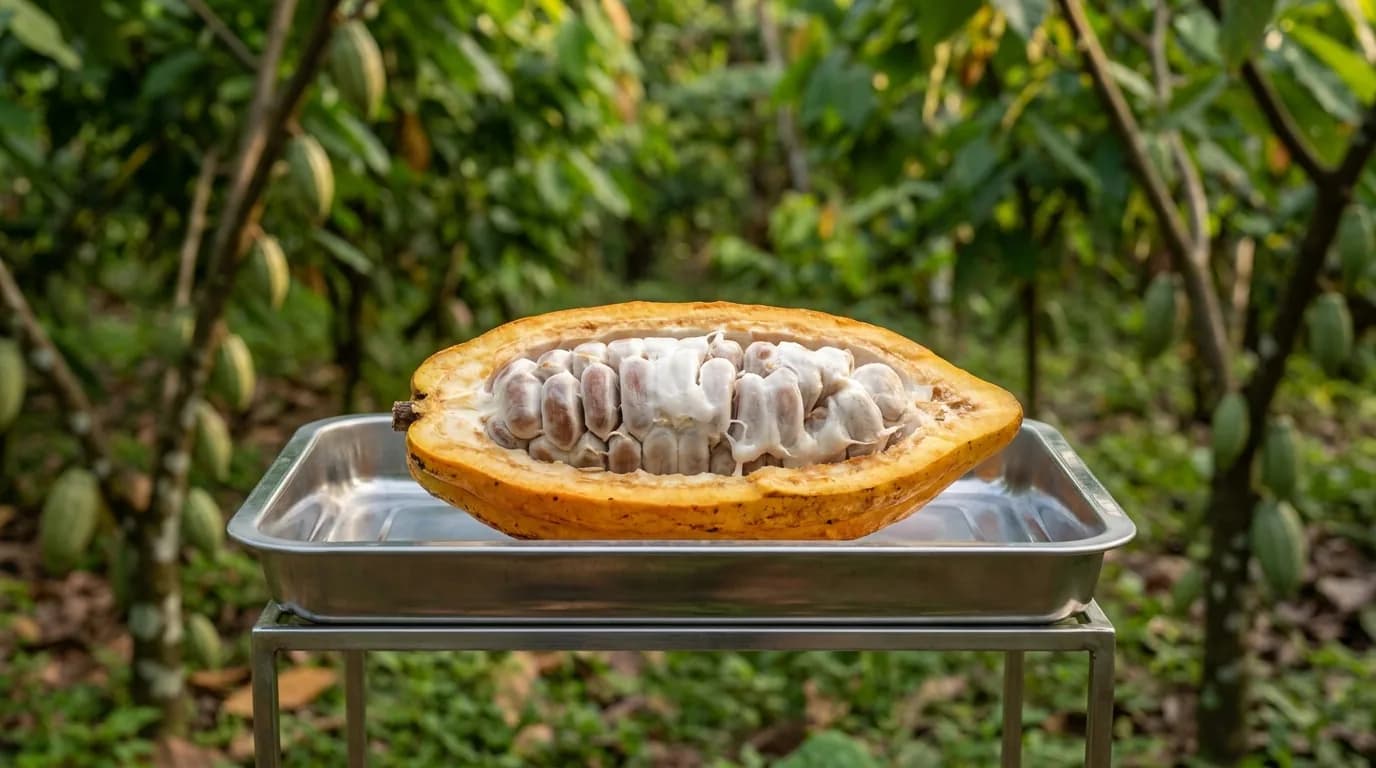
A Network of Around 100 Allied Farms
Every batch is sourced from farms we know by name, not an anonymous local market, across a growing area that spans Manabí, Esmeraldas and Pichincha at altitudes from sea level to roughly 800 meters. This direct relationship is what makes traceability possible from the first bag: we can tell a buyer exactly which farms contributed to a given lot, and we have maintained most of these grower relationships for around six years, long enough to plan harvest timing and volume together instead of buying whatever the open market offers that week.
Our Own Factory, Not a Reseller's Warehouse
Fermentation, drying and processing happen at our own facility, under our own quality control — at a GMP-certified plant, with continuous BPM monitoring, FDA registration, and access to certifiable organic cacao suppliers on request. We are not a trading desk adding a margin between farm and buyer: we are the manufacturer, a project that began as a small cacao workshop and grew, step by step, into the plant operating today. That progression matters commercially, because quality control decisions — fermentation time, drying method, batch segregation — are made by the same team that answers a buyer's technical questions, not relayed through a broker who never saw the beans.
Proven Export Track Record
We already export private label to Japan, France and the United Kingdom, with production capacity that scales with order volume. This is not a pitch deck — it is an operating export business with active buyers on three continents, built on repeat orders rather than one-off spot sales. That is why our documentation, sampling process and sales ladder are designed around a long-term commercial relationship: a buyer who starts with a 1-5kg sample and a 60kg trial sack should be able to scale to pallet and container volume without renegotiating the basics each time.
Regenerative Growing, Not Industrial Monoculture
Our ceremonial-grade cacao follows a fully regenerative growing model rather than industrial monoculture: a diversified chacra system that mixes cacao with other crops instead of clearing land for a single species, zero synthetic agrochemicals, biol prepared with mountain microorganisms in place of chemical fertilizer, and the preservation of mature mother trees that anchor soil biology and support the younger plants growing around them. This same regenerative approach reinforces the neutral-to-alkaline soil chemistry, typically pH 6.2 to 7.2, that keeps cadmium levels naturally low across our allied farm network — agronomy and compliance reinforcing each other rather than working against each other. It is a slower, more deliberate way to grow cacao, reserved for our Nacional and fine-flavor lots, and it is also part of why the flavor profile below is as consistent as it is from one harvest to the next.
Sensory Profile
Floral notes, red fruit, and a chocolatey base — the characteristic profile of Ecuadorian Nacional Arriba Fine Aroma Cacao, prized by chocolate makers for its complexity without bitterness. Our F1 and F2 fine-flavor grades represent the tiers where this profile is most pronounced, a direct result of variety selection, altitude and the regenerative growing conditions described above, rather than a claim we make without being able to trace it back to a specific farm.
Ecuadorian Specialty Coffee Sourcing
In addition to our fine-flavor Nacional cacao, we extend our direct trade model and vertical integration to specialty coffee. We source high-altitude green coffee beans directly from selected Andean farms, ensuring the same rigor in traceability and quality control.
Explore Specialty Coffee →