From the farm
to your factory
For a specialty cacao buyer in the EU, cadmium is not a footnote — it is the single biggest compliance risk in sourcing from Latin America. We built our traceability process around solving that problem before it reaches your desk.
Cadmium & EU Regulation 488/2014
EU Regulation (EC) No 488/2014 sets maximum cadmium levels for cacao and cacao-derived products sold in the European Union, and it is the single largest compliance barrier for buyers sourcing from volcanic-soil origins across Latin America. Cadmium is absorbed through the cacao tree's root system and deposited inside the cotyledon long before harvest, so no amount of fermentation, roasting or post-harvest processing can remove it once it is inside the bean — mitigation has to start in the soil. Our program begins there: parcel-by-parcel soil mapping, pH management above 6.2, organic-matter enrichment, and selective harvesting that excludes high-risk lots before they ever enter the export stream. On top of that agronomic layer, we provide accredited ICP-MS heavy metal analysis for every batch on request and at the buyer's cost. We are transparent about the model: it is not an automatic certificate stapled to every shipment, but an honest, on-demand verification process that mirrors how experienced European importers actually manage risk on a first order — commission the analysis, build a confidence baseline, then calibrate frequency for repeat volumes. Either way, your technical spec sheet and supporting documentation are ready before the container leaves the Port of Guayaquil, so your compliance file is complete before a customs officer or auditor ever has to ask. For a brand exposed at retail in Germany, France or the Netherlands, a single non-compliant shipment is not just a logistics problem — it can trigger a product recall. That is the real risk our on-request testing model and documentation package are built to prevent.
- Cadmium analysis available per batch, on request
- Documentation aligned with EU Reg. 488/2014 requirements
- Manabí, Esmeraldas and Pichincha origin — mapped soil profiles, part of our standard due diligence
What You Receive: Documentation & Chain of Custody
Every export is backed by a documentation package built for customs and quality-assurance teams, not a marketing brochure. Beyond the cadmium analysis available on request, each shipment includes the paperwork a buyer's import and compliance teams actually need to clear the container and file it for audit. If your quality assurance team works from a fixed checklist, we are glad to match documentation to that format before the first shipment, not after a customs delay forces the conversation.
- Commercial invoice and packing list matched to the exact batch and farm network of origin
- Bill of lading and phytosanitary certificate for customs clearance in the EU, US, Japan and other markets
- Technical specification sheet per product, downloadable as a PDF in your language
- Continuous BPM and GMP monitoring backbone at our processing plant, supported by FDA registration, rather than a certificate issued per lot
- ICP-MS cadmium report on request, delivered before the container leaves the Port of Guayaquil
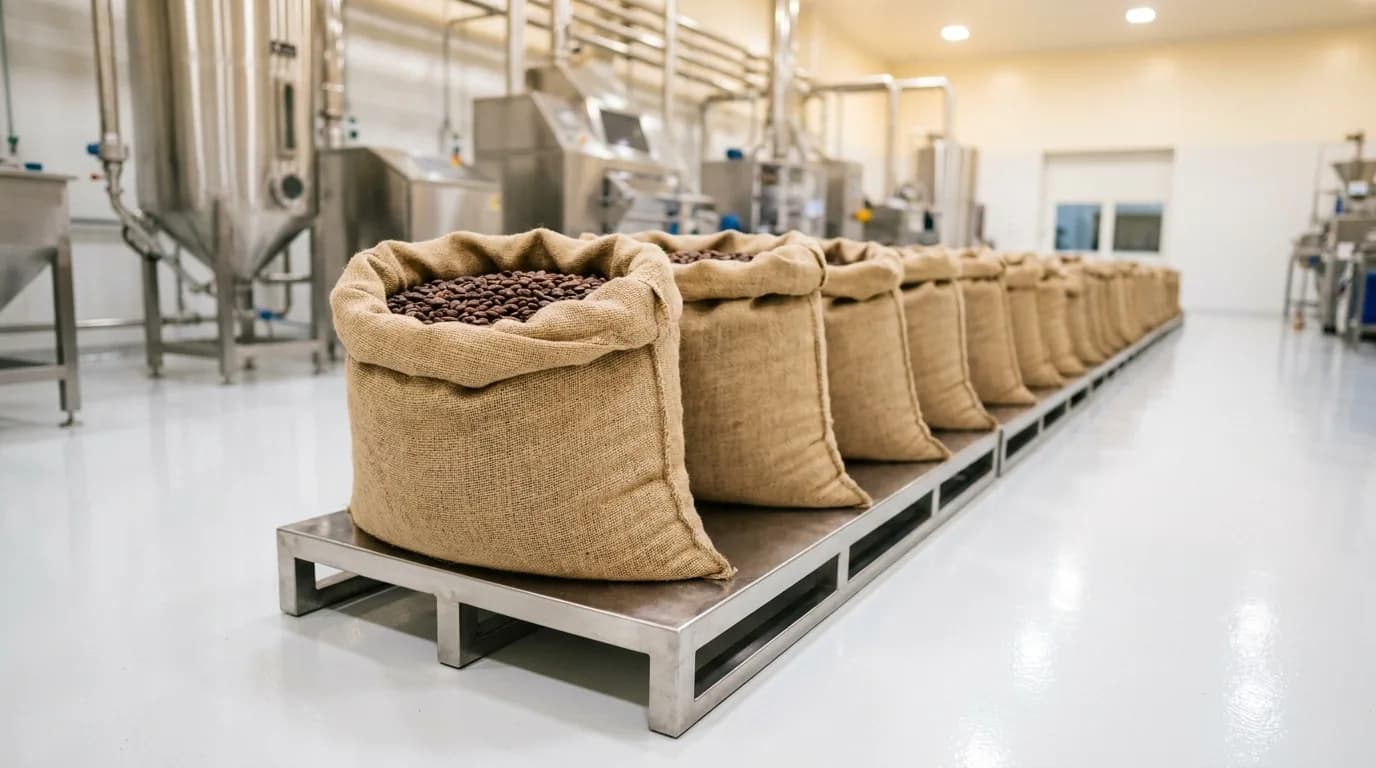
Batch-Level Traceability
Every batch is traceable back to its farm of origin among our network of around 100 allied farms in Manabí, Esmeraldas and Pichincha. We can document the chain from farm to fermentation to your shipment — not a generic origin claim, but a specific, verifiable one, consolidated at our own processing facility rather than through an intermediary trader who buys anonymous lots on the local market.
EUDR Deforestation Compliance for Specialty Coffee
With the implementation of the European Union Deforestation Regulation (EUDR), coffee B2B imports are subjected to strict zero-deforestation validation. We manage georeferenced polygon maps of our allied coffee farms in Ecuador, integrating digital GPS mapping directly into export documentation at the Port of Guayaquil. This guarantees a secure, compliant, and transparent supply chain for European micro-roasters and green importers.
Learn about EUDR Coffee Compliance →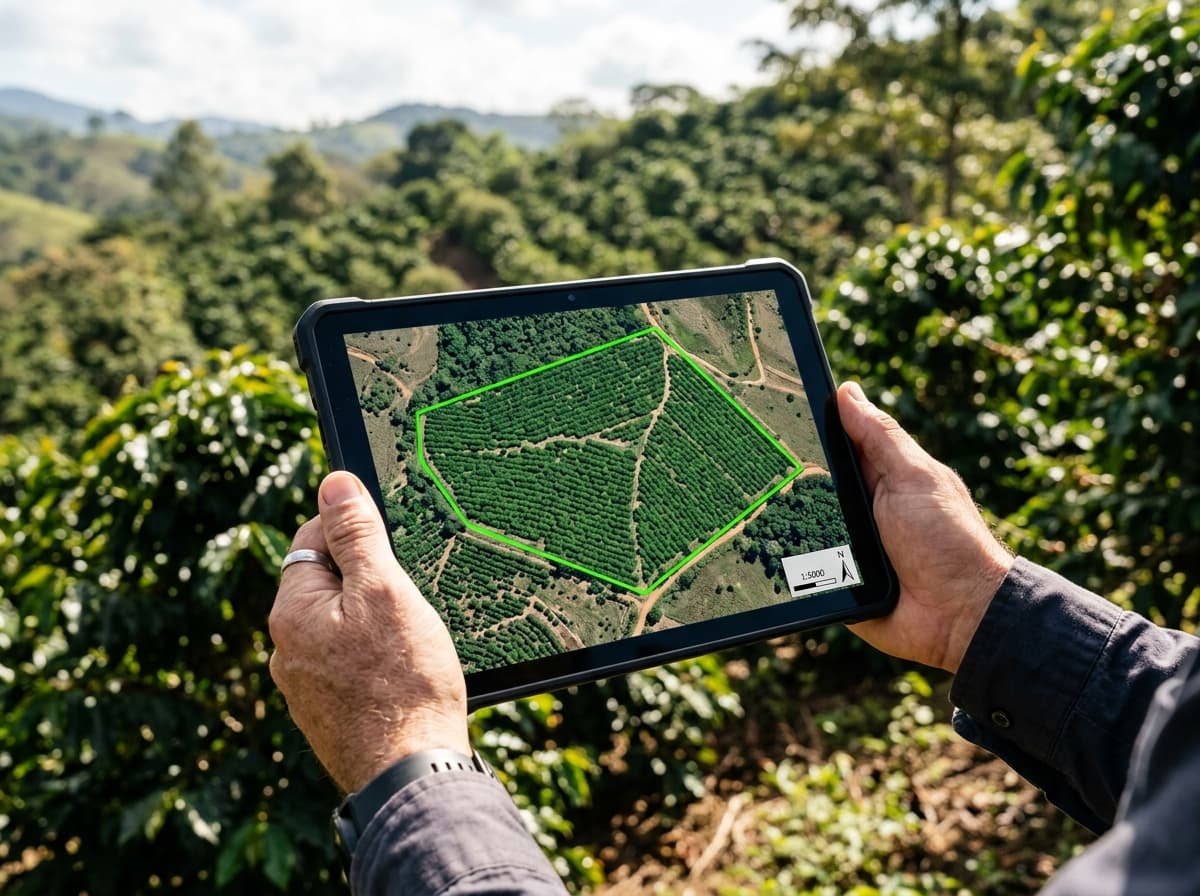
Direct Farm Management Across Three Provinces
Our traceability is not a database entry — it is a direct, working relationship with a network of around 100 allied farms across Manabí, Esmeraldas and Pichincha, at altitudes from sea level to 800 meters, built over roughly six years. Manabí supplies the bulk of our Nacional Arriba and fine-flavor volumes; Esmeraldas and Pichincha add balao and amelonado lots that broaden our flavor and volume profile without diluting the fine-aroma standard we hold for ceremonial-grade cacao, produced exclusively from Nacional and fine-flavor varieties, never CCN-51, which we reserve only for large-volume orders on request. This direct footprint is also an agronomic advantage: our allied farms sit on neutral-to-alkaline soils, typically pH 6.2 to 7.2, which naturally lock cadmium into the soil matrix rather than releasing it to the plant. When a buyer asks which farm contributed to a specific lot, we can answer with a name, not a region — a level of granularity that a trading desk buying on the open market simply cannot offer. Because we manage this network directly rather than through intermediaries, we can also respond quickly when a buyer needs a specific grade, volume or harvest window, instead of waiting on a broker to canvas the local market. Beyond these farm-level lots, buyers can choose how they source: single origin (Manabí or Esmeraldas) or a fine-aroma blend, and for those seeking the highest level of detail, micro-lots traceable to an individual farm. For volumes beyond our allied network, we can also source Ecuadorian cacao from other regions of the country.
A Simple Sales Ladder
1-5kg courier sample, 60kg sack, pallet, and full container — no surprises in the process, no minimum order that blocks a first evaluation. Samples typically ship within three business days when stock is available, with courier costs covered by the buyer, and production capacity scales with confirmed order volume. Most first-time buyers start with a courier sample to confirm sensory profile and documentation quality before committing to a 60kg trial sack, which is usually enough to qualify a new supplier internally.