Carob vs Cacao Powder: B2B Formulation Guide
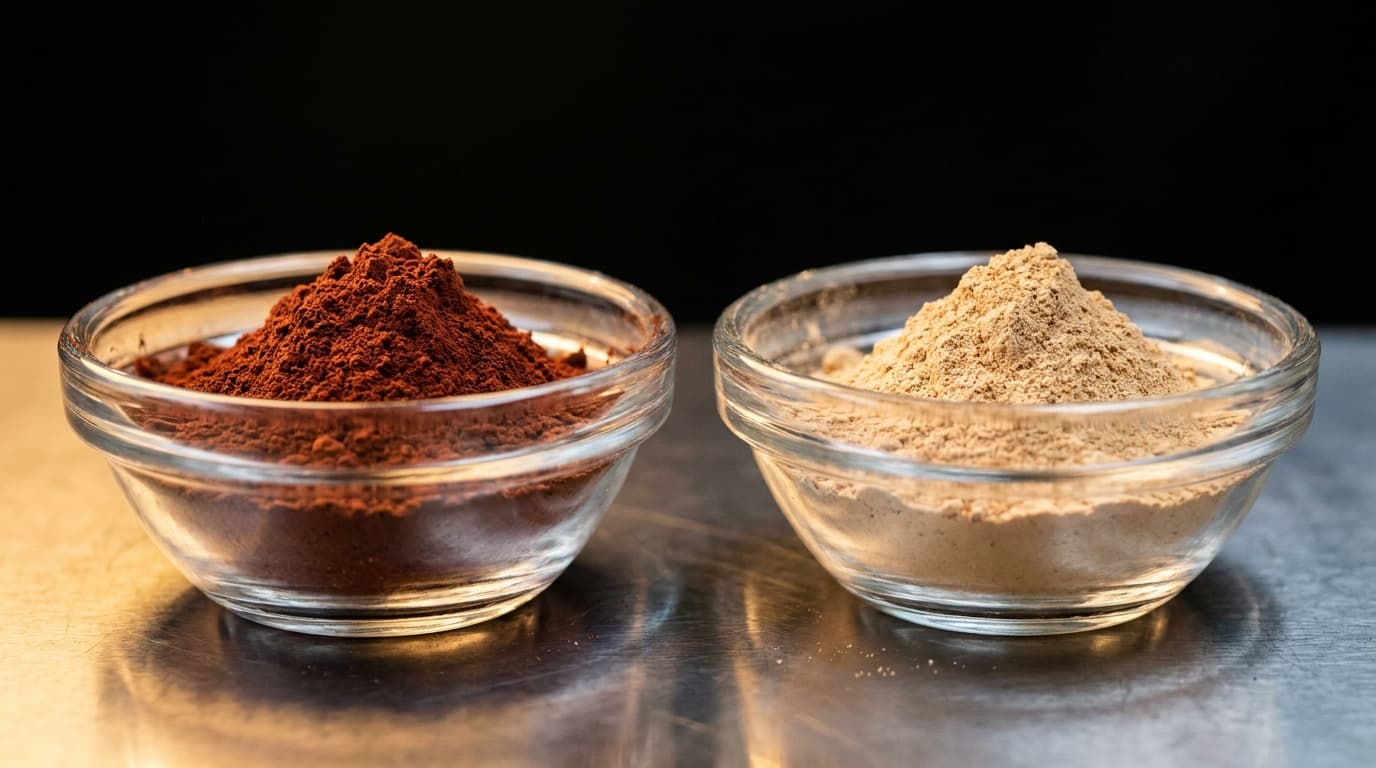
Table of Contents
- 01Botanical Origin and Chemical Composition
- 02Comparative Nutrient and Functional Matrix
- 03Dough Rheology and Water Binding Mechanics
- 04Thermal Baking Behavior: Caramelization vs. Maillard Reaction
- 05Sensory and Flavor Profile Comparison
- 06Beverage Performance: Foam Stability and Solubilization
- 07Industrial B2B Applications
- 08Quality Control and Microbiological Safety Standards
- 09Economic Trade-Offs and Substitution Economics
- 10Storage Stability and Hygroscopicity in Industrial Silos
- 11Conclusion and Recommendation
- 12Flavanol and Polyphenol Profile: Cocoa Lipids vs. Pectin Complexes
- 13Industrial Batch Calculations for Reformulation
- 14Regulatory Compliance and Customs Documentation
- 15Supply Chain Traceability and Sustainability
In industrial food processing, commercial baking, and functional beverage development, formulators frequently evaluate plant-based ingredients for chocolate-like food formulations. Carob powder (derived from the pods of the carob tree *Ceratonia siliqua*) is often promoted as a caffeine-free alternative to cocoa powder. Although both ingredients share a similar brown visual spectrum, they differ fundamentally in chemical composition, rheological behavior, thermal baking characteristics, and sensory attributes. Sourcing premium cocoa powder milled from fine aroma Ecuadorian Arriba Nacional cocoa beans ensures food manufacturers deliver authentic chocolate flavor and performance.
For B2B brands, recognizing that carob powder is not a direct drop-in functional replacement for cocoa powder is essential. In this technical guide, we evaluate botanical origins, chemical composition, dough rheology, thermal baking performance, sensory profiles, and economic formulation trade-offs.
Botanical Origin and Chemical Composition
The fundamental distinction between both raw materials resides in their botanical origin and nutrient matrix: - **Cocoa Powder**: Derived from fermented, roasted, and pressed seeds of the cacao tree (*Theobroma cacao*). It naturally contains cocoa butter (10-12% or 20-22%), beneficial alkaloids (theobromine and trace caffeine), and high concentrations of antioxidant flavanols. For details on processing, read our guide on natural vs alkalized cocoa powder. - **Carob Powder**: Milled from the sweet pod pulp of the carob tree. It is naturally free of theobromine and caffeine, contains virtually no fat (<1%), but features very high levels of natural sugars (sucrose, fructose, glucose: 40-50%) and soluble dietary fibers.
Comparative Nutrient and Functional Matrix
Key chemical differences for B2B formulation benchmarking include: - **Fat Content**: Cocoa powder 10-22% (cocoa butter) vs. Carob powder <1%. - **Sugar Content**: Cocoa powder 0.5-1.5% (natural) vs. Carob powder 45-50%. - **Dietary Fiber**: Cocoa powder 25-35% (insoluble) vs. Carob powder 35-40% (soluble pectins). - **Alkaloid Profile**: Cocoa powder 1.5-2.5% theobromine vs. Carob powder 0.0%.
Dough Rheology and Water Binding Mechanics
When incorporated into commercial bakery doughs, the two ingredients display opposing rheological effects. Cocoa powder binds water mechanically through insoluble fibers and proteins without swelling excessively. For technical baking insights, consult our industrial baking cocoa.
Conversely, carob powder contains abundant hydrocolloids and soluble pectins. These soluble fibers form a dense, gel-like matrix upon hydration. Replacing cocoa powder with carob powder without adjusting formula hydration rapidly strips free water from the dough, producing stiff, gummy doughs and dense baked goods.
Thermal Baking Behavior: Caramelization vs. Maillard Reaction
Thermal behavior inside commercial ovens differs significantly: - **Cocoa Powder**: Minimal free sugar content means browning occurs via Maillard reactions between proteins and reducing sugars at 140°C-160°C, tolerating high oven temperatures without scorching. - **Carob Powder**: High free sucrose and fructose trigger rapid caramelization starting at 130°C. Standard baking temperatures (180°C) cause excessive surface darkening and bitter, smoky off-notes.
Sensory and Flavor Profile Comparison
Sensory profiles diverge dramatically: - **Cocoa Powder**: Delivers rich, complex chocolate flavor—deep body, balanced bitterness, and delicate floral-fruity notes (characteristic of Ecuadorian Nacional cocoa). - **Carob Powder**: Exhibits a distinctly sweet, earthy flavor with notes of dried figs, malt, and molasses, lacking the characteristic depth and bitterness of real chocolate.
The sensory complexity of fine cocoa powder is driven by over 600 volatile aromatic compounds, — including pyrazines, esters, and aldehydes formed during fermentation and roasting. Carob powder lacks this rich aromatic spectrum. Attempting to mask carob's inherent sweetness with artificial chocolate flavorings often results in synthetic off-notes in sensory panel testing.
Beverage Performance: Foam Stability and Solubilization
In commercial beverage bottling and instant cocoa drinks, performance contrasts sharply. Lecithinized 10-12% cocoa powder suspends evenly in liquids, interacting with dairy or plant proteins to generate a rich, stable foam layer and clean mouthfeel.
Carob powder, due to its high pectin content, forms sticky hydrocolloid gels in cold liquids. Without high-shear homogenization equipment, carob particles settle into unpleasant sediment or create a gummy texture disliked by consumers seeking a smooth chocolate drink experience.
Industrial B2B Applications
Each raw material serves distinct industrial sectors: - **Cocoa Powder**: Essential for premium confectionery, commercial baking, ice cream, chocolate beverages, and gourmet foods. - **Carob Powder**: Specialized use in infant nutrition (thickening agent), pet treats (since dogs cannot metabolize theobromine), and stimulant-free dietary products.
Quality Control and Microbiological Safety Standards
Incoming quality audits require distinct testing protocols. Cocoa powder must be audited for fat content, particle fineness (minimum 99.5% passing 75 microns), heavy metals (cadmium and lead), and Salmonella safety. Carob powder audits require testing for Ochratoxin A (a mycotoxin risk in dried carob pods), free sugar ratios, and pectin viscosity.
Economic Trade-Offs and Substitution Economics
While carob powder can appear cost-effective during high cocoa market cycles, direct substitution rarely reduces total formulation cost. Restoring chocolate flavor profiles in carob-based recipes requires adding artificial flavors and fats, eroding cost advantages.
When formulators attempt substitution, complete formula rebalancing is mandatory: added refined sugar must be reduced by roughly 45% of the carob powder weight, while dough hydration must be increased by 15-20% to offset pectin gelation.
Storage Stability and Hygroscopicity in Industrial Silos
During bulk raw material handling, both powders display contrasting storage characteristics. Cocoa powder containing 10-12% fat maintains free-flowing characteristics in industrial silos and pneumatic dosing systems, provided ambient relative humidity remains below 60%.
Conversely, carob powder is intensely hygroscopic due to its high concentration of free sugars (up to 50%) and soluble pectins. Upon exposure to ambient air, it rapidly absorbs atmospheric moisture, forming stubborn clumps that clog automated auger feeders and pneumatic conveyance lines. Processing carob powder requires climate-controlled storage and dehumidified hopper environments.
Conclusion and Recommendation
Carob powder is an independent botanical ingredient rather than a functional cocoa powder substitute. For authentic chocolate taste, superior baking performance, and consumer acceptance, high-grade Ecuadorian cocoa powder remains the gold standard.
At El Dulce Origen, we supply European food manufacturers with premium Ecuadorian cocoa powder. Contact our sales engineers through our contact page to request samples and technical specifications.
Flavanol and Polyphenol Profile: Cocoa Lipids vs. Pectin Complexes
Cocoa powder represents one of the richest botanical sources of monomeric, and oligomeric flavanols (specifically epicatechin, and catechin). These secondary plant metabolites impart the characteristic complex bitterness, astringency, and antioxidant potential associated with fine chocolate. The polyphenolic matrix contributes essential top notes, and lingering retronasal aroma that consumers expect from chocolate products.
Carob powder also contains polyphenols (primarily gallic acid, and condensed tannins), but these compounds are tightly bound within insoluble cell wall pectin networks. Consequently, carob powder completely lacks the epicatechins typical of cacao. When formulating functional foods or premium confectionery, carob cannot replicate the health benefits or sensory depth provided by real cocoa flavanols.
Industrial Batch Calculations for Reformulation
When food technologists evaluate replacing cocoa powder with carob powder or vice-versa, explicit mathematical formulation adjustments must be executed across the batch sheet:
1. **Carbohydrate Adjustment**: Because 100g of carob powder delivers 45g to 50g of natural sugars (sucrose and fructose), added refined sugar in the batch must be reduced by an equivalent amount. Failing to reduce added sugar yields excessively sweet baked goods. 2. **Hydration Rebalancing**: The soluble pectins in carob powder bind 2 to 3 times their weight in liquid water. Process water addition in commercial mixers must be increased by 15% to 20% of the carob weight to prevent stiff, crumbly dough. 3. **Fat Compensation**: Because cocoa powder contains 10% to 22% cocoa butter while carob contains virtually zero fat (<1%), healthy fat or vegetable oil additions must be adjusted upward to maintain standard crumb tenderness and mouthfeel.
Regulatory Compliance and Customs Documentation
From an international trade compliance perspective, importing cocoa powder versus carob powder involves distinct customs classifications and regulatory frameworks. Cocoa powder imports into the European Union are governed by specific cocoa and chocolate directives, requiring certificates of analysis (CoA) detailing fat content, moisture limits (below 5%), pH value, and heavy metal screening. Carob powder falls under botanical gum and fruit processing classifications, requiring separate phytosanitary certificates and mycotoxin testing documentation.
Supply Chain Traceability and Sustainability
For modern European B2B buyers, full supply chain traceability is a decisive purchasing criterion. Fine aroma Ecuadorian cocoa offers complete transparency from smallholder agroforestry cooperatives to final milling. Sourcing direct-trade Ecuadorian cocoa powder supports sustainable tropical forestry, and empowers farming communities, creating, a compelling sustainability narrative, for premium retail brands.
Furthermore, evaluating cocoa powder suppliers against international sustainability certifications ensures long-term supply chain security. Commercial buyers gain verifiable evidence of environmental stewardship, fair remuneration for agricultural communities, and complete compliance with European deforestation free supply chain regulations (EUDR).
A less common but recurring request is for carob nibs, the roasted and broken carob pod sold as an inclusion in the same way cacao nibs are. It behaves differently in a formulation: carob is naturally sweet, contains no theobromine or caffeine, and is much lower in fat, so it neither browns nor carries flavour the way a cacao nib does. Substituting one for the other on a one-to-one basis will change sweetness, colour and texture at once, which is why any reformulation towards carob should be treated as a new recipe rather than an ingredient swap.
Cacao Powder
Interested in sourcing this product directly from our factory in Cayambe, Pichincha?
Frequently Asked Questions About This Topic
Can carob powder substitute cocoa powder 1:1 in commercial baking?
No, carob powder contains up to 45-50% natural sugars and zero cocoa butter. A 1:1 substitution alters dough viscosity, accelerates Maillard browning, and requires adjusting recipe sugar levels.
What are the primary ingredient differences between carob and cocoa powder?
Cocoa powder contains theobromine, trace caffeine, valuable cocoa butter, and flavanols. Carob powder is stimulant-free, low-fat (<1%), but very high in soluble fibers (pectins) and natural sugars.
Why does carob powder burn faster during baking than cocoa powder?
Due to high free sugar content, carob powder caramelizes at lower temperatures (above 130°C), leading to rapid darkening and burnt off-flavors at standard oven temperatures.
Which B2B product categories benefit from carob powder over cocoa powder?
Carob powder is primarily specified in stimulant-free foods, infant nutrition thickening, pet food (since theobromine is toxic to dogs), and specific caffeine-sensitive formulations.
Related articles
Baking Cocoa vs. Natural Cocoa Powder: An Industrial Sourcing Guide
Understand the differences between baking cocoa (alkalized/Dutch-processed) and natural cocoa powder to optimize your industrial bakery formulations.
Read ArticleRaw Unsweetened Cocoa Powder vs. Alkalized: Technical Sourcing Gaps
A technical evaluation of raw unsweetened cocoa powder compared to alkalized variants, highlighting acidity, fat contents, and industrial baking behaviors.
Read ArticleCocoa Powder Fat Content Grades: B2B Guide 10-12% vs 20-22%
Industrial B2B guide on cocoa powder fat content grades (10-12% vs 20-22% vs defatted): hydraulic pressing, application matrix, and cost optimization.
Read Article