Natural vs. Alkalized Cocoa Powder: B2B Technical and Sensory Guide
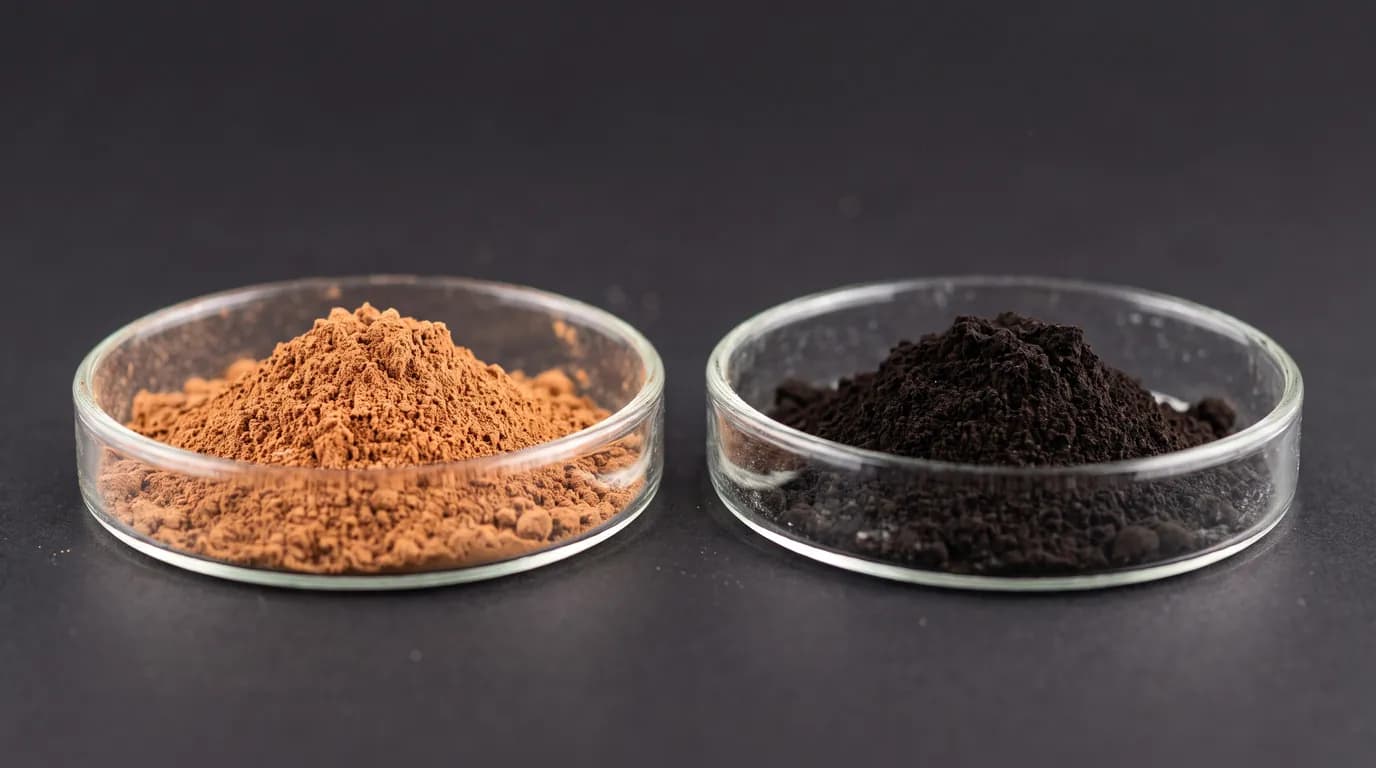
Table of Contents
- 01The Chemistry of Cocoa Alkalization: The Dutch Process
- 02Sensory Profiles: Fruit and Acid vs. Deep Chocolate Notes
- 03B2B Industrial Applications: Which Powder to Choose?
- 04Technical Specifications and Heavy Metal Monitoring
- 05Colorimetry: Measuring Hunter L*, a*, b* Values
- 06Dispersibility and the Use of Lecithin in Dry Mixes
- 07Wetting Behavior and Rheological Suspension Stability
- 08Water Binding Capacity and Dough Hydration Yields
- 09Emulsifier Synergy and Colloidal Stability in RTD Beverages
For industrial food manufacturers, bakery product developers, and B2B purchasing managers, selecting the appropriate cocoa powder is a critical choice that impacts color, flavor, reological behavior, and chemical reactions in the finished food formulation. Cocoa powder is available in two primary configurations: natural and alkalized (commonly referred to as Dutch-process). While both are residues of the hydraulic pressing of cocoa liquor, their chemical properties, sensory profiles, and industrial applications differ significantly. In this technical guide, we will analyze these variations directly from our integrated processing plant in Cayambe, Pichincha, Ecuador, to help your sourcing and technical teams.
The Chemistry of Cocoa Alkalization: The Dutch Process
Alkalization was invented in the 19th century by Dutch chemist Coenraad van Houten. The process involves treating raw cacao beans or cocoa nibs with an alkaline solution, typically potassium carbonate (K2CO3) or sodium carbonate (Na2CO3), under controlled temperatures and pressure. This treatment modifies the chemical structure of the cocoa solids in several ways:
- pH Adjustment: Natural cocoa powder is naturally acidic, with a pH ranging from 5.0 to 5.8. Alkalization neutralizes this acidity, raising the pH to a neutral range of 6.8 to 7.2 (lightly alkalized), or even 7.8 to 8.2 (strongly alkalized).
- Color Modification: The chemical reaction alters the polyphenol compounds, shifting the color of the powder from a light tan or yellowish-brown to deep reddish-brown, dark brown, or even charcoal black.
- Solubility and Suspension: While cocoa powder does not dissolve in liquids, alkalization makes the cocoa starches and proteins more hydrophilic. This allows the particles to disperse and stay suspended in liquid solutions longer, preventing sedimentation.
For B2B buyers, understanding these chemical changes is crucial when formulating beverages or dry mixes, where suspension and color consistency are primary quality metrics. Sourcing from our integrated farm network in Manabí, Esmeraldas and Pichincha guarantees a pure, direct supply of single-origin raw materials. You can read more about this in our Bulk Cocoa Powder Hub or check the product specifications on our cocoa powder product page. We also suggest reading our comparison guide on cocoa liquor vs. ceremonial paste or exploring the cadmium distribution by cacao product to understand food safety limits.
Sensory Profiles: Fruit and Acid vs. Deep Chocolate Notes
The chemical changes of alkalization also transform the sensory profile of the cocoa powder. Natural cocoa powder retains the native characteristics of the Nacional Arriba bean: it displays a bright, fruity acidity with distinct floral notes, wood undertones, and a sharp, pleasant astringency. This profile is highly valued by craft chocolate brands and clean-label manufacturers who want to showcase the natural terroir of Ecuador.
Conversely, alkalization breaks down the bitter tannins and volatile organic acids, neutralizing the sharp acidity. The result is a smooth, mellow flavor with deep, toasted chocolate notes and low astringency. While it lacks the complex floral terpenes of natural cocoa, alkalized powder delivers a strong chocolate flavor that is highly consistent and familiar to the general consumer. Selecting between natural and alkalized depends on whether your product line requires the complex taste of raw cacao or a standardized chocolate flavor.
B2B Industrial Applications: Which Powder to Choose?
The choice between natural and alkalized cocoa powder depends on the specific food formulation and manufacturing setup:
- Bakery Formulations: Natural cocoa powder must be paired with alkaline leavening agents like sodium bicarbonate (baking soda). The acid-base reaction releases carbon dioxide gas, causing the dough to rise during baking. If alkalized powder is used, there is no acid to react with the baking soda, resulting in a flat, dense bake unless baking powder (which contains its own acid) is substituted.
- Instant Beverages: Alkalized powder is preferred for cocoa mixes and RTD chocolate milks due to its superior dispersibility. It mixes easily in water or milk without clumping.
- Ice Cream and Dairy: Alkalized powder provides the deep dark color and smooth chocolate taste that cuts through the milk fat, without introducing unwanted sour notes.
- Biscuits and Oreo-Style Cookies: Strongly alkalized "black" cocoa powder is used to achieve the signature dark color and bitter-sweet flavor profile typical of chocolate sandwich cookies.
These parameters are monitored under the plant's continuous GMP program; precise pH, moisture, and fat content specs for your batch are available on request, ensuring consistent industrial performance. Sourcing directly from our plant prevents variations that can disrupt automated baking and packaging lines.
Technical Specifications and Heavy Metal Monitoring
In addition to pH and color, B2B buyers must evaluate physical safety parameters. Our cocoa powder is processed under strict quality controls, with a fat content calibrated at 10-12% (standard low-fat) or 22-24% (high-fat), and moisture restricted below 4.5%. We perform systematic heavy metal testing to comply with EU Regulation 488/2014, ensuring that the cadmium levels in our exported powder remain below the strict limit of 0.60 mg/kg (ppm) for consumer products. Sourcing from our low-cadmium farms in Manabí, Esmeraldas and Pichincha guarantees compliance, protecting your brand from customs rejections at European ports.
Looking for a reliable, direct supplier of premium Ecuadorian natural cocoa powder? We supply natural, non-alkalized powder only; Dutch-process powder is described in this guide so you can specify it correctly, but it is not part of our range. Our technical sales team can assist you with contract details and custom specifications. Contact us today to request technical sheets and sample boxes.
Visit our Quote Page to request wholesale pricing and start your order.
Colorimetry: Measuring Hunter L*, a*, b* Values
In B2B food manufacturing, color consistency is a key indicator of quality. To verify this, our quality control lab in Cayambe, Pichincha utilizes spectrophotometers to measure the Hunter L*, a*, b* color space coordinates. The 'L*' parameter measures lightness (ranging from 0 for black to 100 for white), 'a*' measures redness-greenness, and 'b*' measures yellowness-blueness. Natural cocoa powder displays a high L* value (lighter brown), while alkalized powders have lower L* values and positive a* values (deep red or dark brown). Managing these parameters ensures that your cookies, coatings, and frostings maintain a uniform visual appeal across every production lot.
Dispersibility and the Use of Lecithin in Dry Mixes
For instant drink formulations, improve the dispersibility of cocoa powder is a major goal. Since cocoa solids contain trace proteins and starches, they tend to clump when introduced to water. Alkalized powder disperses better than natural powder, but industrial manufacturers often apply instantization. This process involves coating the cocoa particles with a micro-thin layer of sunflower or soy lecithin (typically under 1.5% of total mass). The lecithin acts as a surfactant, reducing surface tension and allowing the powder to mix instantly in hot or cold milk, providing a smooth RTD beverage.
Wetting Behavior and Rheological Suspension Stability
The thermodynamic behavior of cocoa powder in aqueous systems depends on the surface energy of the particles. Natural cocoa powder contains hydrophobic fats that resist wetting, causing particles to float on the surface. During an industrial alkalization process, the addition of alkali salts alters the electrostatic surface charge of the cocoa proteins and starches, making them more hydrophilic. In industrial beverage lines, this reduction in the contact angle improves the dispersibility index. It ensures that when the powder is mixed, it forms a stable colloidal suspension that resists gravitational settling, extending the shelf-life of RTD chocolate beverages.
Water Binding Capacity and Dough Hydration Yields
For large-scale industrial bakeries, the water binding capacity (WBC) of cocoa powder is a critical formulation variable. Alkalized cocoa powder exhibits a higher WBC compared to natural cocoa powder, driven by the swelling of structural polysaccharides (hemicellulose and pectins) under elevated pH conditions. When formulating automatic dough-mixing lines for cookies or cakes, food technologists must adjust the water absorption calculations. Failing to compensate for the higher WBC of alkalized powder can lead to dry doughs, reduced volume, and cracking in the final baked goods, whereas natural powder requires less moisture correction.
Emulsifier Synergy and Colloidal Stability in RTD Beverages
In ready-to-drink (RTD) chocolate milks, maintaining a stable suspension of cocoa solids is a major engineering challenge. Alkalized cocoa powder displays synergy with hydrocolloids like carrageenan (kappa and iota fractions) and food-grade emulsifiers. The increased pH of the alkalized powder stabilizes the milk protein-cacao complex, preventing phase separation. By adjusting the electrostatic repulsion between particles, this synergistic interaction allows B2B beverage manufacturers to achieve a smooth, homogeneous suspension that remains stable under UHT pasteurization and long storage cycles.
On a specification sheet, alkalized powder is also labeled alkali processed cocoa powder or Dutch-processed cocoa powder; all three names describe the same treatment with potassium carbonate solution. Buyers comparing quotes across suppliers should confirm which of the three terms a given price refers to before assuming two offers describe the same pH range.
A batch described as cocoa powder processed with alkali or cocoa processed with alkali on a technical data sheet is the same product this guide calls Dutch-processed; ask for the pH figure directly rather than relying on any one of these labels to imply a specific value.
Specification sheets increasingly ask for non alkalized cocoa powder rather than natural cocoa powder, and the two phrases describe exactly the same product: cocoa solids pressed and milled with no alkali wash at any stage. The second phrasing is more precise for procurement purposes because it names the absence of a process rather than an attribute, and it survives translation better than natural, which several markets read as a marketing term. When a brief also asks for minimally processed cocoa powder, the buyer is typically after the same non-alkalized product plus a limit on roasting temperature. That second condition needs to be written explicitly, since it is not implied by the absence of alkalization and it has real consequences for the microbiological result.
Related reading: B2B Cocoa Powder Sourcing: Complete Guide to Specifications.
Cacao Powder
Interested in sourcing this product directly from our factory in Cayambe, Pichincha?
Frequently Asked Questions About This Topic
What is the pH difference between natural and alkalized cocoa powder?
Natural cocoa powder has an acidic pH of 5.0 to 5.8, while alkalized cocoa powder is neutral to slightly alkaline, ranging from 6.8 to 8.2.
Can I substitute natural cocoa powder for alkalized in baking?
Only if you adjust the leavening agents; natural powder requires baking soda, whereas alkalized requires baking powder to rise properly.
What is the standard fat content of your wholesale cocoa powder?
We offer standard 10-12% fat cocoa powder, but we can supply high-fat 22-24% powder for premium ice cream and confectionery formulations.
Does alkalization affect the antioxidant content?
Yes, alkalization reduces the total polyphenol and flavanol content compared to natural powder due to the alkaline chemical treatment.
What is the maximum cadmium limit for cocoa powder in the EU?
Under EU Regulation 488/2014, the maximum cadmium limit for cocoa powder sold to the final consumer is 0.60 mg/kg (ppm).
Related articles
Fino de Aroma Cacao Sensory Profile: Arriba Nacional vs. CCN-51
A detailed B2B sensory analysis of fine aroma cacao. Learn how to cup cacao beans, evaluate floral profiles, and understand the price premium over CCN-51.
Read ArticleCadmium Distribution by Cacao Product: EU Regulation 488/2014 Compliance
A scientific analysis of cadmium accumulation and distribution in cacao derivatives. Learn about EU Regulation 488/2014 limits and soil mitigation protocols.
Read ArticleWhat Are Cacao Nibs? A Complete Definition Guide
A clear, no-jargon definition of cacao nibs: how they're made from bean to nib, how they differ from chocolate and cocoa powder, and how they're used.
Read Article