B2B Cocoa Powder Sourcing: Complete Guide to Specifications
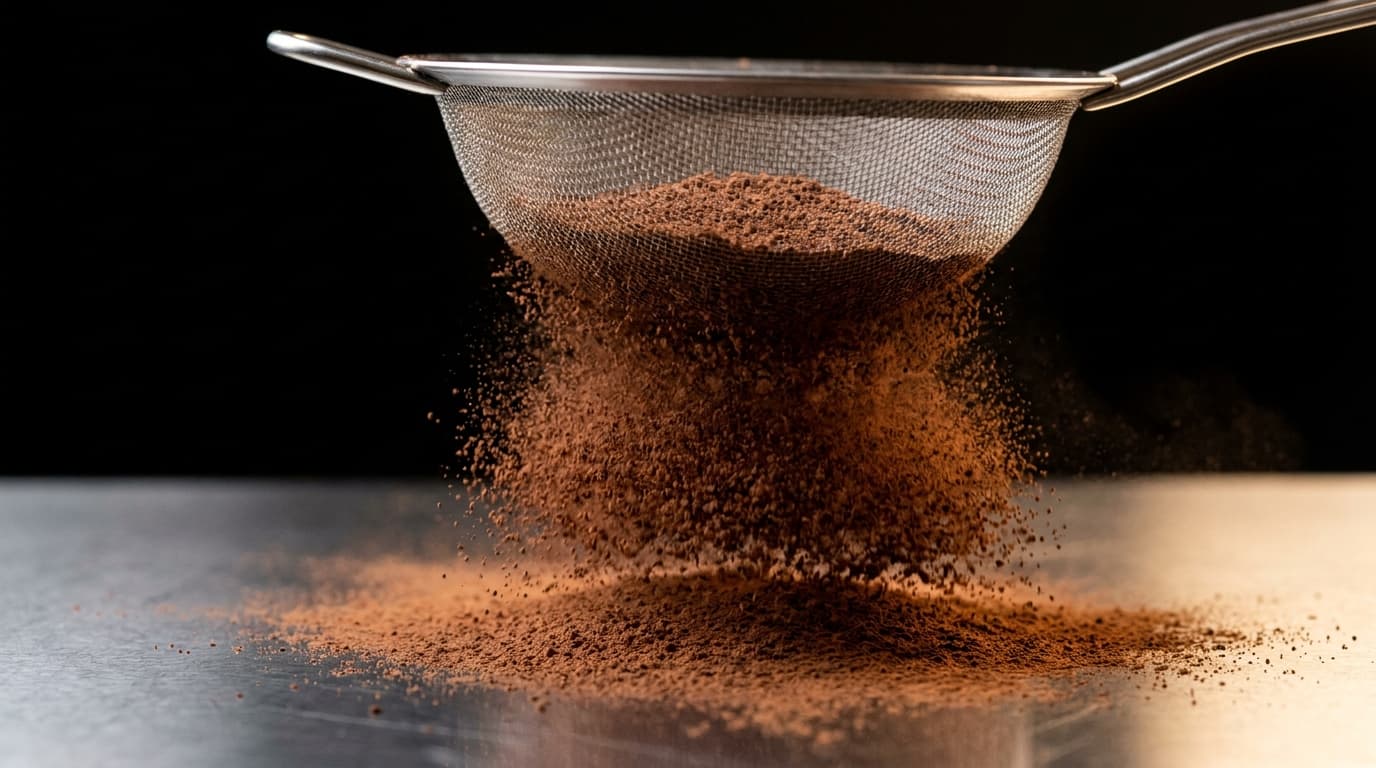
Table of Contents
- 01Industrial Processing Chain: From Bean to Powder
- 02Core Definitions: Cocoa Powder vs. Liquor vs. Cocoa Butter
- 03Critical TDS Specification Parameters
- 04Industrial Applications by Sector
- 05Physicochemical Rheology and Industrial Emulsion Behavior
- 06Organic Certification Boundaries and De Facto Organic Reality
- 07Heavy Metal Cadmium Compliance and EU Regulatory Limits
- 08Packaging Infrastructure, Palletization and Global Logistics
- 09Supplier Qualification Protocols and Industrial Quality Assurance
- 10Storage Conditions and Industrial Shelf Life
- 11Conclusion and Procurement Recommendations
In commercial food processing, beverage manufacturing, and industrial baking, ingredient selection requires an exact understanding of technical specifications. Industrial cocoa powder represents one of the most versatile plant-based raw materials in global food production. Milled from processed cacao seeds ("Theobroma cacao"), cocoa powder defines the color, texture, and sensory identity of thousands of commercial retail products worldwide. Sourcing premium cocoa powder derived from fine aroma Ecuadorian "Arriba Nacional" beans ensures technical standardization and sensory consistency across production runs.
This comprehensive technical guide serves as a practical manual for "B2B" procurement managers and "R&D" food scientists. We evaluate primary processing steps, key differences among cacao derivatives, critical parameters on Technical Data Sheets ("TDS"), commercial grades, and supplier audit criteria.
Industrial Processing Chain: From Bean to Powder
Manufacturing high-grade cocoa powder requires tight process control at every primary processing stage:
1. **Fermentation and Sun Drying**: Harvested cacao beans undergo wooden box fermentation for 4 to 6 days to develop essential precursor flavor compounds. Beans are then sun-dried until moisture drops below 7.0%.
2. **Convection Roasting and Winnowing**: Cleaned beans undergo thermal convection roasting to develop chocolate top notes and loosen outer hulls. Pneumatic winnowing separates clean nibs from shell fragments.
3. **Grinding and Hydraulic Pressing**: Nibs are milled into cocoa liquor through mechanical friction. High-pressure hydraulic presses (exceeding 400 bar) squeeze liquid cocoa butter from heated liquor, yielding dense solid cocoa press cake.
4. **Micronization and Air Sifting**: The cake is pulverized in pin mills and classified by air classifiers to ensure at least 99.5% of particles pass through 200 "mesh" (75 microns) sieves.
Core Definitions: Cocoa Powder vs. Liquor vs. Cocoa Butter
Formulators must distinguish between the three primary cacao derivatives: - **Cocoa Liquor (Cocoa Mass)**: Pure ground cacao nibs containing 52-55% natural cocoa butter and 45-48% dry cocoa solids. It forms the structural core of fine chocolates and coatings. - **Cocoa Butter**: The pure lipid fraction extracted during pressing, possessing polymorphic Beta-crystal setting properties at 36°C. - **Cocoa Powder**: Dry cocoa solids remaining after partial fat extraction, containing fibers, polyphenols, and 10-22% residual fat.
Critical TDS Specification Parameters
When reviewing a "B2B" specification sheet, quality assurance teams must audit five vital parameters:
1. Fat Content Grades
Residual fat directly alters dough rheology, aeration, and batch cost. Standard commercial grades are 10-12% standard fat and 20-22% high fat. For application details, review our technical breakdown of cocoa fat content grades.
2. pH and Alkalization Level
Natural cocoa powder exhibits an acidic "pH" of 5.2-5.8 with a light brown color. Dutch alkalization raises "pH" to 6.8-8.2, darkening color and softening flavor. The precise control of "pH" dictates the visual hue from reddish-brown to dark black.
3. Granulometry and Dispersibility
Wet sieve analysis must confirm over 99.5% passing 200 "mesh" (75 microns) to prevent gritty mouthfeel in finished products. Instant beverages require agglomerated or lecithinized grades for rapid wetting.
4. Moisture Content
Moisture must remain strictly below 5.0% (target 3.0-4.5%) to prevent clumping in storage silos and inhibit fungal growth during ocean transit.
5. Microbiological Safety
Specifications must mandate total plate count ("TPC") under 5000 "cfu"/g, yeast/mold under 50 "cfu"/g, and zero *Salmonella spp.* in 375g analytical samples.
Industrial Applications by Sector
Cocoa powder serves distinct functions across food sectors: - **Dairy and Beverage Industry**: Requires Dutch-processed lecithinized powders with medium-to-high "pH" (7.2-8.0) to prevent rapid sedimentation in "UHT" beverages. - **Commercial Bakery and Biscuits**: Utilizes natural or lightly alkalized powders. The interaction between cocoa "pH" and chemical leavening agents (sodium bicarbonate) controls oven rise and crust color. - **Ice Cream and Frozen Desserts**: Prefers 10-12% alkalized powders to minimize fat interference with ice crystal formation and mix overrun. - **Sports Nutrition and Dry Mixes**: Specifies raw, unsweetened cocoa powder for clean-label functional formulations.
Physicochemical Rheology and Industrial Emulsion Behavior
Understanding the rheological behavior of industrial cocoa powder is crucial for beverage manufacturers and confectionery formulators. When cocoa powder is dispersed into liquid systems (such as milk, plant-based dairy alternatives, or water-based syrups), particle size distribution directly governs sedimentation velocity. According to Stokes' Law, reducing particle diameter below 75 microns (200 "mesh") significantly lowers settling rates, prolonging suspension stability in commercial shelf-stable products.
Furthermore, residual cocoa butter fat (10-12% vs 20-22%) influences fat-water interfacial tension. In high-fat powders, lipophilic interactions require high-shear homogenization or lecithin coating to achieve uniform dispersion without fat floatation. In contrast, standard 10-12% fat powders hydrate more rapidly in aqueous solutions, making them ideal for instant beverage mixes, RTD chocolate milks, and nutritional protein drinks.
Organic Certification Boundaries and De Facto Organic Reality
Understanding the distinction between certified organic cocoa powder and "de facto" organic sourcing is vital for procurement strategy. Certified organic cocoa requires unbroken chain-of-custody documentation under USDA NOP or EU 2018/848 standards. Certified farms undergo annual audits to verify zero synthetic pesticide or fertilizer application throughout a mandatory three-year conversion window. Each shipment must be accompanied by Transaction Certificates ("TC") issued by accredited certifying bodies.
However, significant volumes of Ecuadorian fine aroma cacao are grown by smallholder family farms using traditional agroforestry methods. These smallholders avoid synthetic agrochemicals due to cost or traditional farming philosophy, producing cacao that is "de facto" organic. Yet, lacking formal certification due to administrative costs, these lots are traded as conventional. Procurement teams can audit these supply chains via multi-residue pesticide screening, direct farm visits, and trace-back documentation.
Heavy Metal Cadmium Compliance and EU Regulatory Limits
European Regulation (EU) 2023/915 enforces strict maximum residue limits ("MRL") for cadmium ("Cd") in cocoa products. For cocoa powder intended for final retail consumption or industrial formulations, limits range from 0.60 mg/kg for standard cocoa powders up to 0.80 mg/kg for high-fat specialty powders. Cadmium bioaccumulation occurs naturally in volcanic soils rich in organic matter across South America.
Ecuadorian producers manage cadmium levels through soil pH amendments (applying agricultural lime to reduce root absorption), mapping watershed soil chemistry, and blending lots from low-cadmium regions. Quality control teams verify compliance for every export lot using ICP-MS testing prior to issuing shipping documentation.
Packaging Infrastructure, Palletization and Global Logistics
Preserving cocoa powder quality during long-distance maritime transport demands specialized industrial packaging solutions. Shipments are packed in multi-wall kraft paper bags with 80-micron food-grade polyethylene ("PE") inner liners, preventing moisture absorption and odor contamination. Bags are stacked on heat-treated "ISPM-15" wooden pallets, film-wrapped with stretch wrap, and secured with corner protectors for maritime container transport.
Containerized freight across ocean trade routes requires placing desiccant bags inside 20ft or 40ft dry van containers to absorb ambient moisture and prevent container sweat. Maintaining storage temperatures below 20°C and relative humidity under 65% prevents caking and microbiological growth. Contact our logistics engineers for consolidation options.
Supplier Qualification Protocols and Industrial Quality Assurance
Approving a commercial cacao supplier for industrial processing requires a thorough audit of technical documentation and batch-to-batch consistency. Quality assurance ("QA") departments must establish a statistical sampling protocol in accordance with "ISO" standards for every ocean freight shipment arriving at destination ports. Laboratory testing verifies fundamental physicochemical parameters: moisture content via Karl Fischer titration (strictly maintained below 5.0%), residual fat content via Soxhlet extraction, and total ash analysis.
Furthermore, microbiological testing serves as a critical control point ("CCP") within the plant's "HACCP" plan. Total plate count ("TPC") must remain under 5,000 "cfu"/g, with absolute absence of pathogenic microorganisms such as *Salmonella spp.* in 375-gram analytical units. Chemical contaminant monitoring includes continuous heavy metal screening by mass spectrometry ("ICP-MS"), ensuring cadmium ("Cd") and lead ("Pb") levels comply with European Union import standards.
Storage Conditions and Industrial Shelf Life
Industrial cocoa powder maintains a commercial shelf life of 18 to 24 months from production when stored correctly. Multi-wall paper bags with polyethylene liners must be stored on pallets, away from walls, in climate-controlled warehouses below 20°C and relative humidity under 65%. Heat or humidity exposure leads to caking and color degradation.
Conclusion and Procurement Recommendations
Balancing fat content, "pH", particle fineness, and safety parameters ensures optimal product formulation. Partnering with direct Ecuadorian producers guarantees reliable technical quality for European and North American manufacturing facilities.
Across cocoa industries broadly, from confectionery to bakery to functional beverages, the same origin lot of powder gets specified differently by each buyer: a chocolatier reads the fat percentage first, a baker reads the pH and alkalization first, and a beverage formulator reads the particle size first. Supplying one consistent, well-documented lot that satisfies all three reading habits is what lets a single production run serve several downstream industries without re-testing.
At El Dulce Origen, we supply premium Ecuadorian cocoa powder to food manufacturers across Europe and North America. Contact our sales engineers via our contact page page for specifications and sample shipments.
What buyers mean by high quality cocoa powder varies by application, but on paper it comes down to the same handful of numbers: consistent fat content lot to lot, a documented pH and moisture range, a fine, uniform particle size, and heavy metal results within the destination market's limit. A powder can satisfy every one of those and still be the wrong grade for a given recipe if the natural-versus-alkalized choice was wrong, which is why we ask for the application before quoting a lot rather than after.
Some briefs ask for high quality cacao powder rather than cocoa powder, expecting a different tier of product; there is no separate premium line hiding behind the cacao spelling, only the same lot graded against the same specification sheet described above.
A related but distinct request is bulk chocolate powder, which usually refers to a sweetened drinking-chocolate mix (cocoa powder blended with sugar and sometimes milk powder) rather than the pure, unsweetened cocoa powder specified throughout this guide. We supply the cocoa powder component in bulk formats as the base ingredient for that kind of blend, but the sweetened finished mix itself is formulated and packed by the buyer or their co-packer, not sold by us as a ready-made product.
A request for a bulk cocoa mix usually means something different from the single-ingredient powder specified throughout this guide: a pre-blended drinking or bakery base in which cocoa powder sits alongside sugar, milk solids or a stabiliser. We supply the cocoa component of that blend in bulk formats, and where the recipe is already fixed we can recommend the grade the blend needs, since fat percentage and pH govern how the mix disperses in hot liquid and how dark the finished cup reads. The blending, sweetening and packing of the finished mix stay with the buyer or their co-packer. Saying up front whether you need a pure powder or the base for a mix prevents the most common quoting error in this category: a low-fat 10-12% natural powder sent to a customer whose beverage application required a 22-24% alkalized grade.
Search demand for a cacao powder supplier is dominated by intermediaries rather than by the plants that actually press the powder, which is why the first qualifying question in this category is not price but position in the chain. A trading desk can quote faster and in smaller lots; an origin supplier can tell you which harvest and which pressing run the lot came from, and can reproduce it next season. Neither answer is wrong, but they carry different risks: the trader's advantage disappears the moment your specification tightens, because the lot they resell was pressed to someone else's brief. Ask any prospective supplier who owns the press, whether the certificate of analysis is issued for your lot or for a reference batch, and what happens when a shipment fails your incoming inspection.
Requests for bulk hot chocolate powder, or hot cocoa powder bulk, almost always mean a sweetened drinking preparation rather than the pure powder specified here, and the same applies to briefs for organic cacao hot chocolate. We supply the cocoa component of those blends, not the finished mix. What is worth settling early is the powder grade the blend needs, because the choice is counterintuitive for teams new to the category: a higher-fat, alkalized powder usually performs better in a milk-based drink, where a natural low-fat powder can read as thin and acidic, while the opposite is true in most bakery applications.
Cacao Powder
Interested in sourcing this product directly from our factory in Cayambe, Pichincha?
Frequently Asked Questions About This Topic
What are the primary commercial grades of industrial cocoa powder?
Industrial cocoa powder is categorized by fat content (10-12% standard fat vs 20-22% high fat) and alkalization level (natural unalkalized vs light, medium, or dark Dutch processed).
How does alkalization affect cocoa powder performance in food manufacturing?
Alkalization raises pH from natural acidic levels (5.2-5.8) to neutral or alkaline ranges (6.8-8.2), darkening color, softening astringency, and improving dispersibility in liquids.
What microbiological standards apply to B2B cocoa powder shipments?
Standard specifications require total plate count (TPC) under 5000 cfu/g, yeast and mold under 50 cfu/g, enterobacteriaceae negative, and absolute absence of Salmonella in 375g samples.
Does cocoa powder contain natural stimulants?
Yes, cocoa powder naturally contains theobromine (1.5% to 2.5%) and trace amounts of caffeine, providing a smooth, sustained alertness without sharp energy spikes.
Related articles
Baking Cocoa vs. Natural Cocoa Powder: An Industrial Sourcing Guide
Understand the differences between baking cocoa (alkalized/Dutch-processed) and natural cocoa powder to optimize your industrial bakery formulations.
Read ArticleRaw Unsweetened Cocoa Powder vs. Alkalized: Technical Sourcing Gaps
A technical evaluation of raw unsweetened cocoa powder compared to alkalized variants, highlighting acidity, fat contents, and industrial baking behaviors.
Read ArticleCarob vs Cacao Powder: B2B Formulation Guide
Industrial B2B comparison between carob powder and cocoa powder: nutritional matrix, baking performance, rheology, and sensory profile.
Read Article