What 'Organic' Really Means in B2B Cacao Sourcing & Cocoa Butter
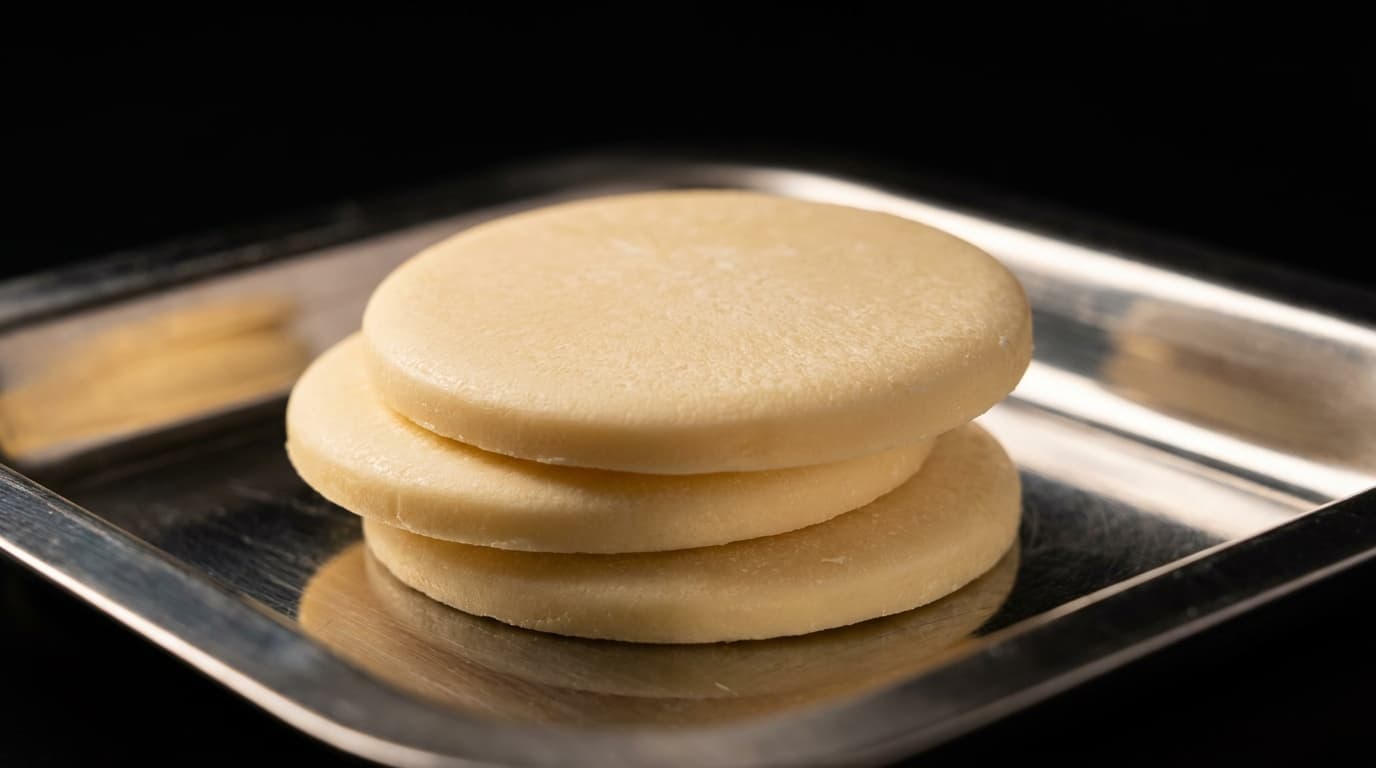
Table of Contents
- 01The Regulatory Framework: USDA NOP vs. EU 2018/848
- 02The 3-Year Conversion Period and Smallholder Economics
- 03The Reality of 'De Facto Organic' Cacao in Ecuador
- 04How B2B Buyers Evaluate Suppliers Without Organic Certification
- 05Fair Trade Cocoa: What the Label Certifies
- 06Kosher Cocoa: Certification Follows the Plant, Not the Bean
- 07Cocoa Butter vs. Cacao Butter: Terminology and Technical Specifications
- 08Natural Prime Pressed vs. Deodorized Cocoa Butter Grades
- 09Commercial Sourcing and Transparent Positioning
For international B2B buyers, food manufacturers, and confectionery brands, sourcing organic raw materials represents an increasingly vital commercial strategy—driven by shifting consumer demands and strict regulatory mandates across global markets. However, navigating commercial claims surrounding organic cacao and organic cocoa butter requires a thorough, technical understanding of international certification standards, farm-level agricultural economics, and rigorous chemical auditing protocols. In the global cacao trade, the designation 'organic' is not a casual marketing descriptor; rather, it carries precise legal definitions enforced by government authorities such as the United States Department of Agriculture (USDA) National Organic Program (NOP) and the European Union (under Regulation EU 2018/848). Understanding how these regulatory frameworks operate in origin countries—specifically within Ecuador's diverse agricultural zones—is essential for purchasing managers, procurement officers, and quality assurance specialists who must maintain regulatory compliance while managing supply chain costs effectively across international trade routes.
When evaluating a potential commercial supplier offering organic cacao derivatives, purchasing directors must recognize a foundational principle: official organic certification is never granted to an isolated bean sample, a single shipping container, or a standalone product lot. Instead, organic certification applies to the entire agricultural production ecosystem—and the unbroken chain of custody. This means that every single entity handling the material (from the smallholder farmer's plot, local aggregation hub, and fermentation facility, to the dry mill, export warehouse, and extraction plant) must hold an active, valid organic certificate issued by an accredited third-party certifying body. Procurement officers sourcing cocoa butter or related derivatives must rigorously verify that both the agricultural producer, and the processing facility maintain compliant documentation for the destination market prior to executing binding commercial purchase contracts.
The Regulatory Framework: USDA NOP vs. EU 2018/848
The two dominant global benchmarks governing organic cacao trade are the USDA NOP framework across North America and Regulation EU 2018/848 across the European Union. While both standards share the primary objective of prohibiting synthetic chemical fertilizers, synthetic pesticides, genetically modified organisms (GMOs), and ionizing radiation, they differ in administrative enforcement, inspection protocols, and specific input permissions. Under USDA NOP guidelines, products labeled as '100% Organic' or 'Organic' (containing at least 95% certified organic ingredients by weight) can display the official USDA organic seal once verified by an accredited agency. Conversely, the European Union framework enforces comprehensive rules regarding soil health management, biodiversity conservation, and chemical drift prevention; it requires the mandatory EU organic leaf logo on consumer packaging distributed within member states.
To transport organic cacao across international borders, suppliers must generate transaction-specific documentation, for every individual shipment. For commercial shipments entering the European Union, a Certificate of Inspection (COI)—generated through the electronic TRACES NT system—is legally required before the ocean vessel departs from the port of export. For the North American market, an NOP Import Certificate (issued by the accredited certifier) must accompany the commercial invoice, phytosanitary certificate, and bill of lading. Without these original, verified transaction certificates, even cacao harvested from a fully certified farm loses its organic status at customs entry—forcing the importing entity to clear the shipment as conventional material at a substantial financial loss. This mandatory paper trail guarantees that certified organic supply streams remain strictly segregated from conventional harvests during international sea transport.
The 3-Year Conversion Period and Smallholder Economics
Obtaining formal organic certification is a demanding, multi-year process that requires a mandatory transition period of at least three years—universally referred to as the conversion phase. During these 36 months, agricultural producers must adhere completely to organic farming protocols (eliminating all prohibited synthetic fertilizers, fungicides, and insecticides) without being permitted to market or sell their harvest at premium organic prices. For smallholder farmers in Ecuador's coastal lowlands and Amazonian foothills, where typical family farm sizes range between two and five hectares, this three-year financial gap represents a formidable barrier to entry; it requires capital resilience, technical guidance, and patient farm management over multiple harvest cycles.
In addition to revenue delays, the direct financial costs of annual third-party audits, administrative record-keeping, soil and leaf testing, and chain-of-custody tracking are disproportionately heavy for individual smallholders. While agricultural cooperatives occasionally implement Internal Control Systems (ICS) to group small producers under a unified collective certificate, maintaining compliance requires continuous training, internal farm inspectors, and dedicated administrative staff. As a direct result, many small farming communities choose not to pursue formal certification—even when their traditional agronomic practices fully align with organic standards in daily field operations.
The Reality of 'De Facto Organic' Cacao in Ecuador
Across many traditional cacao-growing regions in Ecuador—particularly within ancient Nacional and Arriba cacao groves—smallholder farmers practice what agronomists and industry experts classify as 'de facto organic' agriculture. Guided by historical farming customs, high commercial costs of synthetic inputs, and geographical isolation, these smallholders rely exclusively on natural leaf litter decomposition, nitrogen-fixing shade trees (such as leguminous *Erythrina* and *Inga* species), and manual weed management using machetes. Synthetic chemical fertilizers, systemic fungicides, and chemical insecticides are simply never applied to the cacao trees throughout the annual crop cycle.
However, despite being agronomically clean, environmentally sustainable, and free from synthetic agrochemical residues, this cacao cannot be legally advertised, traded, or labeled as 'certified organic' in B2B transactions or on retail packaging. In the international marketplace, claiming organic status without official certification violates consumer protection statutes, fair trade laws, and import regulations. For procurement managers seeking high-purity cacao, distinguishing between certified organic inventory and de facto organic agricultural practices allows for more realistic purchasing strategies, accurate product labeling, and transparent contract negotiations.
How B2B Buyers Evaluate Suppliers Without Organic Certification
When sourcing conventional cacao or uncertified lots from high-quality origins, professional B2B procurement teams implement rigorous technical auditing protocols to verify purity, chemical safety, and compliance with international food safety standards. Rather than relying solely on paper certificates, experienced industrial buyers evaluate prospective suppliers through empirical laboratory testing, physical farm inspections, and direct supply chain audits. Understanding these analytical verification methods is essential when reviewing cocoa butter grades and uses across food manufacturing, confectionery production, and personal care formulations.
The primary technical tool for supplier evaluation is comprehensive multi-residue pesticide screening conducted by independent, accredited laboratories using advanced liquid chromatography-tandem mass spectrometry (LC-MS/MS) and gas chromatography-tandem mass spectrometry (GC-MS/MS) instrumentation. These analytical panels test for hundreds of active synthetic pesticide compounds, herbicides (such as glyphosate and AMPA), and industrial chemical contaminants down to parts-per-billion (ppb) detection limits. By requiring lot-specific Certificate of Analysis (CoA) documentation prior to vessel loading, buyers confirm that the incoming cacao complies with strict Maximum Residue Limits (MRLs) established by regulatory bodies like the US FDA or the European Food Safety Authority (EFSA).
Beyond laboratory testing, B2B buyers conduct physical farm audits, and trace lot documentation back to specific farmer associations, and aggregation centers. Establishing direct, transparent relationships with origin exporters guarantees full visibility into post-harvest practices, fermentation box protocols, and drying hygiene. When specialized uncertified organic-grade batches are requested for custom product formulations, buyers frequently establish tailored supply agreements that outline strict agronomic protocols—backed by mandatory pre-shipment sampling, and analytical screening.
Fair Trade Cocoa: What the Label Certifies
Fair trade cocoa is certified under a social and economic standard, not an agricultural one. The two schemes most buyers meet are Fairtrade (Fairtrade International, with national labels such as Fairtrade Deutschland or the Fairtrade Foundation in the UK) and Fair Trade USA. Both certify conditions along the supply chain — typically a minimum price or price floor for certified producer organisations, a premium they invest collectively, and requirements on labour, governance and traceability — and both are audited per operator, just like organic. The certificate belongs to a specific cooperative, exporter or trader, and the lot has to travel through certified hands for the claim to reach the pack.
Fair trade and organic answer different questions. Organic certifies how the cacao was grown and handled; fair trade certifies how the value was shared. A lot can be both, either or neither, and one never implies the other. The minimum price and premium amounts are revised by the standard owners from time to time, so a buyer should take the current figures from the scheme itself rather than from an older contract or article.
El Dulce Origen does not hold a fair trade certification of its own and does not present its cacao as fair trade certified. What we can document is the commercial relationship: direct purchasing from around 100 allied farms in Manabí, Esmeraldas and Pichincha, post-harvest processing in our own facility in Cayambe, and lot-level traceability from farm to sack. For a brand that needs the fair trade logo on pack, that documentation is a starting point for a certified supply chain, not a substitute for the certificate.
Kosher Cocoa: Certification Follows the Plant, Not the Bean
Cocoa beans are a plant product, so buyers sometimes assume kosher cocoa needs no paperwork. In practice, kosher certification is issued by a kosher agency to a specific production facility and a specific list of products, after an inspection of ingredients, equipment and cleaning procedures. What an agency looks at in a cocoa plant is everything that touches the product: shared lines with dairy or other ingredients, release agents and emulsifiers, and how equipment is cleaned between runs. The outcome is a certificate or letter of certification that names the plant and the products, often with a designation such as pareve (containing neither meat nor dairy) or dairy.
For a manufacturer who sells into kosher markets, the practical rule is to ask for the current letter from the certifying agency for the exact product and plant, and to check that the product name on the letter matches the one on the invoice. A statement that cocoa is "naturally kosher" is not a certificate.
El Dulce Origen does not hold a kosher certification today, so we cannot supply kosher-certified cocoa. What we can state is factual: our cacao products — beans, nibs, liquor, butter, powder and paste — are 100 % cacao, with no dairy or animal ingredients. A buyer who needs certified kosher cocoa should source it from a certified plant.
Cocoa Butter vs. Cacao Butter: Terminology and Technical Specifications
In commercial trade documentation, raw material specifications, and marketing literature, buyers frequently encounter the terms 'cocoa butter' and 'cacao butter'. From a botanical, chemical, and regulatory perspective, both terms refer to the exact same natural vegetable fat extracted from the fermented, dried seeds of the *Theobroma cacao* tree. The fundamental triglyceride structure—dominated by palmitic acid (C16:0), stearic acid (C18:0), and oleic acid (C18:1)—remains completely identical regardless of which English designation appears on the product data sheet.
The distinction between these two terms is primarily commercial and market-driven. In retail channels, 'cacao butter' is frequently adopted by wellness brands, raw food manufacturers, and boutique chocolatiers to imply minimal thermal processing. Conversely, 'cocoa butter' represents the standard technical terminology utilized in global commodity trade, industrial chocolate manufacturing, pharmaceutical pharmacopeias (such as the USP and Ph. Eur.), and official food standards. Purchasing agents should treat both terms as chemically equivalent while focusing their evaluation on tangible physical parameters—including slip melting point, Free Fatty Acid (FFA) percentage, saponification value, and iodine index.
Natural Prime Pressed vs. Deodorized Cocoa Butter Grades
When ordering cocoa butter for industrial food processing or cosmetic manufacturing, purchasing managers must specify the precise processing grade required for their formulation. Commercial cocoa butter is primarily produced in two distinct technical grades: Natural Prime Pressed (NPP) and Fully Deodorized (PPP). Selecting the appropriate grade is critical for achieving target sensory characteristics, flavor stability, and processing efficiency in production lines.
Natural Prime Pressed (NPP) cocoa butter is extracted by mechanically pressing pure cocoa liquor under high hydraulic pressure—without chemical solvents, alkali treatment, or refining. NPP butter retains its natural pale yellow hue, rich chocolate aroma, and distinct flavor notes inherited from the origin cacao beans. This grade is the preferred choice for dark chocolate, milk chocolate, and premium confectionery products where authentic cacao flavor enhances the finished food matrix.
Fully Deodorized cocoa butter undergoes a controlled steam distillation process under vacuum conditions to strip out volatile aromatic compounds; this produces a neutral, odorless, and virtually tasteless vegetable fat. This grade is widely utilized in white chocolate manufacturing—where added dairy, and vanilla flavors must not compete with cocoa notes—as well as in cosmetic lotions, pharmaceutical suppositories, and skin creams where a chocolate scent would interfere with added fragrances. Both grades must comply with strict physical purity limits—maintaining Free Fatty Acids below 1.75% (as oleic acid) and low peroxide values to ensure oxidative stability.
Commercial Sourcing and Transparent Positioning
Maintaining a completely honest, transparent market positioning is essential for building enduring B2B relationships. In our commercial strategy, we prioritize total clarity regarding agricultural practices, product processing, and technical specifications. Our Ecuadorian cacao derivatives—including cocoa butter, liquor, and cocoa powder—are produced as premium conventional ingredients sourced from traditional smallholder farms renowned for producing fine aroma Arriba Nacional cacao.
While our standard, commercial inventory is offered as conventional grade supported by complete, analytical CoA documentation, we actively collaborate with industrial partners who require specialized agricultural management. For clients seeking cacao grown without synthetic inputs, we coordinate custom contracts and dedicated lot segregation through selected farmer networks. To review detailed product specifications, request laboratory CoAs, or discuss custom supply arrangements, contact our technical sales team through our dedicated contact page.
The same organic-practice farm network that supplies this butter also feeds our cacao powder and bean lots, so a brand building an organic chocolate line or an organic cacao powder SKU can source every input from one traceable origin instead of stitching together certificates from separate suppliers — with the organic certificate itself held by a certified operator in that chain, since El Dulce Origen does not hold one. Because none of our partner farms are formally certified yet, buyers who need the certificate itself for label claims should confirm the volume threshold that makes a dedicated certification run worthwhile before committing a formulation to it.
Brands benchmarking the market often search for the best organic cacao powder or, more broadly, the best organic cacao, but organic is a documentary status rather than a quality tier. A certified lot is not automatically better in the cup than an uncertified one from the same farm; what the certificate does is allow a specific claim on a specific label, backed by an audit chain covering the farm, the processing facility and the trader. Our own position is stated plainly elsewhere on this site: conventional-grade lots by default, and certifiable organic volumes arranged under contract with the certificate issued in the name of the operator who holds it.
For finished goods sold into the United States, the query becomes usda organic chocolate, and the requirement shifts from the bean to the manufacturer: the certification covers the operation making the bar, which in turn has to source certified ingredients and keep the audit trail intact. A buyer cannot inherit organic status from a supplier's certificate; they have to be certified themselves for the claim to appear on their own packaging. Establish which side of that line your project sits on before you specify the raw material, because it changes what documentation is worth paying for.
Alongside organic, the certification most often requested is fair trade cocoa beans, and the two are not interchangeable: organic certifies agricultural practice and the absence of prohibited inputs, while fair trade schemes certify price floors and social conditions along the supply chain. A lot can hold one, both or neither, and each certificate is issued to a specific operator for a specific chain of custody. For buyers whose value proposition is farmer income rather than a label, direct sourcing with published terms is an alternative route, but it is a different claim and cannot be worded as if it were a certification.
Benchmark searches in this segment stack modifiers rather than adding requirements: best organic raw cacao powder, best raw organic cacao powder, 100 organic cacao powder and 100 cocoa powder organic all describe the same three conditions, single ingredient, unalkalized and certified. Only the third is a document, and it is the one that determines lead time and price. When comparing offers, separate the three explicitly on the RFQ, because a supplier quoting against the certificate and one quoting against the process are not competing on the same product.
Cacao Butter
Interested in sourcing this product directly from our factory in Cayambe, Pichincha?
Frequently Asked Questions About This Topic
Do you supply kosher cocoa?
Not certified. Kosher certification is issued by an agency to a specific plant and product list, and we do not hold one. Our cacao products are 100 % cacao with no dairy or animal ingredients, which a buyer can use in its own evaluation but not as a kosher certificate.
Is fair trade cocoa the same as organic cocoa?
No. Organic certifies agricultural practice and the absence of prohibited inputs; fair trade certifies price floors, premiums and social conditions along the supply chain. A lot can hold one, both or neither. El Dulce Origen holds neither certification of its own.
Is organic cocoa butter healthy?
Organic cocoa butter is a pure vegetable fat—rich in saturated and monounsaturated fatty acids (like stearic and oleic acid)—that is free from synthetic pesticide residues when properly audited by accredited laboratories.
What is the best cocoa butter to buy?
The ideal cocoa butter depends on the final application: natural prime pressed butter is preferred for chocolate making (due to its rich aroma), while deodorized cocoa butter is preferred for neutral cosmetics and white chocolate.
Is there a difference between cocoa butter and cacao butter?
Chemically and botanically they are identical (extracted from Theobroma cacao seeds). 'Cacao butter' is often used in raw or cold-pressed marketing, whereas 'cocoa butter' is the standard industry term.
Is cocoa butter actually good for your skin?
In cosmetic formulation, cocoa butter functions as a rich emollient and occlusive barrier; it helps lock in skin moisture, improve formula viscosity, and enhance skin elasticity.
Related articles
Does Cacao Have Caffeine? The Truth About Stimulants in Cocoa Beans
A deep B2B analysis of the actual caffeine content in cacao vs. theobromine, featuring exact serving comparisons and stimulant profiles.
Read ArticleCriollo Cacao vs. Nacional Fine-Flavor: A Guide to Premium Varieties
Explore the genetic differences, flavor profiles, and commercial realities of Criollo and Ecuadorian Nacional fine-flavor cacao varieties.
Read ArticleTheobromine Benefits: The Active Energy Compound in Cacao Nibs
An objective industrial exploration of theobromine benefits, its physiological mechanisms, safety thresholds, and occurrence in cacao products.
Read Article