Does Cacao Have Caffeine? The Truth About Stimulants in Cocoa Beans
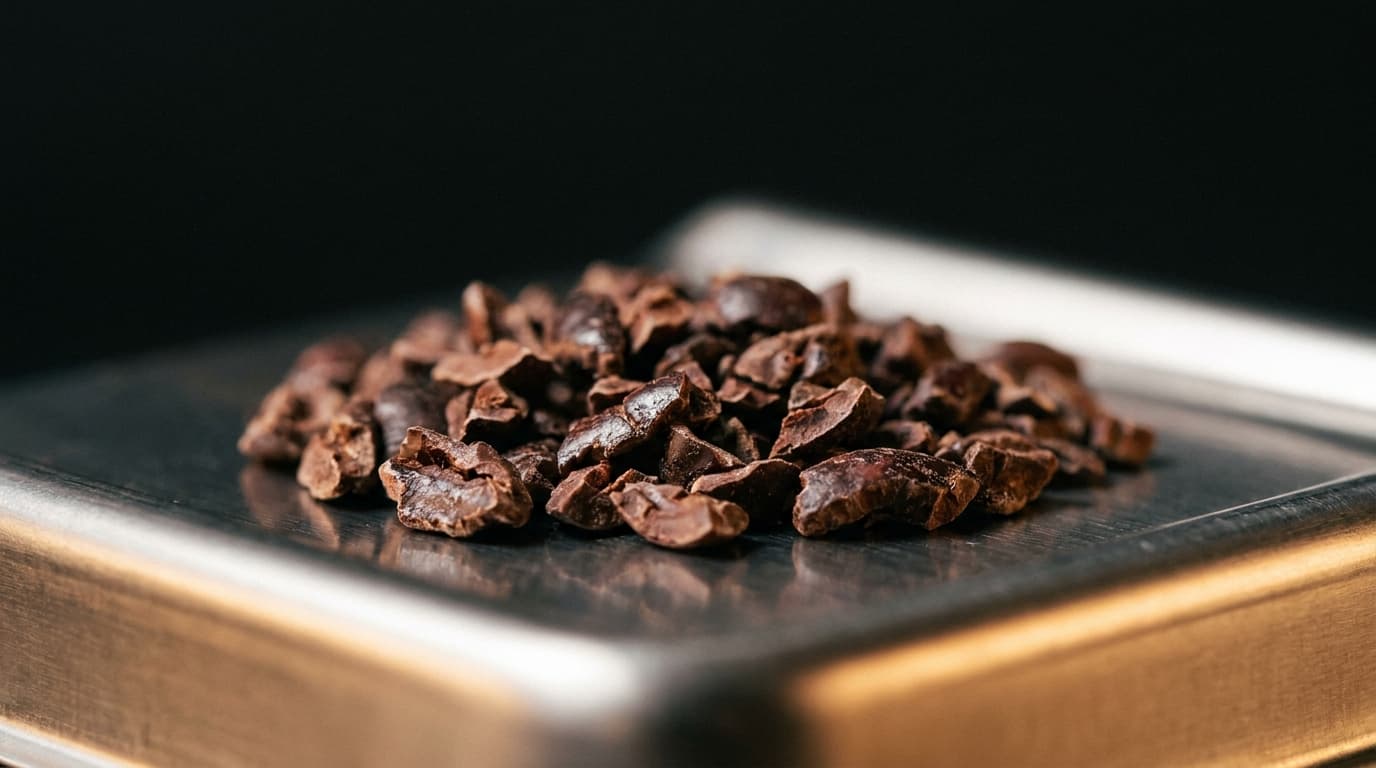
Table of Contents
- 01Understanding the Alkaloid Profile: Does Cacao Have Caffeine and Theobromine?
- 02Comparative Physiological Effects: Caffeine vs. Theobromine
- 03Quantifying Stimulants: Does Cacao Have Caffeine in Significant Amounts?
- 04Industrial Applications and Product Development Considerations
- 05B2B Procurement: Logistics, Payment Terms, and Supply Chain Integrity
- 06Conclusion: The Strategic Importance of Cacao's Stimulant Profile
Short answer: yes, cacao has caffeine, but not much. Dry cacao beans contain roughly 0.1% to 0.4% caffeine and 1.5% to 3.0% theobromine, their main stimulant. A cup of 100% cacao delivers a fraction of the caffeine in a cup of coffee; the effect people notice comes mostly from theobromine, which is milder and longer-lasting. Figures per product (nibs, powder, chocolate) are in the table further down this guide.
In the intricate world of cocoa and chocolate processing, a nuanced understanding of the raw material's biochemical composition is paramount. For industrial buyers, product developers, and quality assurance professionals, comprehending the stimulant profile of cacao is not merely an academic exercise; it directly impacts product formulation, consumer perception, and regulatory compliance. One of the most frequently posed questions in this domain is: does cacao have caffeine? While the answer is unequivocally yes, the true industrial significance lies in the comparative analysis of caffeine with its more abundant alkaloid counterpart, theobromine, and their distinct physiological effects. This article delves into the chemical intricacies of these compounds, their presence in various cacao derivatives, and the implications for B2B procurement and product development within the global agricultural export landscape.
Understanding the Alkaloid Profile: Does Cacao Have Caffeine and Theobromine?
The cacao bean (Theobroma cacao) is a rich source of various phytochemicals, among which methylxanthine alkaloids are particularly prominent. These compounds are naturally occurring stimulants that contribute significantly to the characteristic sensory profile and physiological effects associated with cocoa and chocolate products. The two primary methylxanthines found in cacao are caffeine and theobromine.
While both are structurally related, their concentrations and pharmacological actions differ substantially. Caffeine, chemically known as 1,3,7-trimethylxanthine, is widely recognized for its central nervous system (CNS) stimulating properties. In cacao, caffeine concentrations typically range from 0.1% to 0.4% on a dry weight basis. This relatively low concentration, especially when compared to coffee (which can range from 1.0% to 2.5% caffeine), often leads to the misconception that cacao is caffeine-free. However, its presence, even in smaller quantities, is a critical factor for product labeling and consumer information, particularly for sensitive populations.
Theobromine, or 3,7-dimethylxanthine, is the predominant methylxanthine in cacao, present in significantly higher concentrations, typically ranging from 1.5% to 3.0% on a dry weight basis. This alkaloid is a homolog of caffeine, differing by a single methyl group, yet this subtle structural variation leads to distinct physiological effects. Theobromine is a milder stimulant than caffeine, primarily acting as a vasodilator and a diuretic. Its impact on the CNS is less pronounced, and it is known for its longer-lasting, gentler stimulatory effect without the acute "jolt" often associated with caffeine. The higher concentration of theobromine is a defining characteristic of cacao, contributing to its unique appeal and differentiating it from other stimulant-containing botanicals.
The presence and ratio of these alkaloids are influenced by several factors, including the cacao variety (genetics), geographical origin, fermentation and drying processes, and the specific part of the bean being analyzed. For instance, the outer shell of the cacao bean can contain higher concentrations of methylxanthines than the nibs. Industrial processors must account for these variations to ensure consistency in their final products and to accurately declare nutritional information.
Comparative Physiological Effects: Caffeine vs. Theobromine
Understanding the distinct physiological effects of caffeine and theobromine is crucial for product development, especially when targeting specific consumer segments or functional benefits. While both are stimulants, their mechanisms of action and overall impact on the human body diverge significantly.
Caffeine: A Central Nervous System Stimulant
Caffeine primarily exerts its effects by antagonizing adenosine receptors in the brain. Adenosine is a neuromodulator that promotes relaxation and sleepiness. By blocking these receptors, caffeine prevents adenosine from binding, leading to increased neuronal activity and the release of neurotransmitters like dopamine and norepinephrine. This results in heightened alertness, improved cognitive function, reduced fatigue, and sometimes, increased anxiety or jitters, particularly in sensitive individuals or at higher doses.
A key characteristic of caffeine's action is its relatively rapid onset and peak effect, typically within 30-60 minutes of ingestion. It also has a shorter half-life compared to theobromine, meaning its effects dissipate more quickly. Furthermore, caffeine can stimulate the adrenal glands, leading to the release of cortisol, the "stress hormone." While this contributes to its energizing effect, chronic or excessive caffeine intake can potentially lead to adrenal fatigue or exacerbate stress responses in some individuals.
Theobromine: A Cardiovascular Vasodilator with Milder CNS Impact
Theobromine also acts as an adenosine receptor antagonist, but its affinity for these receptors is considerably lower than that of caffeine. This explains its milder stimulatory effect on the CNS. Instead, theobromine's primary physiological impact is on the cardiovascular system. It acts as a vasodilator, meaning it helps to widen blood vessels, which can lead to improved blood flow and a slight reduction in blood pressure. This vasodilatory effect is often associated with a feeling of gentle invigoration rather than the sharp alertness induced by caffeine.
Another significant difference is theobromine's longer half-life, which can be two to three times longer than caffeine's. This results in a sustained, milder stimulatory effect without the abrupt peak and crash often associated with caffeine. Crucially, theobromine does not typically induce a significant cortisol spike, making its stimulatory profile smoother and less prone to causing anxiety or sleep disturbances, especially when consumed in moderate amounts. Its diuretic properties also contribute to its overall physiological profile.
For industrial applications, these distinctions are vital. Products designed for sustained energy without jitters might leverage the higher theobromine content of cacao. Conversely, products where a rapid onset of alertness is desired might incorporate other caffeine sources or concentrate cacao components with higher caffeine ratios. The synergistic effects of caffeine and theobromine in cacao are also a subject of ongoing research, suggesting that their combined presence may offer a unique physiological experience distinct from either compound in isolation.
Quantifying Stimulants: Does Cacao Have Caffeine in Significant Amounts?
To address the question, "does cacao have caffeine in significant amounts?", it is essential to quantify the alkaloid content in various cacao-derived products. The concentration of caffeine and theobromine varies depending on the processing stage and the specific product. Below is a table illustrating typical ranges for these methylxanthines in common cacao products, based on average dry weight percentages and typical serving sizes.
| Cacao Product | Typical Serving Size | Caffeine Content (mg) | Theobromine Content (mg) | Caffeine (% dry weight) | Theobromine (% dry weight) |
|---|---|---|---|---|---|
| Cacao Nibs | 10g | 10 - 40 mg | 150 - 300 mg | 0.1% - 0.4% | 1.5% - 3.0% |
| Cocoa Powder (Natural) | 10g | 10 - 30 mg | 180 - 280 mg | 0.1% - 0.3% | 1.8% - 2.8% |
| Cocoa Powder (Dutch-processed) | 10g | 5 - 20 mg | 100 - 200 mg | 0.05% - 0.2% | 1.0% - 2.0% |
| Ceremonial Cacao Paste | 20g | 20 - 80 mg | 300 - 600 mg | 0.1% - 0.4% | 1.5% - 3.0% |
| Dark Chocolate (70-85% Cacao) | 30g | 20 - 60 mg | 200 - 400 mg | 0.07% - 0.2% | 0.7% - 1.3% |
| Milk Chocolate (30-40% Cacao) | 30g | 5 - 15 mg | 50 - 100 mg | 0.01% - 0.05% | 0.15% - 0.3% |
Note: These values are approximate and can vary based on cacao origin, variety, processing methods, and specific product formulation.
From the table, it is evident that while caffeine is present, its quantity per serving is generally lower than that found in a typical cup of coffee (which can contain 95-200 mg of caffeine). For example, a 10g serving of cacao nibs, a direct derivative of the cacao bean, contains approximately 10-40 mg of caffeine. In contrast, theobromine content is consistently higher, often by an order of magnitude. This data underscores the unique stimulant profile of cacao, where theobromine plays a more dominant role in terms of quantity.
For industrial applications, this detailed understanding allows for precise formulation. Manufacturers producing energy bars, functional beverages, or health-oriented chocolate products can leverage these figures to meet specific nutritional claims or to manage the stimulatory impact of their offerings. For instance, a product aiming for a gentle, sustained energy release might emphasize its theobromine content, while one targeting a more immediate boost would need to consider its caffeine contribution more carefully.
Industrial Applications and Product Development Considerations
The distinct stimulant profiles of caffeine and theobromine in cacao have significant implications for industrial applications and product development across various sectors. For B2B clients, understanding these nuances is critical for creating products that align with consumer expectations and market trends.
Functional Foods and Beverages
The growing market for functional foods and beverages presents a prime opportunity for cacao derivatives. Products designed for energy, focus, or mood enhancement can strategically utilize cacao's methylxanthine content. For example, a beverage aiming to provide sustained energy without the "jitters" might highlight its natural theobromine content. Conversely, a pre-workout supplement could combine cacao extract with other caffeine sources to achieve a desired stimulatory effect. The natural antioxidants and other beneficial compounds in cacao further enhance its appeal in this segment.
Confectionery and Chocolate Products
In the traditional confectionery industry, the stimulant profile influences consumer perception and product positioning. Dark chocolate, with its higher cacao content, naturally contains more caffeine and significantly more theobromine than milk chocolate. This contributes to its characteristic robust flavor and subtle energizing effect, which is often appreciated by consumers seeking a more sophisticated and less overtly sweet experience. Manufacturers can use this knowledge to differentiate their products, emphasizing the natural energy boost from cacao in their marketing.
Regulatory and Labeling Compliance
For all industrial applications, accurate labeling of caffeine content is a critical regulatory requirement in many markets. Even though the caffeine content in cacao products is generally lower than in coffee, it is still present and must be declared, especially for products marketed to sensitive populations such as pregnant women, children, or individuals with caffeine sensitivities. Theobromine, while not typically subject to the same strict labeling requirements as caffeine, is increasingly being recognized for its physiological effects, and its presence can be a valuable marketing point for products emphasizing natural, gentle stimulation.
Sourcing and Quality Control
The variability in methylxanthine content across different cacao varieties and processing methods necessitates rigorous sourcing and quality control. Industrial buyers must work with suppliers who can provide detailed specifications and consistent product quality. Our commitment to quality begins with our network of 100 allied farms in Manabi, Esmeraldas, and Pichincha, with whom we have cultivated relationships over six years. This direct engagement allows us to monitor cultivation practices and ensure the quality of the raw material. Our processing facility in Cayambe further ensures that the cacao beans are handled and processed under strict conditions to maintain their desired chemical profile, including their stimulant content. This meticulous approach is vital for clients seeking specific alkaloid concentrations for their product formulations.
B2B Procurement: Logistics, Payment Terms, and Supply Chain Integrity
For industrial clients seeking high-quality cacao derivatives, understanding the procurement process, logistics, and payment terms is as crucial as the product's chemical specifications. Our operations are structured to provide a seamless and reliable supply chain for B2B partners globally.
Export Logistics from Guayaquil
All our international shipments are managed through the Port of Guayaquil, Ecuador's largest and most active port. Guayaquil offers excellent connectivity to major global shipping routes, ensuring efficient and timely delivery of our products. We handle all necessary export documentation, customs clearances, and logistical coordination to facilitate a smooth transaction from our facility to your designated port. Our experienced logistics team works closely with reputable shipping lines to ensure the integrity and security of your cargo throughout transit.
Payment Terms: 60% Advance / 40% Against FOB Documents
Our standard payment terms for B2B transactions are structured to provide security and flexibility for both parties: a 60% advance payment upon order confirmation, with the remaining 40% due against the presentation of FOB (Free On Board) shipping documents. This payment structure ensures that production and logistical arrangements can commence efficiently, while the final payment is tied to the verifiable shipment of goods. Upon receipt of the 60% advance, we initiate the processing and preparation of your order. Once the goods are loaded onto the vessel at the Port of Guayaquil and the Bill of Lading (B/L) and other relevant shipping documents are issued, we present these documents for the final 40% payment. This method is widely accepted in international trade and provides transparency and accountability.
Supply Chain and Sourcing
Our supply chain is built on direct relationships and vertical integration. We collaborate with a network of 100 allied farms located in the prime cacao-growing regions of Manabi, Esmeraldas, and Pichincha. These relationships, cultivated over six years, ensure a consistent supply of premium cacao beans. Our commitment to sustainable and ethical sourcing practices means that we work directly with farmers, providing fair prices and technical assistance, which in turn guarantees the quality and traceability of our raw materials. This direct sourcing model allows us to offer full traceability from farm to export, a critical factor for many industrial clients concerned with ethical sourcing and product integrity.
Our state-of-the-art processing facility in Cayambe is equipped with modern machinery to process cacao beans into various high-quality derivatives, including cacao liquor, cacao butter, and cocoa powder. This facility adheres to stringent quality control standards, ensuring that all products meet international specifications and client requirements. We also offer private label services, allowing our B2B partners to brand our high-quality cacao products under their own labels, further enhancing their market presence.
Conclusion: The Strategic Importance of Cacao's Stimulant Profile
The question, "does cacao have caffeine?" is more than a simple query; it opens a gateway to a deeper understanding of cacao's complex biochemical profile and its profound implications for the industrial cocoa and chocolate sector. While caffeine is indeed present, its concentration is typically lower than that of theobromine, the dominant methylxanthine in cacao. This distinction is not merely academic; it underpins the unique physiological effects of cacao, offering a gentler, more sustained stimulation primarily driven by theobromine's vasodilatory properties, with a less pronounced central nervous system impact compared to caffeine.
For industrial buyers and product developers, this detailed knowledge is a strategic asset. It enables the precise formulation of products tailored to specific consumer needs, from functional foods emphasizing sustained energy to premium confectionery products leveraging cacao's natural invigorating qualities. Our commitment to quality, from our allied farms in Manabi, Esmeraldas, and Pichincha to our advanced processing facility in Cayambe, ensures that our cacao derivatives consistently meet the stringent specifications required by the global market. With robust export logistics from Guayaquil and transparent payment terms, we are positioned to be a reliable partner in your supply chain.
To explore how our premium cacao products can enhance your industrial applications and to discuss your specific requirements, we invite you to connect with our sales team. Our experts are ready to provide detailed product specifications, discuss custom solutions, and facilitate a seamless procurement process.
Buyers formulating an energy or functional beverage often ask directly how much caffeine in cacao beans they should expect, hoping for a single number the way they would for coffee. There is no single number: caffeine content varies with genetics, fermentation and roast, and it is consistently the minor stimulant next to theobromine in raw cacao, which is why a cacao-based product delivers a steadier lift than an equivalent dose of coffee rather than a sharper one.
The shorthand \"caffeine cocoa\" is often used loosely to mean any cocoa derivative marketed for its stimulant content, whether that is a nib, a natural powder, or a ceremonial-grade paste. Because caffeine is the minor alkaloid in every one of those formats, sourcing the raw bean itself already gives a formulator the full spectrum, without needing an isolated caffeine extract added back in.
Buyers comparing cacao bean caffeine to coffee often frame the question as theobromine vs caffeine, since both are xanthine alkaloids from the same chemical family but behave differently in the body. Caffeine crosses into the bloodstream quickly and blocks adenosine receptors directly, producing the familiar sharp alertness and, at high doses, the later crash. Theobromine is absorbed more slowly and has a longer half-life, roughly 6 to 10 hours against 3 to 5 for caffeine, which is why the lift from cacao feels steadier and lasts longer even though the bean's total caffeine content is a fraction of what coffee delivers. For formulators positioning a product on a clean-energy or functional claim, this theobromine-to-caffeine ratio is the technical detail that actually supports the marketing angle.
Contact us today to learn more about our offerings and to initiate a partnership that delivers quality and reliability: Contact Us.
The comparison buyers actually want is cacao vs coffee caffeine, phrased in searches as caffeine in cacao vs coffee, caffeine in cocoa vs coffee or cocoa caffeine vs coffee. The short version: a cup brewed from cacao contains a small fraction of the caffeine in an equivalent cup of coffee, while its dominant stimulant is theobromine, which acts more slowly and for longer. That difference is the entire basis for the ritual-drink positioning in this category, and it is also its main labelling risk, because low is not zero.
That is why a specification asking for cocoa powder caffeine free cannot be met by any genuine cocoa product. Caffeine occurs naturally in the bean and survives pressing and milling; a powder marketed as caffeine-free is either not cocoa or has been decaffeinated by a process that would have to be declared. For a beverage brand the accurate and defensible claim is naturally low in caffeine, supported by an analytical figure on your own lots rather than a generic table.
The direct question, is there caffeine in cocoa powder, deserves an unambiguous answer: yes, in small amounts that vary with origin, processing and how much of the bean's non-fat solids the powder contains. It is naturally present, it is not removed by pressing or milling, and it therefore appears in every genuine cocoa powder on the market. What varies is the quantity, which is why brands intending to communicate anything about caffeine content should measure their own lots rather than cite a generic figure from a nutrition table.
Two of the most common direct questions have short answers. Does cocoa powder have caffeine: yes, naturally and in small amounts, varying with origin and with how much non-fat cocoa solid the powder contains. Does ceremonial cacao have caffeine: also yes, and typically more per serving than powder, because ceremonial preparations use full-fat mass at a much higher dose than a spoonful of powder in milk. Neither product is caffeine-free, and any brand communicating on this point should measure its own lots instead of citing a generic figure, since the same origin can vary between harvests.
Requests for the cocoa powder caffeine content as a single number are the most common formulation question we receive, and the honest answer is a range rather than a figure. The quantity depends on the proportion of non-fat cocoa solids in the powder, on the variety and on processing, so a natural high-fat powder and a heavily defatted alkalized one will not return the same result. Brands that need a number for a label or a specification should have their own lots analysed and re-tested when the origin changes.
Related reading: What is Pure Cacao B2B: Definitions and Sourcing Guide.
Cacao Beans
Interested in sourcing this product directly from our factory in Cayambe, Pichincha?
Frequently Asked Questions About This Topic
Does cacao contain more caffeine than coffee?
No. Cacao contains very low amounts of caffeine (typically 0.1% to 0.4% by weight), whereas coffee beans average 1.2% to 2.2% caffeine. Most of cacao's stimulating effect comes from theobromine.
Will cacao keep you awake?
Cacao contains small amounts of caffeine and high amounts of theobromine. Theobromine is a mild, long-lasting cardiovascular stimulant, but it does not cause the jitteriness or cortisol spikes associated with coffee, making it less disruptive to sleep.
Is cacao a stimulant like coffee?
Cacao is a stimulant, but it behaves differently. Coffee relies on caffeine (a central nervous system stimulant), while cacao relies primarily on theobromine (a vasodilator and smooth muscle relaxant) that provides sustained energy without a crash.
Related articles
Criollo Cacao vs. Nacional Fine-Flavor: A Guide to Premium Varieties
Explore the genetic differences, flavor profiles, and commercial realities of Criollo and Ecuadorian Nacional fine-flavor cacao varieties.
Read ArticleTheobromine Benefits: The Active Energy Compound in Cacao Nibs
An objective industrial exploration of theobromine benefits, its physiological mechanisms, safety thresholds, and occurrence in cacao products.
Read ArticleThe Ultimate Chocolate & Cacao Glossary: Technical Definitions
Explore our comprehensive technical glossary covering essential chocolate and cacao definitions for professionals in the manufacturing and culinary industries.
Read Article