The Ultimate Chocolate & Cacao Glossary: Technical Definitions
Comprehensive Guide to Professional Chocolate Terminology
Understanding the intricate vocabulary of the chocolate and cacao industry is essential for professionals navigating the global supply chain, from sourcing raw agricultural materials to formulating premium confections. This glossary provides detailed, technically accurate definitions for key terms utilized by manufacturers, chocolatiers, and agricultural specialists. By establishing a clear, standardized lexicon, industry participants can ensure effective communication regarding quality specifications, processing protocols, and product characteristics. Whether discussing the nuanced aromatic profiles of distinct genetic varieties or the precise rheological parameters required for molding and enrobing, a robust understanding of these concepts is indispensable. The following detailed entries explore the critical components, processes, and classifications that define the professional landscape of cocoa processing and chocolate manufacturing.
Before diving into the terminology, it is vital to source the right ingredients, such as high-quality cocoa beans or roasted cocoa nibs. If you are specifically interested in rare varieties, you can explore our guide to criollo cacao.
Couverture Chocolate
A high-quality chocolate containing a higher percentage of cocoa butter than regular baking or eating chocolate. This additional fat content ensures that the melted product flows smoothly, making it ideal for molding, coating, and dipping applications in professional culinary settings. The precise formulation demands meticulous attention to temperature control during processing to achieve the desired glossy finish and satisfying snap upon cooling. Manufacturers often rely on this variant to deliver premium sensory experiences in confections, pastries, and artisanal creations. The balance of ingredients is strictly regulated to maintain its distinct rheological properties, distinguishing it from standard consumer formulations.
Bean-to-Bar Process
A manufacturing philosophy where the entire chocolate production process, from sourcing raw agricultural materials to molding the final product, is overseen by a single entity. This approach allows makers to exert maximum control over flavor development, roasting profiles, and texture refinement. It often involves direct trade relationships with farming cooperatives, ensuring traceability and quality assurance throughout the supply chain. Practitioners of this method emphasize the unique characteristics of specific harvests, celebrating the inherent diversity found in different geographic regions. The resulting products are frequently characterized by complex tasting notes that reflect their terroir and the maker's technical expertise.
Single Origin
Refers to products crafted using agricultural inputs sourced exclusively from one specific geographic area, which could be a country, a region, or even a single estate. This categorization is highly prized in the specialty sector, as it highlights the distinctive environmental factors—such as soil composition, climate, and local agricultural practices—that influence the final flavor profile. Consumers and professionals alike seek out these items to experience the pure, unblended expression of a particular terroir. The commitment to maintaining the integrity of these regional characteristics requires rigorous sorting and processing protocols to prevent cross-contamination with bulk commodities.
Percentage of Cacao (% Cacao)
A numerical indicator representing the total proportion of ingredients derived from the cocoa pod, including both the solid mass and the extracted fat. This metric serves as a crucial guide for determining the intensity, sweetness, and functional application of the product in professional formulations. A higher number typically correlates with a more robust, less sweet flavor profile, although it does not inherently dictate quality. Formulators use this percentage to adjust recipes, ensuring the correct balance of dry solids and fat for specific culinary requirements, from dense baked goods to delicate mousses. Understanding this value is fundamental for precise inventory selection and recipe development.
Cocoa Mass
The foundational ingredient produced by finely grinding roasted and winnowed kernels until they form a smooth, homogenous paste. At room temperature, this substance solidifies, but it becomes a viscous liquid when heated due to its naturally high fat content. It contains roughly equal parts of non-fat solids and naturally occurring fats, serving as the essential building block for all subsequent manufacturing stages. The quality of this paste directly dictates the aromatic complexity and bitterness of the final confection. Industrial processors evaluate its fineness and flavor consistency rigorously before proceeding with further formulation or pressing operations.
Cocoa Liquor
Synonymous in industrial contexts with the aforementioned mass, this term specifically refers to the substance in its melted, liquid state during the manufacturing process. Despite the name, it contains no alcohol; rather, it describes the fluid nature of the finely milled kernels under heat and friction. This liquid is either pumped directly into mixers for immediate formulation or directed to hydraulic systems for separation into its constituent parts. Its viscosity and particle size distribution are critical parameters monitored continuously to ensure optimal performance in subsequent refining and conching stages. The handling of this fluid requires precise temperature management to prevent degradation of delicate flavor compounds.
Cocoa Butter
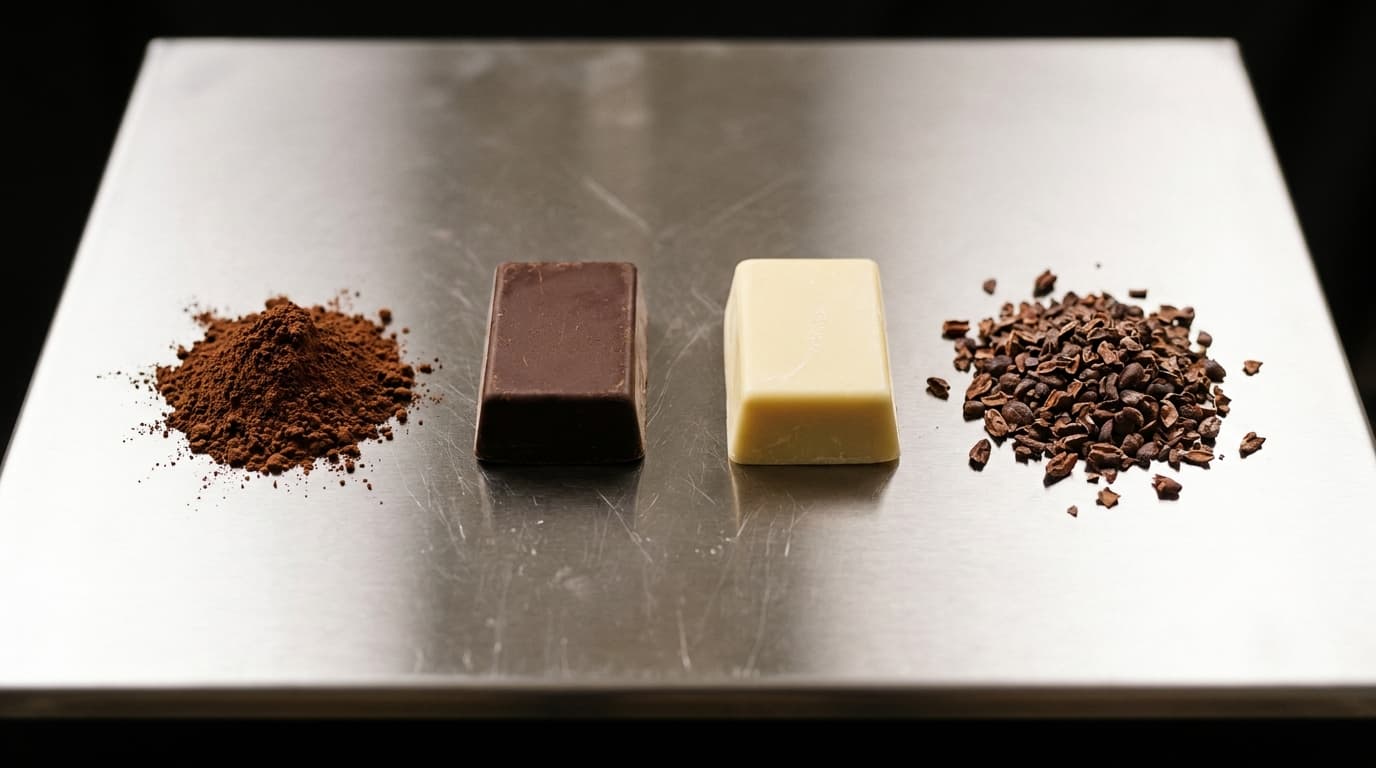
The pale yellow, edible vegetable fat extracted from the milled kernels through mechanical pressure. This highly valued ingredient is responsible for the characteristic melting profile, glossy appearance, and satisfying texture of premium confections. It exhibits unique polymorphic properties, meaning it can crystallize in several different forms, necessitating precise thermal manipulation to achieve stability. Beyond its primary culinary use, it is a sought-after commodity in the cosmetics and pharmaceutical industries due to its stability and skin-nourishing properties. Its market value often fluctuates based on global supply dynamics, making it a critical cost factor in large-scale manufacturing operations.
Cocoa Nibs
The small, broken pieces of roasted kernels obtained after the outer shell has been removed through the winnowing process. These fragments offer a crunchy texture and an intense, earthy, and slightly bitter flavor, representing the purest edible form of the raw material before extensive milling. They are increasingly utilized as a textural inclusion in baked goods, savory dishes, and healthy snack formulations due to their robust nutritional profile. Professionals value them for their versatility, using them to infuse liquids, garnish desserts, or mill into custom small-batch formulations. Their size and consistency are carefully graded to ensure uniform roasting and optimal extraction in later stages.
Fino de Aroma
A classification designated to describe beans that exhibit exceptional and complex aromatic profiles, typically characterized by floral, fruity, nutty, or malt notes. This distinction is crucial in the specialty market, differentiating premium lots from standard bulk commodities that primarily offer basic, straightforward flavors. The International Cocoa Organization recognizes specific countries and regions as producers of these highly sought-after varieties. Sourcing these specific lots often involves strategic partnerships and rigorous sensory evaluations to verify their superior organoleptic qualities. They are the preferred choice for high-end artisanal creations where nuanced flavor expression is paramount.
Criollo
An ancient and rare genetic variety renowned for producing beans with exceptional aromatic complexity, very low bitterness, and a delicate, creamy texture. Historically significant, this cultivar yields lighter-colored kernels that are highly prized by elite manufacturers for their refined flavor profiles, often featuring notes of caramel, nuts, and red fruits. Despite its superior sensory qualities, it is notoriously susceptible to disease and offers low agricultural yields, making it a scarce and expensive commodity. True, unhybridized populations are extremely rare, with many modern sources offering carefully selected hybrids that attempt to capture its legendary flavor while improving resilience. Its integration into a product line signifies a commitment to the highest echelons of quality.
Nacional
A celebrated genetic lineage primarily associated with Ecuador, distinguished by its unique floral aromatic profile, famously referred to as the 'Arriba' flavor. This variety played a historically dominant role in the fine flavor market before disease outbreaks necessitated the introduction of more robust hybrids. The classic profile is characterized by distinct notes of jasmine, orange blossom, and subtle earthiness, highly valued in premium European manufacturing traditions. Efforts to preserve and revive pure strains of this lineage are ongoing, involving advanced genetic mapping and dedicated conservation programs. Authentic lots command premium prices and require careful processing to protect their volatile aromatic compounds.
Forastero
The most widely cultivated genetic group globally, prized for its robust disease resistance and high agricultural yields, forming the backbone of the standard bulk market. While generally exhibiting a stronger, more straightforward, and sometimes astringent flavor profile compared to finer varieties, it provides the essential foundational structure for many mainstream products. Its dependable performance makes it the practical choice for large-scale industrial operations where consistency and cost-effectiveness are primary concerns. Certain specific populations within this broad category can develop surprisingly complex flavors when subjected to optimal post-harvest protocols. It remains the dominant force shaping global supply chains and pricing structures.
Conching
A crucial refinement process involving prolonged mechanical kneading, aerating, and heating of the milled mixture to develop flavor and improve texture. This stage reduces moisture content, volatilizes undesirable acidic compounds, and ensures every solid particle is evenly coated with fat, resulting in a smooth, luxurious mouthfeel. The duration and intensity of this procedure vary significantly depending on the desired final product, ranging from a few hours to several days for ultra-premium lines. It represents a significant energy expenditure in manufacturing, requiring specialized machinery and precise sensory monitoring to determine the optimal endpoint. The transformation achieved during this phase is essential for converting coarse ingredients into an elegant, finished product.
Tempering
The controlled process of heating and cooling the refined mixture to encourage the formation of stable fat crystals, specifically the Beta V form. Proper execution ensures the final product possesses a glossy finish, a clean snap when broken, and resistance to fat bloom, a cosmetic defect where fat migrates to the surface. This thermal manipulation requires precise equipment and constant monitoring, as even minor deviations can ruin the texture and appearance of the entire batch. It is a fundamental skill in professional applications, essential for creating molded shapes, enrobing delicate centers, and ensuring long-term shelf stability in varying environmental conditions. Mastery of this technique is a hallmark of professional competence in the industry.
Lecithin
A natural emulsifier, typically derived from soy or sunflower, added in small quantities to reduce the viscosity of the fluid mixture and improve its workability. By decreasing the surface tension between the fat and non-fat particles, it allows manufacturers to achieve the desired flow properties while utilizing less added fat, optimizing formulation costs. Its inclusion prevents the mixture from becoming too thick or seizing during molding and coating operations, ensuring consistent results in automated production lines. While some purists avoid it, it remains a standard, highly effective tool in both industrial and artisanal settings to maintain rheological stability. Precise dosing is critical, as excessive amounts can paradoxically increase viscosity.
Winnowing
The mechanical process of separating the brittle outer shell from the valuable inner kernel after the roasting stage. This operation utilizes a combination of cracking and air currents to blow away the lighter husks, leaving behind the denser, edible fragments. Efficiency in this stage is paramount, as residual shell material can negatively impact the flavor, texture, and machinery wear in subsequent milling operations, while excessive loss of the kernel reduces overall yield and profitability. Modern industrial systems employ sophisticated multi-stage aspirators to achieve optimal separation. The discarded shells are often repurposed as agricultural mulch or utilized in specialized extraction processes, minimizing waste.
Alkalization
Also known as the Dutch process, this treatment involves washing the raw material with an alkaline solution, such as potassium carbonate, to neutralize natural acidity. This chemical intervention darkens the color, mellows the flavor by reducing bitterness and astringency, and improves the solubility of the resulting powder in liquids. It is widely employed in the production of powders destined for baking, dairy applications, and beverage formulations where a milder flavor and richer color are desired. The degree of treatment can be tightly controlled to produce a range of specifications, from lightly alkalized to heavily processed, nearly black variants. While it diminishes some complex aromatic notes, it provides essential functional benefits for large-scale food manufacturing.
Roasting
A critical thermal process where the raw, dried beans are subjected to controlled heat to develop their characteristic flavor profile and reduce moisture content. This stage triggers the Maillard reaction, transforming precursors formed during fermentation into complex aromatic compounds while simultaneously loosening the outer shell for easier removal. The specific temperature and duration profiles are closely guarded secrets, customized to enhance the unique qualities of different origins and genetic varieties. It also serves a crucial food safety function by significantly reducing microbial loads present from the agricultural environment. Precise execution of this step is fundamental to defining the final product's sensory identity.
Fermentation
An essential post-harvest agricultural process where the sweet, mucilaginous pulp surrounding the fresh seeds is broken down by naturally occurring microorganisms. This biochemical transformation generates heat and alters the internal structure of the seed, initiating the development of crucial flavor precursors and reducing inherent bitterness. Typically conducted in wooden boxes or heaps over several days, it requires careful turning and temperature monitoring to ensure uniform results and prevent the proliferation of undesirable molds. The success of this stage dictates the potential quality of the final product, as poorly executed protocols result in flat, astringent, or defective flavors. It is the vital link between agricultural cultivation and manufacturing potential.
Drying
The process immediately following fermentation, aimed at reducing the moisture content of the beans from approximately sixty percent to a stable seven percent for safe storage and transport. This is traditionally achieved by spreading the harvest in thin layers under the sun, allowing for gradual moisture evaporation and the continuation of important oxidative flavor development. In regions with challenging climates, artificial heating systems may be employed, though they require careful management to avoid introducing smoky taints or halting enzymatic activity prematurely. Proper execution prevents mold growth and ensures the longevity of the raw material during global transit. It represents the final critical step in preparing the agricultural commodity for the manufacturing sector.
Mucilage
The sweet, sticky, and slightly acidic pulp that encases the fresh seeds within the pod. This substance is rich in sugars and water, serving as the essential substrate that fuels the microbial activity during the fermentation process. Its composition directly influences the rate and temperature of the biochemical reactions, playing a vital role in the development of complex flavor precursors. In some innovative agricultural models, a portion of this substance is extracted prior to processing to create unique, fruity beverages or distillates, adding value to the harvest. Understanding its properties is fundamental for optimizing post-harvest protocols and maximizing flavor potential.
Hydraulic Pressing
An industrial operation used to extract fat from the milled, fluid paste by applying immense mechanical pressure. The substance is pumped into specialized chambers where powerful rams compress it, forcing the clear, yellow fat through fine filters and leaving behind a dense, solid cake of non-fat solids. This separation allows manufacturers to isolate the valuable fat for use in premium formulations, cosmetics, and pharmaceuticals, while the remaining cake is pulverized into standard powder. The efficiency of this extraction is a key metric in industrial processing, impacting the economic viability of the entire operation. It is a fundamental technique for manipulating the fat content of various formulations.
Dark Chocolate
A formulation characterized by a high proportion of solids derived from the pod, minimal added sugar, and the absence of dairy components. This category highlights the robust, complex, and often bitter notes of the roasted kernels, appealing to consumers seeking an intense sensory experience. In professional applications, it provides strong structural integrity and powerful flavor in baked goods, ganaches, and sophisticated confections. Formulations vary widely in their percentage of total solids, allowing chefs to select specific profiles to balance other ingredients in complex recipes. It is often perceived as a premium category, frequently utilized in single-origin and artisanal expressions.
Milk Chocolate
A popular formulation that incorporates dairy components, typically in the form of dry powder, along with sugar, added fat, and a moderate percentage of solid mass. The inclusion of dairy softens the intensity of the roasted notes, creating a creamy, sweet, and approachable flavor profile with distinct caramel and vanilla undertones. It represents the largest segment of the global consumer market, favored for its comforting texture and broad appeal. Manufacturers must carefully balance the dairy and sugar to maintain stability and prevent undesirable rheological issues during processing. The quality of the dairy ingredients significantly impacts the final flavor and mouthfeel of this ubiquitous product.
White Chocolate
A formulation that utilizes only the extracted fat from the pod, combined with sugar, dairy components, and flavorings like vanilla, completely excluding the non-fat solid mass. Because it lacks the dark solids, it possesses a pale, ivory color and a mild, exceptionally creamy, and sweet flavor profile focused on dairy and vanilla notes. Its unique composition demands careful temperature management during melting and tempering, as the high fat and sugar content make it susceptible to burning or seizing. Professionals utilize it for its delicate flavor, visual contrast, and ability to easily carry added colors and delicate flavor infusions in complex desserts. Regulatory definitions strictly govern the minimum fat content required to legally use this classification.
Partnering for Excellence in Cocoa Sourcing
Navigating the complex landscape of premium cocoa requires a deep understanding of the technical parameters and agricultural nuances defined in this glossary. For manufacturers and professionals seeking reliable access to high-quality raw materials, establishing direct relationships with knowledgeable suppliers is crucial. We offer extensive expertise in sourcing conventional bulk ingredients, and our standard supply is conventional (we do not hold an active organic certification), tailored to specific manufacturing requirements. For further inquiries regarding our product offerings, technical specifications, and sourcing capabilities, please contact our specialized B2B team. Together, we can optimize your formulations and ensure the consistent quality of your final products.
Keep this page bookmarked as your working reference for chocolate definitions: procurement teams routinely lose time in supplier calls re-deriving the difference between liquor, mass and butter, or between natural and Dutch-processed powder, when a shared glossary would have settled the question in one line. Standardizing on these definitions internally, before a specification dispute reaches the supplier, is what actually prevents the miscommunication.
Dictionaries are of little help when a chocolates definition has to survive a label review, because the term is fixed by standards of identity rather than by usage. Under EU Directive 2000/36/EC, chocolate must contain at least 35% total dry cocoa solids, of which not less than 18% cocoa butter and not less than 14% dry non-fat cocoa solids, while milk chocolate sits at a lower cocoa threshold with defined milk solids. The United States regulates the same products separately through the standards of identity in 21 CFR part 163, where the reference point is chocolate liquor content rather than total cocoa solids. The practical consequence for procurement is that an identical recipe can be legally chocolate in one market and require a different denomination in another, so the destination market has to be named before the formulation is locked.
One term that belongs in any procurement glossary is compound chocolate. Asked directly, what is compound chocolate: it is a chocolate-style coating in which cocoa butter has been wholly or partly replaced by vegetable fats such as palm kernel or coconut derivatives, which makes it cheaper and lets it set without tempering. It cannot legally be called chocolate in the EU or under the US standards of identity, and the labelling has to reflect that. For a buyer the trade-off is straightforward: compound saves the tempering step and tolerates warmer distribution, at the cost of the melting behaviour and flavour release that cocoa butter provides.
Cacao Beans
Interested in sourcing this product directly from our factory in Cayambe, Pichincha?
Frequently Asked Questions About This Topic
What are the 7 different types of chocolate?
While the main categories are dark, milk, and white chocolate, the industry often expands this list to include couverture, ruby, gianduja (a hazelnut blend), and raw or unroasted variants. Each type has specific technical requirements regarding cocoa mass, butter, and added ingredients to achieve its distinct characteristics.
What is another meaning of chocolate?
Beyond the solid confection, the term historically referred to a bitter, frothy beverage consumed by ancient Mesoamerican civilizations. Today, in some professional contexts, it can also broadly denote the entire category of products derived from the processed kernels of the Theobroma cacao tree.
What words are associated with chocolate?
Common associated terms include tempering, conching, couverture, cacao percentage, single-origin, roasting, and flavor notes like earthy, fruity, or nutty. Technical vocabulary also involves terms like rheology, crystallization, and the Maillard reaction during the manufacturing process.
Related articles
Does Cacao Have Caffeine? The Truth About Stimulants in Cocoa Beans
A deep B2B analysis of the actual caffeine content in cacao vs. theobromine, featuring exact serving comparisons and stimulant profiles.
Read ArticleCriollo Cacao vs. Nacional Fine-Flavor: A Guide to Premium Varieties
Explore the genetic differences, flavor profiles, and commercial realities of Criollo and Ecuadorian Nacional fine-flavor cacao varieties.
Read ArticleTheobromine Benefits: The Active Energy Compound in Cacao Nibs
An objective industrial exploration of theobromine benefits, its physiological mechanisms, safety thresholds, and occurrence in cacao products.
Read Article