What is Pure Cacao B2B: Definitions and Sourcing Guide
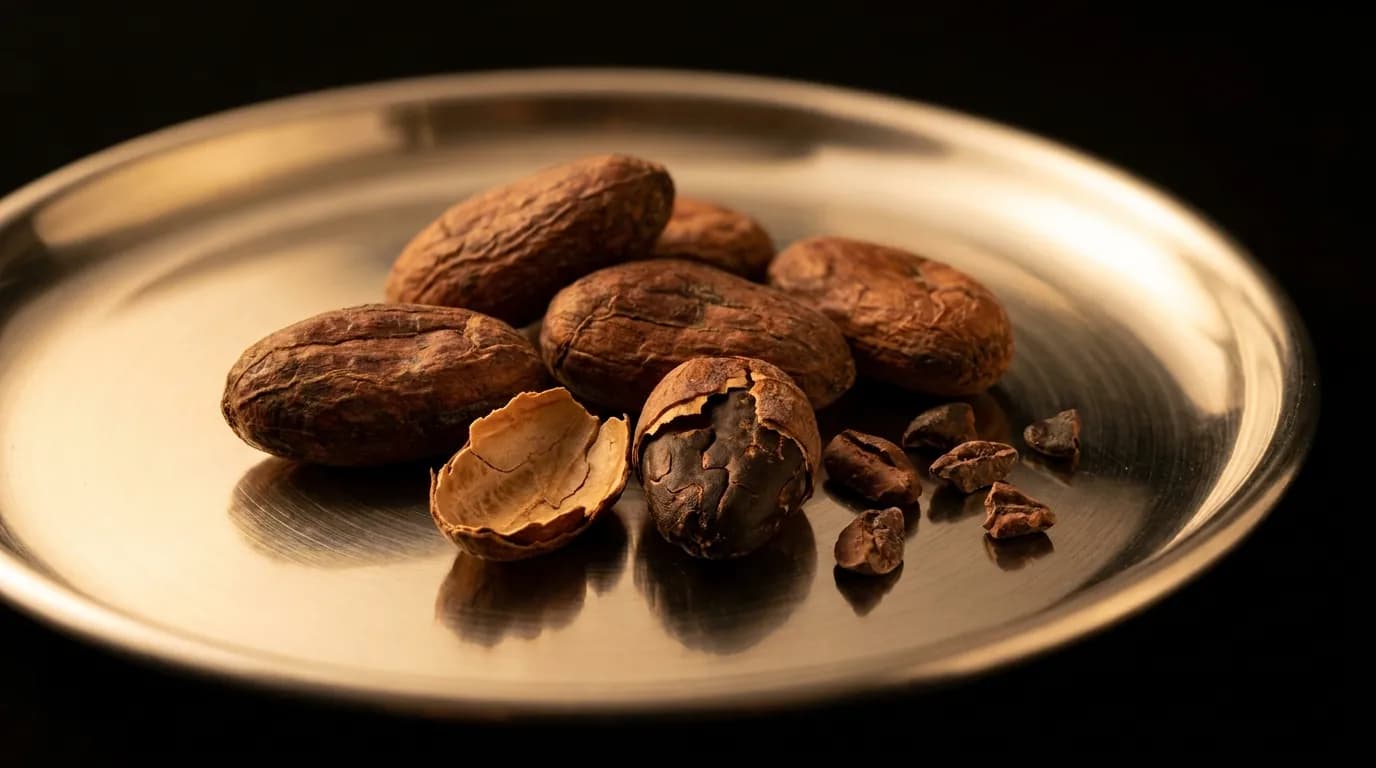
Table of Contents
- 01Defining Pure Cacao in the B2B Ingredients Market
- 02Arriba Nacional vs. High-Yield Bulk Varieties (CCN-51)
- 03Why North European Markets Demand Pure Cacao
- 04Sensory Profile of Pure Ecuadorian Arriba Cacao
- 05Physicochemical Rheology and Processing Performance
- 06Purity Verification and Supply Chain Traceability
- 07Heavy Metal Cadmium Mitigation in Pure Ecuadorian Cacao
- 08Packaging Infrastructure and Storage Guidelines
- 09Industrial Verification Methods for Pure Cacao Shipments
- 10Organic Certification Boundaries and Smallholder Agroforestry Reality
- 11Palletization, Container Logistics and Global Ocean Transit
- 12Specifying Pure Cacao in B2B Procurement Contracts
- 13Conclusion and Sourcing Strategy
Across the European food manufacturing sector and specialty confectionery industry, demand for transparent, unadulterated botanical ingredients continues to expand rapidly. For procurement officers and R&D food scientists, clear ingredient definitions are paramount. While the term "pure cacao" is frequently used in consumer marketing, within a professional "B2B" supply chain context it carries a precise technical meaning. It defines 100% unadulterated cacao derivatives processed from the seeds of "Theobroma cacao", completely free from added sugars, dairy, emulsifiers, or synthetic flavorings. Sourcing pure cacao beans of the Ecuadorian "Arriba Nacional" variety guarantees verified origin and superior sensory performance.
This technical sourcing guide details the definition of pure cacao in B2B supply chains, compares fine aroma cacao against high-yield bulk varieties, examines why North European markets (Netherlands, Germany, Belgium) prioritize pure sourcing, and outlines technical parameters for contract specifications.
Defining Pure Cacao in the B2B Ingredients Market
In food manufacturing, "pure cacao" must be clearly distinguished from compound chocolates or sweetened preparations. Commercial pure cacao formats include: - **100% Cacao Liquor (Cacao Mass)**: Ground nibs yielding a smooth paste containing ~52-55% natural cocoa butter and 45-48% dry cocoa solids, molded into blocks or wafers without additives. - **Unroasted or Light-Roasted Whole Beans**: Harvested beans subjected to post-harvest fermentation and sun-drying, ready for bean-to-bar chocolate manufacturing. - **Pure Cacao Nibs**: Crushed, winnowed cacao bean kernels used in bakery, granola, and functional foods. - **Natural Unalkalized Cacao Powder**: Milled press cake retaining natural acidity (pH 5.2-5.8) after cocoa butter extraction.
Arriba Nacional vs. High-Yield Bulk Varieties (CCN-51)
The botanical variety dictates commercial value and sensory complexity: 1. **Fine Aroma Cacao (Ecuador Arriba Nacional)**: Renowned worldwide for floral top notes (jasmine, orange blossom), delicate fruity undertones, and mild acidity. Requires no synthetic vanilla to achieve smooth sensory balance. 2. **Bulk Cacao (CCN-51 / West African Forastero)**: Bred primarily for disease resistance and high yield. Offers harsh bitterness and astringency, lacking complex aroma notes, and typically requires heavy roasting or Dutch processing.
Why North European Markets Demand Pure Cacao
Buyers in the Netherlands, Germany, and Belgium lead European demand for unadulterated cacao due to: - **Clean Label Trends**: Consumers actively avoid added sugars and synthetic additives, allowing brands using 100% pure cacao to make premium clean-label claims. - **Specialty Bean-to-Bar Craft Movement**: Artisanal chocolatiers seek distinctive single-origin profiles from Ecuadorian terroirs (Los Ríos, Manabí, Esmeraldas). - **Functional Food Growth**: High antioxidant (flavanol) and mineral content drives adoption in health nutrition. Compare sourcing protocols in our guide on how to buy cacao beans from Ecuador.
Sensory Profile of Pure Ecuadorian Arriba Cacao
Cupping panels evaluate Ecuadorian Arriba Nacional pure cacao for: - **Top Notes**: Fresh jasmine, orange blossom, and wild floral aromas. - **Mid Notes**: Dried stone fruits (raisins, figs) and smooth cacao body. - **Finish**: Gentle, rounded bitterness with a persistent woody, nutty finish.
Physicochemical Rheology and Processing Performance
Processing pure cacao liquor in automated confectionery lines requires strict attention to physical rheology. Lacking added emulsifiers such as sunflower or soy lecithin, the melt viscosity and yield value of 100% pure cacao mass depend entirely on its natural cocoa butter fraction. Arriba Nacional cocoa butter features sharp polymorphic Beta-V crystal formation at 34°C-35°C, ensuring excellent snap and gloss when properly tempered.
For zero-sugar and keto chocolate manufacturers, refining pure cacao mass below 20 microns is essential to prevent grittiness without relying on added fats or bulking agents. Our Ecuadorian processing facilities utilize high-precision pin mills and refiners to achieve uniform particle size distribution for seamless industrial handling.
Purity Verification and Supply Chain Traceability
Delivering 100% pure cacao requires rigorous end-to-end traceability from farm-level drying beds to European port discharge. Direct trade partnerships with established farmer associations enable complete batch tracking back to individual grower cooperatives, preventing admixture with lower-grade bulk beans during post-harvest handling.
Furthermore, every export container undergoes thorough laboratory testing. Physical cut tests evaluate fermentation uniformity, while chemical screens confirm zero foreign fats, added sugars, or allergen cross-contamination, providing complete QA reassurance for industrial buyers.
Heavy Metal Cadmium Mitigation in Pure Ecuadorian Cacao
European Regulation (EU) 2023/915 sets strict maximum residue limits ("MRL") for cadmium ("Cd") in cacao products. For 100% pure cacao mass and dark chocolate, the maximum limit is 0.80 mg/kg. Because cadmium occurs naturally in volcanic South American soils, sourcing pure cacao requires proactive agricultural management.
Ecuadorian partners apply soil pH management (agricultural liming to reduce root uptake) and conduct soil mapping across growing zones. Export lots destined for the EU are screened via ICP-MS mass spectrometry to guarantee full regulatory compliance prior to container loading.
Packaging Infrastructure and Storage Guidelines
Protecting delicate floral esters during ocean transit requires specialized packaging. Whole cacao beans are packed in food-grade jute bags with inner "GrainPro" hermetic liners, guarding against moisture ingress and mold growth. Cacao liquor blocks (25 kg) are packed in heavy cartons with food-grade PE liners.
European warehouse storage must maintain temperature between 15°C and 18°C and relative humidity below 65%. Pure cacao must be stored away from strong-smelling goods, as natural cocoa butter readily absorbs ambient odors.
Industrial Verification Methods for Pure Cacao Shipments
Upon arrival at destination ports in Rotterdam, Hamburg, or Antwerp, quality control laboratories verify cocoa purity through standardized test protocols. Gas chromatography coupled with mass spectrometry ("GC-MS") evaluates fatty acid profiles to confirm 100% natural cocoa butter composition without palm oil or shea stearin adulteration. High-performance liquid chromatography ("HPLC") quantifies polyphenol and flavanol markers, verifying the authentic antioxidant density of Ecuadorian Arriba Nacional beans.
Furthermore, moisture titration via Karl Fischer apparatus ensures water content remains strictly below 7.0% for raw beans and under 2.0% for processed liquor. These analytical checks eliminate batch variation risks and ensure smooth manufacturing performance across high-volume chocolate production runs.
Organic Certification Boundaries and Smallholder Agroforestry Reality
Navigating the distinction between certified organic pure cacao and traditional agroforestry cacao is vital for ("B2B") procurement. Certified organic cacao requires unbroken audit trails under USDA NOP or EU 2018/848 standards. Organic farms undergo annual inspections verifying zero synthetic pesticide usage throughout a mandatory three-year conversion window, accompanied by Transaction Certificates ("TC") for every shipping container.
However, many Ecuadorian Arriba Nacional smallholders practice traditional agroforestry, cultivating cacao under native canopy trees without synthetic inputs. While "de facto" organic, some smallholder groups lack formal certification due to administrative costs. Industrial buyers can audit these traditional supply chains through multi-residue pesticide screens and farm visits, securing pure botanical cacao while supporting sustainable farming communities.
Palletization, Container Logistics and Global Ocean Transit
Exporting pure cacao across transoceanic routes requires specialized container loading protocols. Jute bags containing raw beans (60 kg or 69 kg) are stacked on ISPM-15 heat-treated pallets, shrink-wrapped, and fitted with corner boards to prevent shifting during maritime transit. Containers are lined with moisture-absorbing desiccant blankets to prevent condensation and container sweat.
For processed cacao liquor blocks (25 kg), climate-controlled reefer containers set to 15°C-18°C prevent melting and fat bloom during passage through tropical waters. Maintaining uninterrupted temperature control guarantees pristine structural integrity upon arrival at European processing plants.
Specifying Pure Cacao in B2B Procurement Contracts
Procurement teams should enforce five core parameters in technical contracts: 1. **Ingredients**: 100% Cacao solids (Theobroma cacao). Zero added sugar, dairy, fat, or lecithin. 2. **Botanical Origin**: Minimum 90-100% Ecuadorian Arriba Nacional / Fine Aroma. 3. **Fermentation Degree**: Minimum 75-80% well-fermented beans (cut test verified). 4. **Moisture Content**: Maximum 7.0% for whole beans; maximum 2.0% for cacao mass. 5. **Contaminants**: Strict compliance with EU MRLs for Cadmium (< 0.80 mg/kg), Lead, and pesticides.
One practical check closes the loop. Ask for the full ingredient declaration exactly as it will appear on the specification sheet, not a marketing summary. A genuinely pure product lists a single ingredient; anything that names an emulsifier, a vegetable fat or a flavouring belongs to a different category regardless of the label on the front of the bag. If the declaration and the technical data sheet disagree, the technical data sheet is the document that will be tested at customs.
Conclusion and Sourcing Strategy
Procuring authentic pure cacao enables manufacturers to craft market-leading products aligned with global clean-label trends. Partnering with direct Ecuadorian producers ensures reliable supply and authentic origin integrity.
Whether the RFQ reads pure cacao powder or pure cocoa powder, the specification a serious buyer checks is the ingredient list rather than the name: no maltodextrin, no lecithin, no added alkali, just cocoa solids pressed from fermented beans. Our natural powder satisfies that definition without any reformulation on our end.
El Dulce Origen supplies premium Ecuadorian pure cacao beans and liquor directly to European food processors. Contact our sales engineers via our contact page page for specifications and samples.
Labels claiming 100 pure cacao powder are describing a single-ingredient product with no sugar, no milk solids, no lecithin and no alkalizing agent, which is what the specification sheet in this article covers. The phrase carries no additional legal meaning, so it is worth confirming the composition rather than trusting the claim: the useful test is whether the supplier can state the fat percentage and the pH, since a genuinely pure powder has both and a blend usually cannot.
The equivalent confusion on the solid side involves raw unsweetened chocolate and unroasted dark chocolate. Neither term is regulated, and both are commonly used for cocoa liquor sold in block form, that is, ground nib with nothing added. Buyers ordering it for confectionery should be aware that a mass never roasted above low temperatures will taste sharper and more acidic than the same origin roasted conventionally, which is a formulation decision and not a defect.
Retail-facing terms such as raw chocolate bars and raw cacao bars describe finished goods made from mass that was never conventionally roasted, and buyers sourcing the raw material for them should specify the temperature ceiling rather than the word raw, which carries no legal definition. Two practical consequences follow. The flavour will be sharper and more acidic than a roasted equivalent from the same origin, which is a formulation choice; and because the roast normally does the microbial reduction, the microbiological specification has to be agreed in advance and verified on the lot rather than assumed.
Another phrasing that reaches us regularly is real cacao powder, normally used to distinguish single-ingredient powder from sweetened instant preparations sold in the same supermarket aisle. It is a useful consumer distinction and an unusable procurement term, since real carries no specification. Translate it before ordering: single ingredient, no added sugar or milk solids, no lecithin, alkalized or not, stated fat content and pH. A supplier who cannot fill in that line for their own product is selling a blend.
Searches for pure cacao recipes come from the customer side of our customers, and they are a useful signal for a brand deciding what to sell. Most of that demand is for preparation guidance rather than for a new product, whisked drinks, unsweetened baking applications, and mass melted into simple confections. A supplier of the raw material cannot answer it directly, but a brand that publishes preparation guidance alongside its product page captures the traffic that a bare specification sheet never will.
Cacao Beans
Interested in sourcing this product directly from our factory in Cayambe, Pichincha?
Frequently Asked Questions About This Topic
What constitutes pure cacao in B2B transactions?
Pure cacao refers to 100% unadulterated cacao derivatives (such as 100% cacao liquor or raw cacao beans) containing zero added sugars, dairy, lecithin, or artificial flavorings.
What is the difference between cacao and pure cacao?
Conventional commercial chocolate products contain added sugar, milk powder, and emulsifiers. Pure cacao consists strictly of 100% dry cacao solids and natural cacao butter.
Why is Ecuadorian fine aroma cacao preferred for pure cacao applications?
Ecuadorian Arriba Nacional cacao possesses unique floral jasmine notes and low bitterness, allowing formulators to produce 100% dark chocolate without adding synthetic vanilla.
How is pure cacao tested for heavy metal compliance?
Export shipments undergo ICP-MS laboratory testing to verify cadmium and lead levels strictly comply with EU Regulation 2023/915 limits.
Related articles
Does Cacao Have Caffeine? The Truth About Stimulants in Cocoa Beans
A deep B2B analysis of the actual caffeine content in cacao vs. theobromine, featuring exact serving comparisons and stimulant profiles.
Read ArticleCriollo Cacao vs. Nacional Fine-Flavor: A Guide to Premium Varieties
Explore the genetic differences, flavor profiles, and commercial realities of Criollo and Ecuadorian Nacional fine-flavor cacao varieties.
Read ArticleTheobromine Benefits: The Active Energy Compound in Cacao Nibs
An objective industrial exploration of theobromine benefits, its physiological mechanisms, safety thresholds, and occurrence in cacao products.
Read Article