Cocoa Butter Uses and Grades: A B2B Guide from Origin
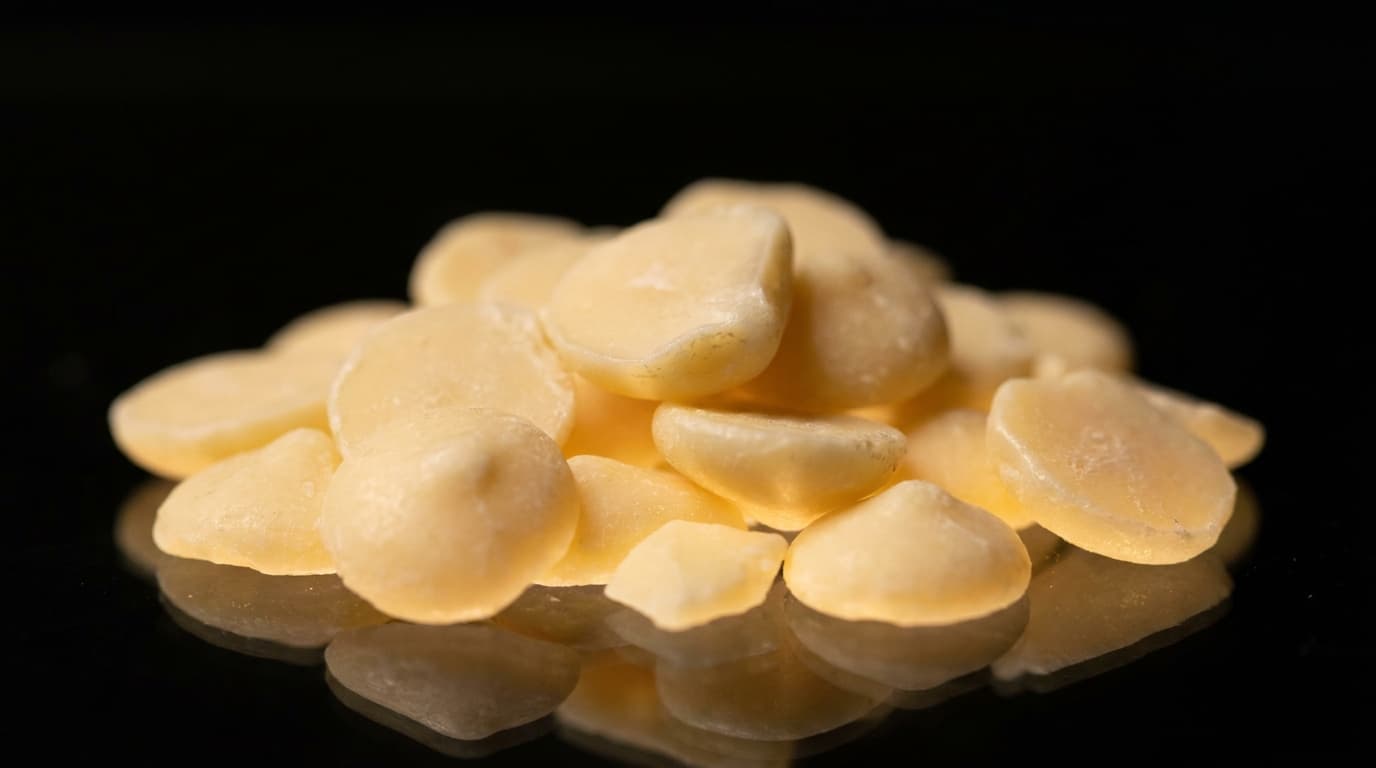
Table of Contents
Cocoa butter is the natural fat obtained from cacao beans, and it is one of the most valuable raw materials in both the food and the personal-care industries. It gives chocolate its characteristic snap and gloss, and it gives lip balms and creams their smooth, protective feel. Yet many buyers still find the range of grades, pressing methods and specifications confusing when they compare offers from different suppliers.
In this guide we explain, from the perspective of an origin supplier in Ecuador, what cocoa butter is used for, why its melting behaviour makes it so special, and how food-grade and cosmetic-grade material differ. We also cover the difference between naturally pressed and deodorized butter, so that you can specify exactly what your production line or formulation needs.
How cocoa butter is obtained
Everything starts with fermented, dried cacao beans. After roasting and winnowing, the nibs are ground into cocoa liquor, a thick paste that contains roughly half fat and half cocoa solids. When that liquor is fed into a hydraulic press, the fat is separated and filtered: the golden fraction that flows out is cocoa butter, while the compacted residue becomes cocoa press cake, the base for cocoa powder.
Because butter and powder come out of the same pressing operation, their markets are closely linked. A supplier that presses its own liquor can balance both streams and offer consistent quality in each of them. If you want to understand the powder side of the process, see our guide to raw and unsweetened cocoa powder, or review the specifications of our cocoa liquor.
The quality of the butter is defined long before pressing. Bean genetics, fermentation and drying at origin determine the aroma profile, the free fatty acid level and the colour of the final fat. That is why butter pressed from well-fermented Ecuadorian beans commands a premium over material recovered from poorly handled stock.
Food applications: chocolate, bakery and confectionery
Chocolate manufacture is by far the largest consumer of cocoa butter. Couverture needs added butter to reach the fluidity required for enrobing and moulding, and the fat also carries the crystalline structure that gives a well-tempered bar its snap, its gloss and its clean release from the mould.
The secret is the melting curve. Cocoa butter is solid at room temperature but melts sharply between 34 and 36 °C, just below body temperature. This is why chocolate stays stable on the shelf and still melts completely in the mouth, releasing aroma without any waxy residue. No inexpensive substitute reproduces that narrow melting window exactly.
Beyond chocolate, bakers and confectioners use cocoa butter to thin fillings, to give pralines a silky texture, to seal biscuits against moisture migration, and as a clean carrier for colours in decoration work. In ice cream and spreads it improves body and mouthfeel at low dosage.
A frequent question is whether cocoa butter can be replaced by cheaper vegetable fats. Compound coatings based on palm or lauric fats do exist, but most premium markets and many food standards distinguish real chocolate precisely by its cocoa butter content, and the sensory gap is noticeable: substitutes melt more slowly or leave a waxy film on the palate. For products positioned on quality, real cocoa butter remains the reference.
For process engineers, the relevant detail is that cocoa butter crystallizes in several polymorphic forms, and only one of them delivers the stable, glossy result the market expects. Tempering, the controlled cycle of cooling and reheating, exists to seed exactly that crystal form. A butter with a clean fatty acid profile tempers predictably, which is why consistent raw material translates directly into fewer rejected batches on the line.
Cosmetic applications: lip care and skin care
The same melting behaviour explains why cocoa butter is a classic base for lip balms, body butters and solid creams: the fat is firm in the jar or in the stick, then melts on contact with the skin and spreads easily. It forms a light occlusive film that helps the skin retain its own moisture, which is why formulators value it in products for dry lips, elbows and heels.
Cocoa butter is also naturally rich in stable fatty acids, mainly stearic, oleic and palmitic, which makes it far more resistant to rancidity than many other vegetable fats, and it carries a mild chocolate aroma that consumers associate with comfort. In its pure form it is often applied directly to the lips; in emulsions it typically appears at two to ten percent of the formula.
One note on communication: cocoa butter is a cosmetic emollient, not a medicine. It softens and protects the skin surface, and responsible labelling stays with those cosmetic claims rather than promising therapeutic effects.
Food grade versus cosmetic grade
Commercially, cocoa butter is sold as food grade or cosmetic grade. Food grade is produced, handled and documented under food-safety systems, with full lot traceability, and it is suitable for chocolate, bakery and any edible application. Cosmetic grade may come from the same pressing, but it is sometimes further refined and it is documented for personal-care use rather than for consumption.
In practice, a high-quality food-grade butter is the more versatile purchase: it can go into a chocolate line today and into a lip-balm formulation tomorrow, while material sold only for cosmetics should never enter a food process. At El Dulce Origen we supply food-grade cocoa butter pressed from Ecuadorian cacao; our standard product is conventional, and we do not hold an active organic certification.
Analytical testing follows the same logic. Parameters such as heavy metals, including cadmium, are not attached to every routine shipment; they are analysed on request when a customer or a destination market requires the data.
Natural pressed versus deodorized
Scope note: El Dulce Origen supplies natural pressed cocoa butter only. We do not offer a deodorized grade; the comparison below is here so you can specify your purchase correctly.
Naturally pressed butter keeps the full aroma of the cacao it came from: chocolate notes, fruit and a hint of acidity. Chocolate makers who sell on origin character prefer it, because the fat itself contributes flavour to the finished bar.
Deodorized butter has passed through a gentle steam and vacuum treatment that strips the volatile aroma compounds and leaves a neutral fat. Formulators choose it when the recipe must not taste or smell of cacao: white chocolate with delicate inclusions, finely perfumed cosmetics, or products where batch-to-batch neutrality matters more than character.
Neither version is better in absolute terms; they serve different briefs. Many buyers keep both on their specification sheet and switch depending on the product being run that week.
Why cocoa butter from Ecuador
Ecuador is known for fine-aroma cacao, and the butter pressed from it inherits that profile: floral and nutty notes instead of the flat character of bulk material. For premium chocolate and natural cosmetics, that sensory difference becomes a selling argument in the finished product.
Buying at origin also means the pressing happens close to the harvest, with shorter storage of intermediate liquor and full visibility of each lot. Our butter is pressed from cacao grown by producers we work with directly, and every dispatch can be traced back to its production run.
Buying cocoa butter B2B: specifications, packaging and storage
When you compare offers, look beyond the price per kilo. A serious specification sheet states free fatty acid content, moisture, melting range, iodine value and filtration quality, and it identifies the origin of the beans. Ask how the butter was pressed and whether it is natural or deodorized, because that single word changes the application.
Logistics matter as much as chemistry. Cocoa butter is typically packed in 25 kg food-safe cartons with liners, and it should travel and rest in cool, dry, odour-free storage, ideally below 20 °C, because fat absorbs surrounding smells easily. Properly stored, it keeps its quality for many months.
It also pays to define incoming quality control on your side before the first container arrives. Most buyers check aroma and colour against the retained sample, verify the melting range in the laboratory, and keep a record per lot. Agreeing on those acceptance criteria with the supplier in advance turns any later discussion into a comparison of numbers instead of opinions.
A typical first order follows a simple path: we share the technical sheet and a sample of the current lot, your team validates it in application, from tempering behaviour in chocolate to texture in a formulation, and we then agree volumes, packaging and delivery schedule. Because we press from identified lots, repeat orders can match the profile you validated.
Working directly with an origin supplier shortens the chain: you know the harvest, the pressing and the lot history behind every carton. Contact our team to receive current specifications and pricing for food-grade cocoa butter from Ecuador.
Formulators sourcing cacao butter for chocolate specifically, rather than for a cosmetic line, should confirm the fat is sold as the food-grade cut described above: it is the same press output, but documented and handled under food-safety protocols from the moment it leaves the press, not diverted later from cosmetic stock.
Buyers using the term raw cacao butter are usually asking whether the beans were roasted before pressing, a different question from natural versus deodorized. Our standard cocoa butter is pressed after a controlled roast, which develops the characteristic chocolate aroma described above; a raw, unroasted-bean butter is a distinct, lower-volume product with a milder, more vegetal note, more common in the wellness and raw-food segment than in mainstream chocolate manufacture. Buyers who need the unroasted version specifically should state that requirement upfront, since it is sourced and scheduled separately from the standard roasted-bean press run.
The question of where to buy cacao butter, or where to buy cocoa butter using the more common industrial spelling, splits by volume more than by grade. Below roughly a hundred kilos the practical route is a distributor holding stock in your market, accepting that the lot documentation will be generic. Above that, buying from the origin becomes both cheaper and more traceable, because the butter is pressed against your order rather than drawn from an aggregated tank. Whichever route you take, fix three things before ordering: whether you need food or cosmetic grade, the format you can actually handle at your facility (blocks, wafers or bulk), and whether the certificate of analysis accompanying the shipment corresponds to your lot number.
Buyers screening cocoa butter suppliers, or cocoa butter distributors depending on which side of the chain they are approaching, are effectively choosing between two service models. A distributor holds stock in-market, ships within days and absorbs the currency risk, at the cost of lot documentation that is generic and volumes that were pressed to somebody else's brief. An origin supplier presses against the order, which means longer lead times and a minimum quantity, but also lot-specific analysis and the ability to repeat the same profile next season. Confirm which model you are dealing with before comparing prices, because a per-kilo figure from a distributor and one from a press are not measuring the same product guarantee.
Requests for organic cocoa butter bulk, sometimes written organic cacao butter bulk, add a documentary layer on top of that choice: the certificate has to cover the pressing facility as well as the farm, and it has to be issued for the lot you receive. We supply conventional-grade butter by default and arrange certifiable organic volumes under contract, which is a deliberately narrower statement than an organic listing on a product page.
One product we do not supply is colored cocoa butter, the pigmented material used for decorating moulded chocolate. It is a manufactured preparation, cocoa butter combined with food colourings and usually with an emulsifier, produced by specialist confectionery suppliers rather than by a press at origin. If a brief mixes it with a bulk butter requirement, separate the two lines before quoting; only the second one is a raw-material purchase.
Requests written as cocoa butter bulk wholesale usually signal a buyer moving from sample volumes to production volumes, and the variables that matter change with them. At that scale the question is no longer grade but format and continuity: whether the butter arrives as blocks, wafers or in bulk cartons, how it will be broken down and melted at your facility without repeated thermal cycling, and whether the supplier can hold the same fat profile across the year rather than lot by lot. Fix the delivery schedule together with the specification, because butter bought in one shipment and used over twelve months is a storage problem as much as a purchasing one.
Enquiries about cocoa butter prices rarely have a stable answer, because the price is built on the cocoa market plus a processing and quality differential rather than being quoted independently. Two consequences follow for a buyer. First, a quote has a validity window, usually short, and comparing offers issued weeks apart measures the market rather than the suppliers. Second, the differential is the negotiable part; asking a supplier to break the price into the market reference and their own margin makes it possible to see which of two offers is actually more competitive.
Several distinct requirements arrive under similar names. Organic raw cacao butter combines a certificate with a temperature condition, and both have to be written explicitly. Cocoa seed butter is a labelling convention used mainly in cosmetics, where INCI nomenclature refers to Theobroma cacao seed butter; it is the same material, described in the vocabulary of a different industry. And searches for skincare cocoa butter or pure cocoa butter for skin come from the cosmetic side entirely, where the relevant documentation is a cosmetic-grade certificate of analysis rather than a food one, which is why we ask which grade is needed before quoting.
On the confectionery side, questions about cocoa butter for chocolate bars and about tempering chocolate with cocoa butter concern the same property: the polymorphic crystallisation that gives a bar its snap and gloss. Added butter raises the total fat and makes a couverture more fluid for moulding, while a small amount of stable form V crystal, whether from seeding with tempered chocolate or with a commercial cocoa butter powder, is what directs the set. What matters at purchase is a consistent melting profile between lots, because a shifting profile forces the tempering curve to be re-derived each time.
Three related enquiries turn up regularly and need separating. Organic cocoa butter wholesale is the certified route described above, arranged under contract. Bulk raw cocoa butter asks for butter pressed from beans that were not conventionally roasted, which affects aroma retention and has to be specified as a temperature limit rather than as a word. Cocoa butter deodorized bulk asks for butter that has been steam-treated to strip the residual cocoa aroma, which is the standard choice in cosmetics and in white or filled confectionery where cocoa notes would interfere. We do not supply the deodorized grade; our butter is natural pressed only, so tell us at the enquiry stage whether a neutral fat is a hard requirement for your formulation.
Enquiries phrased where to buy cocoa butter for cooking, or where to buy cooking cocoa butter, are asking for food-grade butter in a domestic or small-kitchen quantity, which is a different market from the one this article addresses. The distinction that matters is not the retailer but the grade and the documentation: cosmetic-grade butter, widely sold in small formats, is not certified for food use even though the raw material is the same. For professional kitchens buying in bulk, ask for the food-grade certificate of analysis, the melting profile and the free fatty acid value, and specify blocks or wafers depending on how the butter will be melted.
Related reading: Ganache and Fudge Formulation: A Production Guide.
Cacao Butter
Interested in sourcing this product directly from our factory in Cayambe, Pichincha?
Frequently Asked Questions About This Topic
What is cocoa butter used for?
Cocoa butter is mainly used in chocolate manufacture, where it provides fluidity for moulding and the crystal structure behind snap and gloss. It is also used in bakery and confectionery for texture, and in cosmetics as an emollient base for lip balms, body butters and creams.
Is it good to put cocoa butter on your lips?
Yes. Cocoa butter is solid at room temperature, melts on contact with the skin and forms a light film that helps the lips retain their own moisture. It is used pure or as the base of lip balms. It is a cosmetic emollient, not a medical treatment.
What is the difference between cocoa butter and a lip moisturizer?
Cocoa butter is a single natural ingredient: the fat pressed from cacao beans. A lip moisturizer is a finished formulation that may contain cocoa butter together with waxes, oils and humectants. Many lip products use cocoa butter precisely because of its melting behaviour.
Related articles
Does Cacao Have Caffeine? The Truth About Stimulants in Cocoa Beans
A deep B2B analysis of the actual caffeine content in cacao vs. theobromine, featuring exact serving comparisons and stimulant profiles.
Read ArticleCriollo Cacao vs. Nacional Fine-Flavor: A Guide to Premium Varieties
Explore the genetic differences, flavor profiles, and commercial realities of Criollo and Ecuadorian Nacional fine-flavor cacao varieties.
Read ArticleTheobromine Benefits: The Active Energy Compound in Cacao Nibs
An objective industrial exploration of theobromine benefits, its physiological mechanisms, safety thresholds, and occurrence in cacao products.
Read Article