Mushroom Cacao Blends: B2B Formulation & Sourcing Guide
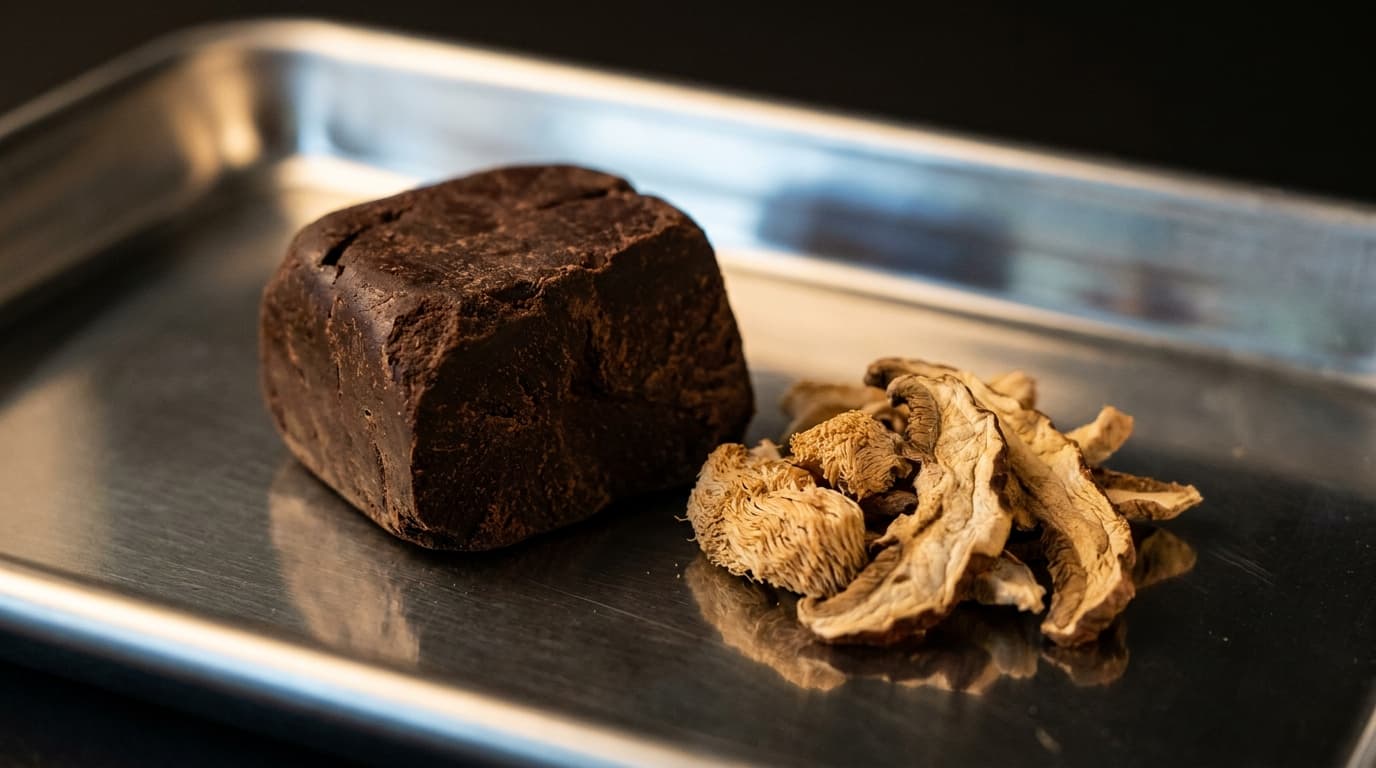
Table of Contents
- 01Biochemical Synergy: Lipid Carriers, Vasodilation, and Bioavailability
- 02Taste-Masking Strategy: Lipid Enrobing vs. Sugar Overloading
- 03Sourcing Raw Materials: Dual-Extract Powders vs. Whole Mushroom Powders
- 04Processing and Manufacturing Methods: Micro-Milling vs. Melt Emulsification
- 05Emulsification Stability, Dispersion, and Shelf-Life Dynamics
- 06Regulatory Compliance: Novel Foods, Health Claims, and Labeling
- 07Quality Control Protocols: Certificate of Analysis (CoA) & Safety Standards
- 08Market Positioning and B2B Supply Chain Partnership
- 09Conclusion and Formulating Your Custom Product
The global functional wellness market is experiencing rapid growth, driven by consumer demand for coffee alternatives, adaptogenic beverages, and holistic daily elixirs. At the intersection of functional nutrition and ancient botanical traditions lies the combination of medicinal mushrooms (such as Lion's Mane, Reishi, Cordyceps, and Chaga) with ceremonial cacao paste (*pasta ceremonial*). For brand owners, R&D formulation scientists, and contract manufacturers, creating a successful B2B adaptogenic cacao product requires more than simply dry-blending powders. Achieving optimal bioavailability, masking earthy mushroom notes, and ensuring stable emulsification depends on leveraging the natural lipid matrix of unrefined ceremonial cacao paste sourced from fine aroma Ecuadorian cacao groves.
While early functional beverage iterations relied on defatted cocoa powder and synthetic flavorings, modern wellness consumers demand clean-label, minimally processed ingredients. Utilizing whole ceremonial cacao paste provides a rich, nutrient-dense vehicle for functional mushroom extracts. In this technical formulation guide, we examine the biochemical synergy between cacao and fungi, taste-masking strategies, industrial milling techniques, and quality assurance protocols for functional B2B brands looking to build a private label ceremonial cacao brand in Western markets.
Biochemical Synergy: Lipid Carriers, Vasodilation, and Bioavailability
The formulation of mushroom cacao elixirs is rooted in a physiological synergy between the active constituents of *Theobroma cacao* and medicinal fungi. Medicinal mushrooms contain two primary classes of bioactive compounds: water-soluble polysaccharides (specifically beta-1,3/1,6-glucans) and lipid-soluble triterpenes (such as ganoderic acids in Reishi and hericenones/erinacines in Lion's Mane). When mushroom extracts are consumed in plain water or defatted drinks, lipid-soluble triterpenes exhibit poor intestinal absorption.
Ceremonial cacao paste retains 50% to 55% natural cocoa butter. This natural lipid matrix acts as an endogenous liposomal carrier, encapsulating hydrophobic triterpenes, and enhancing their solubility, and micellar absorption, in the human digestive tract. Furthermore, cacao contains significant levels of theobromine—a natural alkaloid that promotes mild peripheral, and cerebral vasodilation without the sharp cardiovascular spikes of caffeine. Increased blood flow accelerates the transport of fungal beta-glucans and bioactives throughout the body. Detailed dosage parameters and physiological mechanisms are explored in our guide on ceremonial cacao dosage and effects.
Taste-Masking Strategy: Lipid Enrobing vs. Sugar Overloading
One of the primary challenges in formulating commercial mushroom beverages is overcoming the intense bitterness, earthiness, and astringency inherent to mushroom dual-extract powders (particularly Reishi and Chaga). Traditional beverage brands often attempt to mask fungal notes by adding high amounts of refined sugar, artificial sweeteners, or heavy flavorings—approaches that undermine the health claims of wellness products.
Ceremonial cacao paste offers a natural, highly effective taste-masking solution through lipid enrobing. The rich cocoa butter fat coat coats the bitter taste receptors on the tongue, creating a smooth barrier that softens the initial astringency of fungal extracts. Concurrently, the complex, fruity, and floral flavor notes of fine aroma Ecuadorian Arriba Nacional cacao harmonize with earthy mushroom undertones, transforming an otherwise medicinal taste into a luxurious, ceremonial chocolate ritual.
Sourcing Raw Materials: Dual-Extract Powders vs. Whole Mushroom Powders
Formulators must carefully evaluate raw material specifications for both the fungal and cacao components: - **Mushroom Ingredient Selection**: Formulators should specify hot-water/ethanol dual-extracted mushroom powders standardized for beta-glucan content (minimum 30% beta-glucans) and triterpene levels. Simple ground mushroom biomass or mycelium grown on grain contains high starch filler levels (alpha-glucans) and lacks the potency required for functional claims. - **Cacao Paste Selection**: Industrial formulators should source non-alkalized, stone-ground ceremonial cacao paste made from 100% single-origin Ecuadorian Nacional beans. The paste must be free of added sugars, emulsifiers, or alkali agents to preserve native antioxidants and natural fat ratios.
Processing and Manufacturing Methods: Micro-Milling vs. Melt Emulsification
Translating an adaptogenic cacao concept into a commercial B2B product involves two main manufacturing pathways: 1. **Solid Melt Emulsification (Puck / Block Format)**: Ceremonial cacao paste is gently melted at 42°C-45°C in jacketed stainless steel kettles. Standardized mushroom extract powders, natural botanical spices (such as vanilla, cinnamon, or cardamom), and optional unrefined sweeteners (like coconut sugar) are incorporated into the liquid cacao mass. The mixture undergoes high-shear homogenization or stone refining to reduce fungal particle size below 20 microns, ensuring a silky liquid texture upon whisking. The mass is then tempered, molded into single-serve blocks or drops, and cooled. 2. **Instant Dry Powder Formulations**: For instant beverage sachets or tub packaging, ceremonial cacao paste is micro-milled or spray-dried into a free-flowing functional powder using specialized low-temperature techniques that prevent fat separation and lipid melting. This powder is dry-blended with mushroom extracts and natural solubilizers like sunflower lecithin.
During all thermal processing steps, strict temperature control is vital. Keeping formulation temperatures below 50°C-55°C prevents the thermal degradation of heat-sensitive polysaccharides, enzyme activity, and volatile floral aromatics inherent to Ecuadorian fine cacao.
Emulsification Stability, Dispersion, and Shelf-Life Dynamics
Achieving stable suspension of fungal extracts when whisked into warm liquids is a critical quality milestone. Mushroom extract powders contain both soluble fractions, and insoluble chitin fiber residues that tend, to settle at the bottom of the consumer's cup. When formulating with ceremonial cacao paste, the suspended cocoa solids, and cocoa butter lipids form, a natural colloidal suspension upon whisking at 70°C to 80°C. The natural fat content acts as a thickening matrix, slowing down the sedimentation rate of insoluble fungal particles without requiring synthetic hydrocolloids.
For instant powder lines, adding small quantities of non-GMO sunflower lecithin (0.5% to 1.0% by weight) greatly improves instant dispersibility in warm water or plant-based milks (oat, almond, or coconut). From a shelf-life perspective, cocoa butter's high natural antioxidant concentration (specifically tocopherols and polyphenols) provides strong resistance against lipid oxidation and rancidity. When packaged in moisture-proof, light-shielded foil pouches, mushroom cacao formulations maintain chemical and sensory stability for 18 to 24 months at ambient temperatures.
Regulatory Compliance: Novel Foods, Health Claims, and Labeling
Navigating the regulatory environment in the European Union (EFSA) and the United States (FDA) is essential for B2B brand compliance. In the EU, formulators must verify that every chosen mushroom species possesses a recognized history of consumption prior to May 1997 or has received approval under the EU Novel Food Regulation (Regulation EU 2015/2283). Species like *Hericium erinaceus* (Lion's Mane), *Ganoderma lucidum* (Reishi), and *Inonotus obliquus* (Chaga) have established regulatory statuses in dietary supplements across many EU member states.
Regarding health claims, formulators must exercise caution to avoid unauthorized medical claims. While marketing materials can highlight general wellness concepts—such as adaptogenic support, cognitive focus, or botanical vitality—explicit disease treatment or prevention claims are strictly prohibited under EFSA Regulation EC 1924/2006 and FDA dietary supplement guidelines. Providing clear, compliant nutritional panels, and ingredient declarations builds long-term consumer trust, and regulatory immunity.
Quality Control Protocols: Certificate of Analysis (CoA) & Safety Standards
Functional food products combining agricultural botanicals and fungal extracts require rigorous quality control testing prior to commercial distribution. B2B brand owners must enforce strict Certificate of Analysis (CoA) release criteria for every production lot:
- **Heavy Metal Screening**: Mushrooms are natural bioaccumulators of soil minerals and heavy metals. Every lot must undergo Inductively Coupled Plasma Mass Spectrometry (ICP-MS) testing to verify lead, cadmium, arsenic, and mercury levels comply with strict European and US safety thresholds. - **Microbiological Testing**: Testing must confirm total plate count (TPC), yeast, mold, E. coli, and the absolute absence of *Salmonella* in 375g samples. - **Active Assay Verification**: High-Performance Liquid Chromatography (HPLC) and enzymatic assays should confirm active beta-glucan and theobromine percentages match label claims. - **Pesticide & Mycotoxin Screen**: Verification that both raw materials are free of synthetic pesticide residues and fungal mycotoxins (aflatoxins and ochratoxin A).
Market Positioning and B2B Supply Chain Partnership
The mushroom cacao category spans multiple premium retail segments, including high-end natural grocery stores, boutique yoga studios, functional beverage bars, and direct-to-consumer (DTC) wellness brands. Packaging should utilize high-barrier, moisture-proof materials (such as aluminum-free recyclable pouches or dark glass jars) to protect delicate fungal bioactives and cacao lipids from light and oxygen degradation.
At El Dulce Origen, we partner with international wellness brands, and contract manufacturers to provide premium Ecuadorian ceremonial cacao paste. Sourced directly from sustainable smallholder cooperatives in Ecuador, our ceremonial paste provides the consistent fat content, fine aroma profile, and purity required for high-performance mushroom cacao formulations.
Conclusion and Formulating Your Custom Product
Combining medicinal mushroom extracts with ceremonial cacao paste represents a powerful synergy of science and nature. By harnessing cocoa butter's natural lipid carrier properties and theobromine's vasoactive effects, formulators can create functional beverages that deliver unmatched bio-availability, smooth flavor profiles, and premium consumer satisfaction.
To request technical spec sheets, order samples of our Ecuadorian ceremonial cacao paste, or consult on private label manufacturing options, contact our B2B formulation specialists through our contact page today.
The finished category is usually sold as mushroom cacao powder, which understates how much of the formulation work sits on the mushroom side rather than the cacao side. The cacao component is straightforward to specify: fat content, pH and particle size, plus whether the base is powder or full-fat mass, since the fat changes both mouthfeel and how the extract disperses. The functional ingredient is where diligence belongs, covering the species and the part used (fruiting body versus mycelium on grain), the extraction ratio, and what the supporting documentation actually measures. Blend uniformity is the practical risk in production: two powders of different density separate in transit, so either the particle sizes are matched or the blend is agglomerated.
Ceremonial Paste
Interested in sourcing this product directly from our factory in Cayambe, Pichincha?
Frequently Asked Questions About This Topic
Why is ceremonial cacao paste preferred over cocoa powder for mushroom blends?
Ceremonial cacao paste retains 100% of its natural cocoa butter fat matrix, which dissolves fat-soluble mushroom triterpenes and masks earthy fungal bitterness far better than defatted powder.
Which medicinal mushrooms blend best with ceremonial cacao paste?
Lion's Mane (for focus), Reishi (for stress modulation), Cordyceps (for energy), and Chaga (for antioxidant support) are the most popular functional mushrooms paired with cacao.
Does theobromine enhance the bioavailability of mushroom compounds?
Yes, theobromine acts as a mild vasodilator, increasing cerebral blood flow and facilitating efficient systemic absorption of fungal beta-glucans and triterpenoids.
What processing temperature limits apply during functional cacao formulation?
Formulation temperatures should be kept below 55°C (131°F) to prevent thermal degradation of heat-sensitive beta-glucans, enzymes, and delicate native cacao polyphenols.
Related articles
Sourcing Ceremonial Cacao Wholesale: A Guide for B2B Buyers
What makes cacao truly ceremonial? Learn the criteria for sourcing pure, high-fat, traceable cacao paste from Manabí, Ecuador.
Read ArticleFrom Bean to Brick: The Artisanal Process of Making Ceremonial Cacao Paste
Follow the journey of Nacional Arriba cacao beans as they are fermented, dried, lightly toasted, and stone-ground into pure ceremonial paste.
Read ArticleCeremonial Cacao Dosage, Preparation, and Sensory Effects: A B2B Guide
An essential B2B guide for wellness facilitators. Learn correct ceremonial cacao dosages, preparation methods, and the science of theobromine.
Read Article