A Complete B2B Guide to Chocolate Bloom: Fat Bloom vs Sugar Bloom
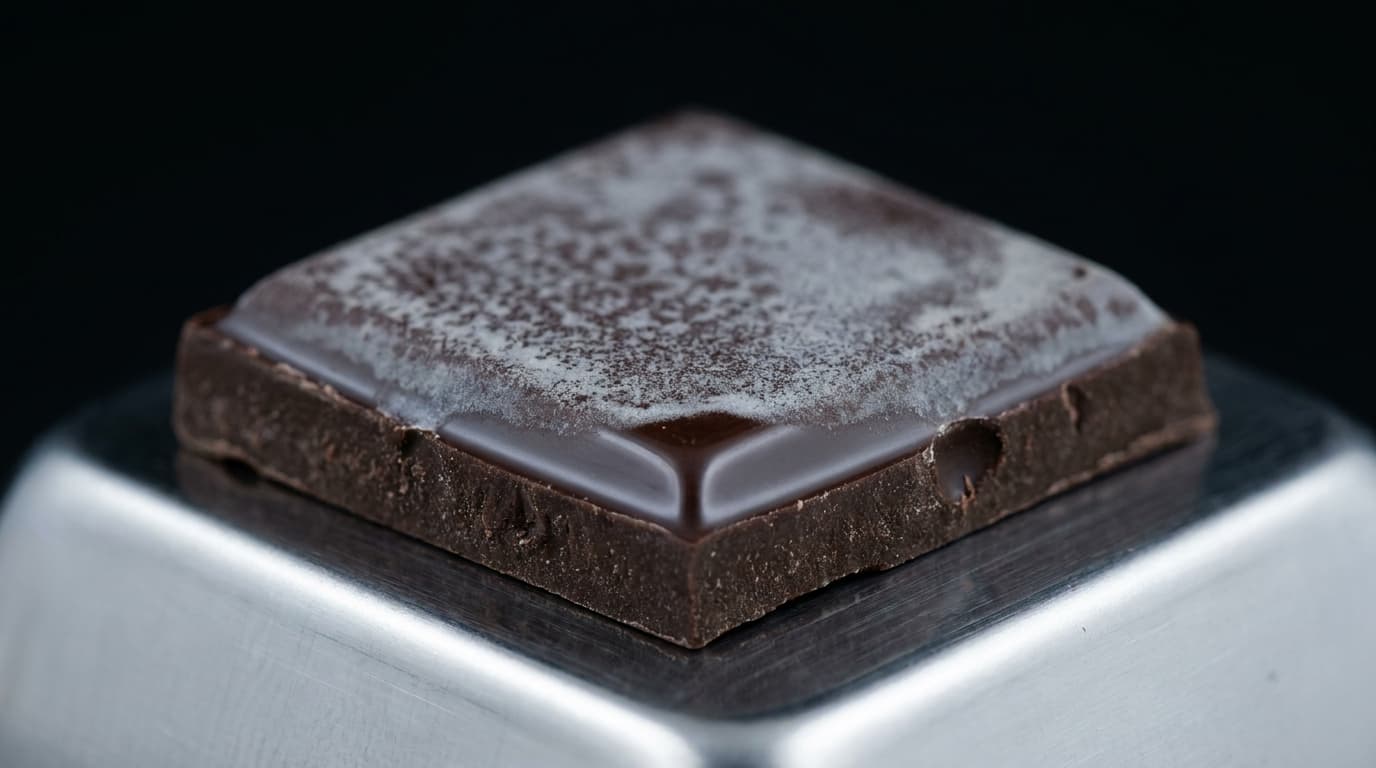
Table of Contents
- 01Introduction to Chocolate Bloom in B2B Operations
- 02Distinguishing Fat Bloom and Sugar Bloom
- 03The Polymorphism of Cocoa Butter and Fat Bloom
- 04The Critical Role of Tempering in Defect Prevention
- 05Environmental Triggers: Thermal Shock and Fat Migration
- 06Causes and Prevention of Sugar Bloom
- 07Logistics, Warehousing, and Optimal Storage at 18-20°C
- 08Reversing Bloom: The Re-tempering Process
- 09Safety, Edibility, and Sensorial Impact
- 10Conclusion and Quality Assurance Strategies
Introduction to Chocolate Bloom in B2B Operations
In the premium chocolate manufacturing industry, maintaining the pristine visual appeal and optimal textural integrity of the final product is a paramount concern for chocolatiers, distributors, and bulk importers. One of the most prevalent and visually striking defects that can compromise the perceived quality of a batch is chocolate bloom. This phenomenon manifests as a dull, whitish, or grayish coating on the surface of the product, often leading consumers and even inexperienced buyers to mistakenly assume that the batch has spoiled or grown mold. However, from a rigorous biochemical and materials science perspective, blooming is purely a physical transformation related to the migration and recrystallization of specific components within the matrix. Understanding the underlying mechanics of this process is critical for professionals engaged in large-scale production and international supply chains.
For B2B stakeholders, the occurrence of this defect represents a significant economic risk. Products that exhibit this chalky appearance often fail to meet the stringent aesthetic criteria demanded by high-end retail markets, leading to potential rejections, costly returns, and damage to brand reputation. Consequently, mastering the prevention of this issue is an essential competency. The defect generally categorizes into two distinct forms: fat bloom, which involves the movement of lipids, and sugar bloom, which is driven by moisture interaction. Both forms fundamentally degrade the glossy finish and the crisp snap that are characteristic of expertly crafted confections, though they arise from completely different environmental and processing failures.
This comprehensive guide delves deep into the etiology of both fat and sugar bloom, exploring the intricate polymorphic nature of cocoa butter, the critical importance of precise tempering, and the vulnerabilities inherent in global logistics and storage. By equipping quality assurance teams and production managers with a thorough understanding of these dynamics, companies can implement robust preventative measures, optimize their supply chain parameters, and ensure that their premium offerings retain their intended sensory properties from the factory floor to the final consumer. If you are sourcing raw materials for such precise operations, exploring our cocoa butter can provide the stable foundation needed for flawless execution.
Distinguishing Fat Bloom and Sugar Bloom
Accurate diagnosis of the specific type of bloom is the first critical step in troubleshooting quality control failures. Fat bloom is the more common variant encountered in the industry and is characterized by a dusty, grayish-white film or distinctive streaks on the product's surface. When you gently touch or lightly rub the affected area with a warm finger, the gray streaks will typically melt and temporarily disappear, as the friction and heat transition the rogue lipid crystals back into a liquid state. This physical reaction is a definitive diagnostic indicator that the defect is lipid-based, stemming from the destabilization of the fat matrix.
Conversely, sugar bloom presents with a slightly different morphology. It often appears as a uniform, rough, and somewhat crystalline white crust on the exterior. If you apply the same tactile test—rubbing the surface with a warm finger—the whitish layer remains stubbornly intact and feels distinctively gritty or sandy to the touch. This happens because the sugar crystals are completely insoluble in the surrounding lipid matrix and do not melt at human body temperature. Sugar bloom is essentially a consequence of sugar dissolution and subsequent recrystallization on the surface, leaving behind microscopic granules that ruin the smooth texture.
The distinction between these two forms is not merely academic; it dictates the required corrective actions and preventative strategies. A misdiagnosis can lead a facility to overhaul its tempering protocols when the actual culprit might be inadequate humidity control in the warehouse. Therefore, quality assurance personnel must be trained to differentiate between the greasy, meltable nature of fat migration and the gritty, insoluble residue of sugar recrystallization, ensuring that subsequent root cause analyses are accurately targeted and effectively resolved.
The Polymorphism of Cocoa Butter and Fat Bloom
To fully grasp the mechanics of fat bloom, one must first understand the complex polymorphic behavior of cocoa butter. Unlike simple fats, cocoa butter can crystallize into six distinct structural forms, designated as Form I through Form VI, depending on the thermal history and cooling rate applied during processing. Forms I through IV are highly unstable, exhibiting low melting points and a loose, disordered crystalline lattice. If a product solidifies predominantly in these lower forms, the molecules possess sufficient kinetic energy to gradually rearrange themselves over time, seeking a more stable energy state.
Form V, also known as the Beta form, is the holy grail of chocolate manufacturing. It provides the ideal characteristics: a glossy appearance, a satisfyingly sharp snap when broken, excellent contraction for easy mold release, and a melting point that perfectly matches human body temperature, resulting in a smooth, luxurious mouthfeel. However, even Form V is not the absolute lowest energy state. Over extended periods, or when subjected to thermal stress, Form V can slowly transition into Form VI, which is the most thermodynamically stable polymorphic state, characterized by larger, coarser crystals. This transition is the fundamental driver of fat bloom.
When the internal lipid matrix shifts towards Form VI, the larger crystals physically push their way to the surface, creating the characteristic grayish haze. Furthermore, if liquid fats from inclusive fillings—such as praline, nougat, or nut pastes—migrate through the solid matrix to the surface, they can dissolve existing stable crystals and trigger secondary recrystallization. This migration-induced fat bloom is a massive challenge in the production of filled bonbons and enrobed confections, necessitating advanced formulation strategies, such as the incorporation of specialized barrier fats or the meticulous control of filling viscosities, to inhibit lipid mobility.
The Critical Role of Tempering in Defect Prevention
Tempering is the highly controlled thermal process designed to force cocoa butter to crystallize exclusively in the desirable Form V structure while eliminating all unstable polymorphs. A flawed tempering curve is the most common processing error leading to premature fat bloom. The process typically involves heating the mass to completely melt all fat crystals, rapidly cooling it to encourage the formation of both stable and unstable crystals, and then slightly reheating it to melt away the unstable Forms I through IV, leaving only the robust Form V seed crystals to propagate throughout the entire batch during final cooling.
If the mass is under-tempered, meaning insufficient Form V seeds were generated, the product will cool into a disordered mixture of unstable polymorphs. These unstable crystals will rapidly undergo polymorphic transition during storage, causing severe fat bloom within days or weeks of manufacture. The product will also exhibit a dull finish, a crumbly texture, and poor contraction, making it difficult to demold. For industrial producers relying on continuous tempering machines, continuous monitoring of the temper index using temper meters is an absolute necessity to prevent catastrophic batch failures.
Over-tempering, while less immediately catastrophic than under-tempering, also presents risks. An over-tempered mass contains an excessive concentration of Form V crystals, leading to a highly viscous fluid that is exceedingly difficult to pump, mold, or use for enrobing. This excessively thick consistency can entrap air bubbles and result in an uneven coating, compromising the structural integrity of the final product. Mastery of the tempering cycle—calibrated precisely to the specific fat content and formulation—is the ultimate safeguard against lipid-based surface defects. For insights into industrial formulations, consult our industrial baking cocoa guide.
Environmental Triggers: Thermal Shock and Fat Migration
Even perfectly tempered products can succumb to fat bloom if subjected to adverse environmental conditions, particularly thermal shock. When a finished product is exposed to ambient temperatures approaching or exceeding the melting point of Form V crystals (around 32°C to 34°C), the meticulously organized crystalline lattice begins to liquefy. As the ambient temperature subsequently drops, the melted cocoa butter recrystallizes. However, without the mechanical agitation and precise temperature control of a tempering machine, it solidifies into chaotic, uncontrolled polymorphic structures on the surface, manifesting as severe fat bloom.
This temperature fluctuation is a notorious hazard during the logistics and transportation phases of the B2B supply chain. A pallet left on a sun-baked loading dock for even a short duration can suffer irreversible thermal damage. To mitigate this risk, importers and distributors must utilize climate-controlled shipping containers and implement strict cold-chain custody protocols. Temperature data loggers should accompany sensitive shipments to verify that the cargo remained within the safe operational bandwidth throughout its journey, providing accountability and preventing dispute over ruined inventory.
In addition to external thermal stress, internal fat migration remains a persistent threat for composite confections. Nut centers, such as hazelnut gianduja or peanut butter, contain high concentrations of liquid oils at room temperature. Because these oils are miscible with cocoa butter, they slowly diffuse through the solid chocolate shell over time. As the liquid oils permeate the shell, they lower the overall melting point of the lipid matrix, facilitating polymorphic transitions and causing the surface to bloom. Formulators often employ strategies like reducing the liquid oil content of fillings or applying ultra-thin, dense crystalline barrier layers to impede this diffusive process.
Causes and Prevention of Sugar Bloom
While fat bloom is dictated by lipid thermodynamics, sugar bloom is entirely a function of moisture exposure and the high hygroscopicity of sucrose. The defect initiates when the surface of the confection comes into direct contact with liquid water or excessively high ambient humidity. The moisture locally dissolves the sugar particles embedded in the surface layer, creating a microscopic film of sugar syrup. When the environmental moisture eventually evaporates, the previously dissolved sugar is left behind, recrystallizing into the coarse, white, gritty deposits characteristic of sugar bloom.
The most frequent catalyst for sugar bloom in the supply chain is condensation, commonly referred to as the "dew point" effect. If products are stored in a cold environment—such as a commercial refrigerator or a chilled warehouse—and are abruptly moved into a warmer, more humid area without proper acclimation, moisture from the ambient air will rapidly condense on the cold surfaces of the packaging or the product itself. This sudden introduction of liquid water provides the exact conditions necessary for rapid sugar dissolution and subsequent blooming.
Preventing sugar bloom requires rigorous environmental control across all operational phases. Packaging plays a defensive role; utilizing high-barrier films and hermetically sealed wrappers can shield the product from external humidity spikes. However, the most effective prevention is thermal staging. When transitioning goods from cold storage to room temperature, they must be allowed to gradually acclimate in a dehumidified staging area, ensuring their surface temperature rises above the ambient dew point before any protective packaging is breached or removed.
Logistics, Warehousing, and Optimal Storage at 18-20°C
The cornerstone of preserving product integrity and preventing both forms of bloom lies in meticulous warehousing practices. For B2B operations handling vast quantities of premium confections or raw materials, the storage environment must be rigorously controlled. The globally accepted industry standard dictates that these products must be stored at a constant temperature of 18°C to 20°C (64°F to 68°F). This specific temperature band is crucial: it is sufficiently cool to prevent the melting and polymorphic transition of cocoa butter, yet warm enough to minimize the risk of condensation when products are eventually moved to standard retail environments.
In conjunction with strict temperature parameters, relative humidity (RH) within the storage facility must be maintained below 50%, ideally hovering around 45%. High humidity not only invites sugar bloom but can also compromise packaging integrity and encourage microbial proliferation on outer cartons. Warehouses must be equipped with industrial-grade HVAC systems featuring integrated dehumidification capabilities, and continuous environmental monitoring systems should be deployed to trigger alarms if either temperature or humidity deviates from the established safety thresholds.
Furthermore, standard warehousing best practices must be strictly enforced. Pallets should never be stored directly against external walls, which can radiate heat or transmit cold, creating localized microclimates that deviate from the ambient room conditions. Products must be elevated off the floor on clean pallets to allow for adequate air circulation, and strong-smelling goods must be stored in entirely separate zones, as the lipid matrix is highly susceptible to absorbing foreign odors. Adhering to these stringent logistical protocols is non-negotiable for preserving the value of bulk investments.
Reversing Bloom: The Re-tempering Process
For B2B entities, discovering a bloomed batch can induce panic, but it is crucial to recognize that the defect is entirely physical, not chemical. The product has not spoiled, oxidized, or become unsafe; its crystalline structure has merely fallen out of optimal alignment. Therefore, if the product is a solid block of couverture or an un-enrobed mass, the bloom is entirely reversible. The primary corrective action involves completely melting down the affected batch to obliterate the chaotic, bloomed crystalline lattice, effectively resetting the material back to a blank slate.
Once the mass is fully liquid and has reached approximately 45°C to ensure all resistant Form VI crystals are destroyed, it must be subjected to a rigorous re-tempering cycle. By carefully cooling and agitating the mass, and introducing stable Form V seed crystals—either through seeding with pristine callets or via a continuous tempering machine—the manufacturer can force the cocoa butter back into the desired polymorphic state. Upon successful re-tempering and cooling, the product will regain its original high gloss, sharp snap, and optimal melting profile, fully restoring its commercial viability.
However, this remediation strategy is heavily constrained by the format of the product. While solid blocks of couverture can be easily remelted and salvaged, finished composite goods—such as filled truffles, delicate enrobed bonbons, or products containing inclusions like nuts or biscuit pieces—cannot be simply melted down without completely destroying the product's architecture. In these scenarios, a bloomed batch represents a total loss for the intended premium market, highlighting why robust preventative measures and strict cold-chain logistics are infinitely preferable to relying on remediation.
Safety, Edibility, and Sensorial Impact
When confronted with heavily bloomed products, consumers and uninitiated wholesale buyers often raise immediate concerns regarding food safety, frequently confusing the whitish, dusty coating with mold or fungal growth. It is imperative for B2B suppliers to clearly communicate that chocolate bloom, whether lipid-based or moisture-driven, poses absolutely zero health risks. The product remains entirely safe for human consumption, as the phenomenon is purely a structural reorganization of fats and sugars, involving no microbial spoilage or generation of harmful toxins.
Despite being technically safe to consume, blooming severely degrades the organoleptic experience, which is catastrophic for premium brands. Aesthetically, the dull, mottled appearance destroys the visual appeal that commands high price points. Texturally, fat bloom transforms the luxurious, smooth melt-in-the-mouth sensation into a waxy, crumbly, and unpleasant experience, as the large Form VI crystals take longer to melt on the palate. Sugar bloom is arguably worse texturally, introducing a persistent gritty, sandy sensation that completely undermines the refinement of the confection.
Furthermore, while the flavor profile itself may remain largely unchanged initially, the altered melting kinetics caused by fat bloom can impact flavor release. The delayed melting of large crystals means the aromatic volatile compounds are not released as rapidly or uniformly in the mouth, leading to a muted or unbalanced flavor perception. For artisanal chocolatiers and high-end brands, this degradation of the sensory profile is unacceptable, as their reputation is entirely built upon delivering a flawless, multi-sensory indulgence.
Conclusion and Quality Assurance Strategies
In conclusion, chocolate bloom represents one of the most persistent and costly quality control challenges in the global B2B confectionery supply chain. While it poses no health risks, its devastating impact on visual aesthetics, structural integrity, and mouthfeel can ruin the commercial value of premium products. By deeply understanding the distinct mechanisms behind fat bloom—driven by thermal stress, polymorphic transition, and lipid migration—and sugar bloom—caused by moisture exposure and condensation—industry professionals can implement targeted and highly effective preventative strategies.
Success relies on a holistic approach that spans the entire operational lifecycle. It demands meticulous attention to the tempering curve during manufacturing, intelligent formulation to minimize lipid migration, the use of high-barrier packaging, and an uncompromising commitment to strict cold-chain logistics, ensuring products are consistently stored at the optimal 18°C to 20°C with controlled humidity. For operations looking to secure the highest quality raw materials to support these exacting standards, prioritizing stable, high-performance ingredients is essential.
We supply meticulously processed, uncertified conventional lots designed for demanding industrial applications. (Note that organic non-certified lots are strictly available only upon customized contractual agreements). We also facilitate rigorous testing protocols, including cadmium analysis, which is executed purely at the client's request and expense, ensuring absolute transparency. If you require unparalleled stability and consistency for your manufacturing lines, we invite you to contact us today to discuss how our bulk supply solutions can elevate your production capabilities and safeguard your brand against costly quality defects.
Buyers researching this defect online often phrase the search as chocolate blooming rather than bloom, describing the same visible fat or sugar migration to the surface of a bar. Either phrasing points to the same root causes covered above: unstable crystal form, thermal cycling in transit, or moisture contact, not a defect in the raw cocoa butter itself when it was pressed and shipped correctly.
Bloom risk starts with the recipe and the shipment. For couverture and dark chocolate produced to specification at origin, see our page on bulk chocolate wholesale.
Cacao Butter
Interested in sourcing this product directly from our factory in Cayambe, Pichincha?
Frequently Asked Questions About This Topic
Is it okay to eat chocolate that has bloomed?
Yes, it is perfectly safe to eat bloomed products. The defect is entirely physical, stemming from the structural reorganization of fats or sugars, and poses absolutely no health risks or microbial spoilage.
Can I get rid of chocolate bloom?
Yes, fat bloom can be eliminated by completely melting down the solid mass and subjecting it to a rigorous re-tempering cycle, which realigns the crystalline lattice back into the optimal Form V structure.
Is it chocolate bloom or mold?
It is almost certainly bloom if it feels greasy and melts under a warm finger (fat bloom) or feels like sandy grit (sugar bloom). Mold is incredibly rare due to the extremely low water activity of the matrix.
What does it mean if chocolate blooms?
It means the product has undergone a physical change due to poor tempering, thermal shock, or high humidity, causing either cocoa butter or sugar to migrate and recrystallize on the surface.
Related articles
Does Cacao Have Caffeine? The Truth About Stimulants in Cocoa Beans
A deep B2B analysis of the actual caffeine content in cacao vs. theobromine, featuring exact serving comparisons and stimulant profiles.
Read ArticleCriollo Cacao vs. Nacional Fine-Flavor: A Guide to Premium Varieties
Explore the genetic differences, flavor profiles, and commercial realities of Criollo and Ecuadorian Nacional fine-flavor cacao varieties.
Read ArticleTheobromine Benefits: The Active Energy Compound in Cacao Nibs
An objective industrial exploration of theobromine benefits, its physiological mechanisms, safety thresholds, and occurrence in cacao products.
Read Article