Fermentation and Drying: The Chemistry Behind Specialty Cacao Quality
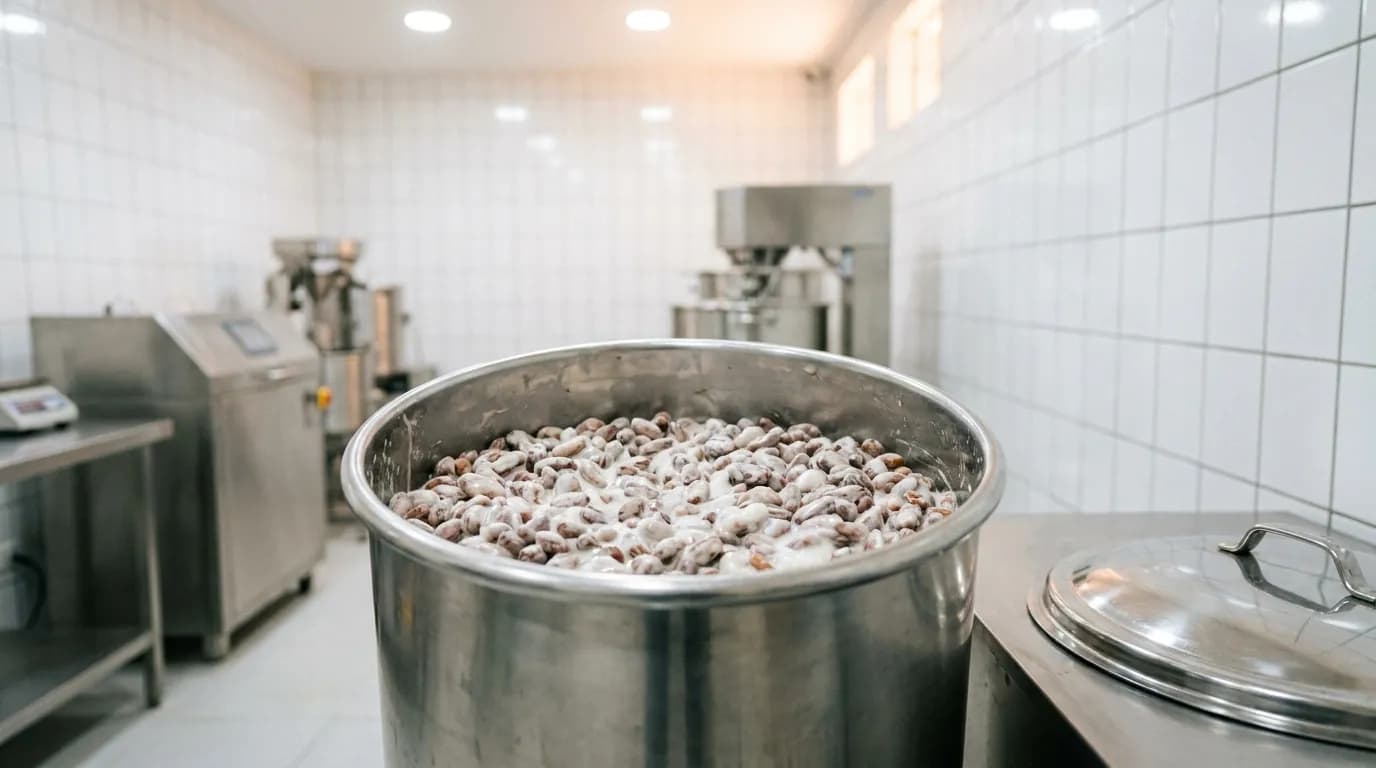
Table of Contents
- 011. Sourcing and Transport: The Initial Sourcing Protocol
- 022. The Biochemistry of Fermentation: Anaerobic Phase (Days 1–2)
- 033. The Biochemistry of Fermentation: Aerobic Phase (Days 3–6)
- 044. Slow Sun-Drying in the Andes: Evaporating Volatile Acids
- 055. Technical Specifications and B2B Quality Control
- 066. B2B Sourcing Logistics and Export Terms
While the genetic lineage of a cacao tree determines the flavor potential of its fruit, the post-harvest processing phase is where the actual flavor profile of the bean is created. For craft chocolate makers, master roasters, and B2B food manufacturing buyers, sourcing raw materials with consistent physical and sensory quality requires a deep understanding of the biochemistry behind fermentation and drying. At El Dulce Origen, we manage these post-harvest stages with scientific precision at our central processing plant located in Cayambe, Pichincha, working with fresh wet cacao beans harvested from our network of approximately 100 allied farms in Manabí, Esmeraldas, and Pichincha. By centralizing operations in Cayambe, we guarantee unmatched consistency and lot-to-lot reliability.
1. Sourcing and Transport: The Initial Sourcing Protocol
The post-harvest journey begins at the farms. To secure the delicate linalool-driven floral aromas of the Ecuadorian Nacional Arriba variety, the cacao pods must be harvested at peak ripeness. Under ripe or overripe pods can lead to uneven sugar levels in the pulp, resulting in poor fermentation control. The pods are harvested manually and split using wooden mallets to prevent bean damage. Once split, the wet beans (cacao en baba)—coated in a thick, sugary, white mucilage—are extracted manually and placed into food-grade, airtight collection bags. Our agronomy team inspects the beans at harvest time to ensure no diseased seeds enter the batch.
To prevent premature, uncontrolled fermentation under the high temperatures and relative humidity of the coast, the wet beans are immediately loaded into isothermal transport vehicles. These vehicles transport the beans to our central factory in Cayambe, Pichincha, within 12 hours. Cayambe's cool mountain climate provides a stable, clean environment for controlled fermentation, far removed from the unpredictable rain and high atmospheric humidity of the coastal plantations. By centralizing the post-harvest processing in Cayambe, we eliminate the farm-to-farm quality variations that occur when individual smallholders dry and ferment beans using basic, decentralized equipment. B2B buyers can learn more about our sourcing system on our traceability page or check our product options like cacao en grano.
2. The Biochemistry of Fermentation: Anaerobic Phase (Days 1–2)
Fermentation is a complex, microbial-driven process split into two distinct biochemical stages. The fresh wet beans are placed into large wooden fermentation boxes made of local laurel or guayacán wood. Laurel is selected for its porosity, which provides a natural home for wild, beneficial yeasts while helping to regulate heat. The pulp surrounding the beans serves as the primary substrate for fermentation. It is rich in simple sugars (glucose, fructose, sucrose), citric acid (yielding a low initial pulp pH of ~3.5), and pectin.
In the first 48 hours, the fermentation is strictly anaerobic due to the dense packing of the wet bean mass, which prevents airflow. During this phase, wild yeasts (specifically strains of Saccharomyces cerevisiae and Kloeckera apiculata) convert the sugars in the pulp into ethanol and carbon dioxide. At the same time, anaerobic lactic acid bacteria ferment sugars and citric acid into lactic acid, slightly raising the pH. The citric acid begins to drain out of the mass as the pectin is broken down by natural enzymes, liquefying the pulp. This runoff, known as cacao juice, drains through the bottom of the wood boxes. As the pulp liquefies and drains away, air channels open up in the box, allowing oxygen to penetrate the mass and initiating the second phase of fermentation. This physical change is critical for heat accumulation.
3. The Biochemistry of Fermentation: Aerobic Phase (Days 3–6)
As oxygen enters the fermentation boxes, the microbial population shifts. Aerobic acetic acid bacteria (such as Acetobacter aceti and Gluconobacter) take over, oxidizing the ethanol produced during the anaerobic phase into acetic acid. This oxidation reaction is highly exothermic, raising the temperature of the cacao mass from ambient levels to 48°C–50°C. To ensure even temperature distribution and oxygenation, our processing team turns the beans manually every 24 hours, transferring them to adjacent boxes.
The combination of high temperature and high acid concentration is critical: it penetrates the seed coat (testa) and diffuses into the cotyledons, killing the cacao seed embryo. Once the embryo is deactivated, internal cellular membranes break down, allowing enzymes and chemical compounds to mix. Under these conditions, hydrolytic enzymes (specifically carboxypeptidases and aspartic proteases) decompose complex proteins into free amino acids and short-chain peptides, which are the essential precursors for chocolate flavor. Concurrently, glucosidases break down bitter polyphenols and anthocyanins, reducing the astringency and bitterness of the beans while turning their internal color from violet-purple to a rich, chocolate brown. The duration of this phase is carefully managed: 5 days for our ASSS grade to retain delicate floral monoterpenes, and 6 days for ASE grade. This precise control prevents the formation of off-flavors.
4. Slow Sun-Drying in the Andes: Evaporating Volatile Acids
Following fermentation, the beans contain around 60% moisture and must be dried to exactly 7.0% to stabilize the product for export. At El Dulce Origen, we dry our fermented beans slowly on raised sun-drying beds (camillas) at our Cayambe facility. The drying process is shaped by Cayambe's unique Andean climate, which features low relative humidity, cool temperatures, and low atmospheric pressure. This allows the beans to dry slowly and evenly over a period of 8 to 10 days.
This slow drying rate is critical. It allows volatile acetic acid to escape through the seed shell, lowering the bean's internal acidity and refining the flavor profile. Industrial mechanical dryers or rapid sun-drying in the hot coastal sun can dry the beans too quickly, causing a physical defect known as "case hardening." When the outer shell hardens too fast, it traps the volatile acids inside the bean, resulting in an unpleasantly sour, acidic, or metallic-tasting chocolate. By utilizing slow Andean sun-drying, we ensure that our Nacional Arriba beans maintain their balanced acidity and floral jasmine top notes. Furthermore, reaching a stable 7.0% moisture content stops all microbial activity, protecting the beans from mold growth during long maritime voyages. This is a non-negotiable step for international sea transport.
5. Technical Specifications and B2B Quality Control
For international chocolate manufacturers and wholesale buyers, our post-harvest processing protocols translate into reliable technical specifications. We manage quality control through strict physical and chemical metrics:
- Fermentation Rate: Our ASSS (Arriba Super Fine Superior) grade guarantees a minimum of 75% well-fermented beans, verified via a cut test showing brown cotyledons with open internal ridges. ASE grade allows up to 65% fermentation.
- Moisture Content: Strictly maintained at 7.0% (±0.2%) to prevent mold and ensure stable storage.
- Defect Rate: Maximum of 2% total defects (moldy, flat, insect-damaged, or slatey beans) for ASSS, and 4% for ASE.
- Heavy Metal Compliance: Volcanic soils can contain trace heavy metals. For European imports governed by EU Regulation 488/2014, we offer lot-specific cadmium analysis via ICP-MS in accredited laboratories, commissioned on request and at the buyer's cost before the cargo leaves the Port of Guayaquil. For more detailed specifications on EU regulations, read our article on EU cadmium limits for cacao.
6. B2B Sourcing Logistics and Export Terms
El Dulce Origen provides structured B2B logistics to support international chocolate makers and wholesale distributors. Our commercial parameters are designed to ensure product traceability and quality compliance at every stage:
- MOQ (Minimum Order Quantity): For bulk raw Nacional Arriba beans, the MOQ is 1 Full Container Load (FCL 20ft, approximately 14 metric tons), packed in standard 60-kilogram food-grade jute sacks shipped from the Port of Guayaquil. For specialty ingredients like our pasta ceremonial, we offer customized pallet quantities.
- Samples: Representative samples of 1 to 5 kg are available for laboratory testing and sensory panel evaluation. We dispatch samples within 3 business days if stock is available in our warehouse, with international air courier costs (DHL/FedEx) paid by the buyer.
- Payment Terms: Initial transactions require a 50% advance deposit via SWIFT bank transfer upon contract signature, and the remaining 50% balance cleared against presentation of shipping documents (original Bill of Lading, DAE, and AGROCALIDAD Phytosanitary Certificate).
- Quality Assurance and FDA Compliance: Our Cayambe facility operates under continuous Good Manufacturing Practices (BPM/GMP) monitoring and is FDA registered. We maintain strict hygiene protocols at all processing stages to eliminate potential biological contamination.
- Organic Certifications: We do not assert active USDA Organic or EU Organic certifications for our standard lots, but we can arrange organic certification under contract for committed annual volumes.
The white, sweet-sour mucilage surrounding the beans, sometimes called cacao pulp or cocoa pulp, is not discarded before fermentation: it liquefies and drains away naturally during the first 24 to 48 hours in the fermentation boxes, and that sugar-driven microbial activity is what starts the biochemical changes inside the bean. Some buyers ask separately about sourcing the pulp itself, for use in juices, jellies or natural sweeteners; at present we manage it as part of the fermentation process rather than as a separately harvested co-product, though the volume recovered from a fermentation run is traceable if a customer wants to explore that byproduct stream.
To evaluate our crop availability, discuss annual volume contracts, or request a technical specification sheet, contact our export team directly at the contact page. We look forward to establishing a secure, high-quality supply line for your chocolate production.
A by-product now finding its own market is cacao honey, also called cacao juice or sweatings: the sweet liquid that drains from the pulp in the first hours of fermentation. It is not honey in any apicultural sense, and it competes directly with fermentation, since the pulp sugars that drain away are the same ones feeding the microbial succession described above. Collecting it commercially is therefore a trade-off rather than free value, and any programme that draws it off has to define how much is removed and validate that the fermentation curve still reaches its endpoint.
Cacao Beans
Interested in sourcing this product directly from our factory in Cayambe, Pichincha?
Frequently Asked Questions About This Topic
Why is mechanical drying avoided for specialty cacao?
Mechanical dryers dry beans too fast, preventing volatile acids from escaping and leading to high, unpleasant acidity in the chocolate.
What temperature should cacao fermentation reach?
It should reach between 45°C and 50°C to deactivate the seed germ and trigger flavor precursor reactions.
Related articles
Direct Sourcing for Bean-to-Bar Chocolate Makers: Transparency & Ethics
How direct-from-factory sourcing eliminates intermediate traders, ensures farm-level traceabilty, and yields superior cacao quality.
Read ArticleEcuadorian Arriba Nacional Cacao: B2B Sourcing and Global Market Guide
An exhaustive guide to Arriba Nacional fine aroma cacao beans. Learn about historical origins, B2B pricing mechanisms, and the direct export process from Manabí.
Read ArticleHow to Prepare Cacao Beans: Roasting, Winnowing, and Stone-Milling
Learn how to prepare raw cacao beans at home or in an artisanal setup. A step-by-step guide to roasting, winnowing, grinding, and ceremonial preparation.
Read Article